Categories
art

Fashion + Textile Museum London

Most years I manage an outing to the Fashion + Textile Museum in Bermondsey where the shows are always top notch. Nearby is the rather more famous White Cube Gallery, currently featuring  American artist Lynne Drexler (1928–99) and others, which makes for an enjoyable trip especially if followed by lunch at Borough Market.

At the moment the FA is showing’ Outlaws: Fashion Renegades of 80s London, “Centres around the legendary nightclub Taboo, opened by designer and performance artist Leigh Bowery in 1985”.

They host workshops and one coming up which caught my eye is by the wonderful textile artist Holly Searle aka The Subversive Stitcher.

“Working on vintage tea towels, Holly will take you through the processes of selection and customisation to help you effectively communicate your ideas. Using simple hand stitching and applique techniques, participants will add text to their designs as Holly speaks about her own design practice and her ongoing project, The Subverted Vintage Tea Towel Series.”

The Return Of The Repressed by Holly Searle
“Contemporary cotton tea towel featuring the work of the incredible artist Beryl Cook.”

Categories
art

The Serious Art of Quilting

I stumbled across this article from 2021 while I was preparing a leaflet to accompany my Requiem for Oil quilt which will be on display in Bath next week at the 44AD Gallery.

“The serious art of quilting: the history of patchwork and political activism. The craft of quilting has been around for centuries, and has more recently emerged as a serious art form in its own right. Fiona McKenzie Johnston explores its history and contemporary relevance.”

Another article looking at the same theme, from 2020 by Isis Davis-Marks https://www.artsy.net/article/artsy-editorial-quiltmakings-deep-traditions-influencing-contemporary-art

The ‘art world’ gets a mention in these articles (and many others) but isn’t clearly defined, although it seems to mean the dealers and galleries rather than craft/gift shops and local shows. Quilts, “warm, comfy, fluffy” do get discussed and some contemporary makers get a mention. There is a wealth of craft work which is often undervalued – especially if created by women – and the originality of much of this work as well as it’s innate quality is testimony to it’s real artistic (and monetary) value, in short collectors want it in the same way they wanted ‘native’ and later ‘ethnic’ art.

Most of my textile work isn’t political in any obvious sense and only a little of that which is has been on public show so far.

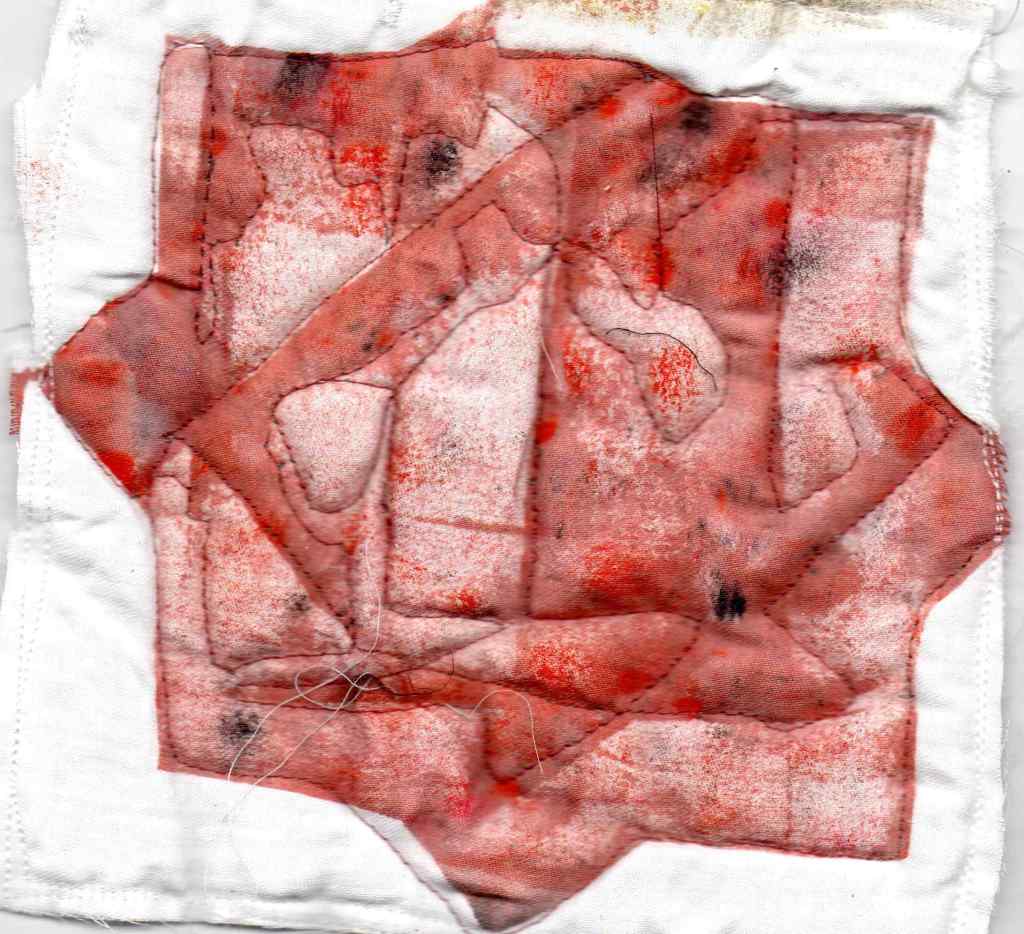
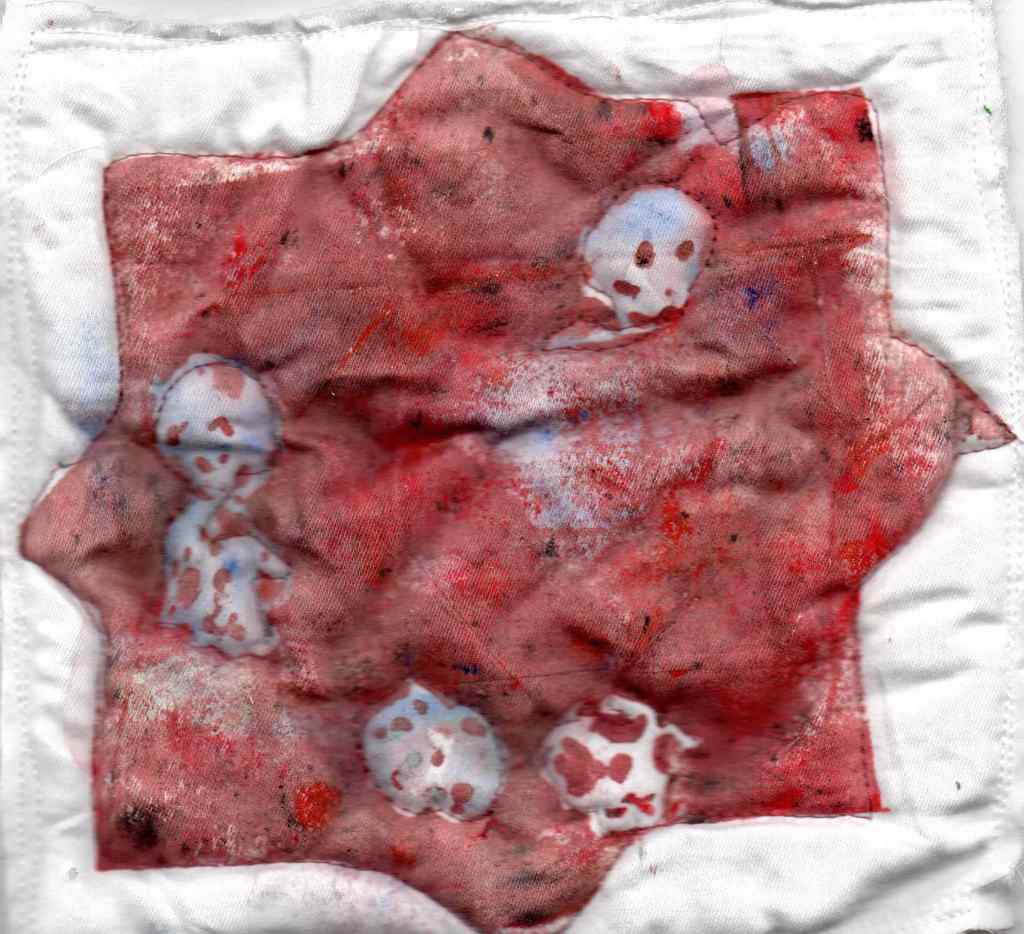
The textile prints below were all based on Afghan poppies, quilted into 15cm squares and intended as a border to a larger quilt called Afghan Wedding, similar in image to the enamel work which is on this blog. But I didn’t much care for the border and so the piece is still waiting to be completed years later.

Other squares were based on tile images from Afghan ceramics.

These are all stencil mono-prints, the stencils were cut from thin film and the prints made with soft rollers or sponge, acrylic paint mixed with fabric print medium, quilted after that.

Afghan Wedding quilt, for in progress in 2019.

Categories
art

City Sunset

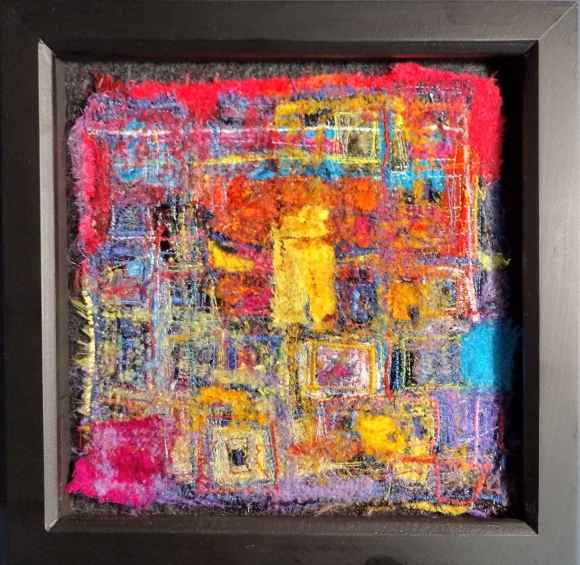
Almost all the pieces in the Meltdown series are reworked from earlier fabric work, I don’t throw much away. I try to avoid polyester but for shine it does get into the mix. Rayon (viscose) thread and cloth can be shiny and I use that where I can, although rayon sewing thread is usually thinner and therefore weaker than cotton or polyester, I don’t know why that is. Silk is best but pure colour scraps can be hard to find. Viscose in clothing is often silky and now frequently used for fast-fashion clothing, also used in place of cotton, it was developed in the 19thC as a substitute for silk but has many other uses. Being made from wood pulp it’s potentially an organic fabric but the manufacturing process is intense and involves a number of chemicals. As with bamboo fabric – also viscose – there may be potential for a more environmentally friendly manufacturing process.

There’s a long way to go in creating truly eco-friendly fabrics but hopefully manufactures will be motivated by the prospect of reducing costs as well as saving the planet. Recycling of viscose clothing is low at present, a large amount go to landfill.

City Sunset, Mixed textiles, 20x20cm, 2024.

I was not planning to name the smaller pieces but this one seemed to name itself. All these works are for sale, at a range of modest prices direct from me or via Artigo, Gloucester Road, Bristol.

Categories
art

Oil quilt detail

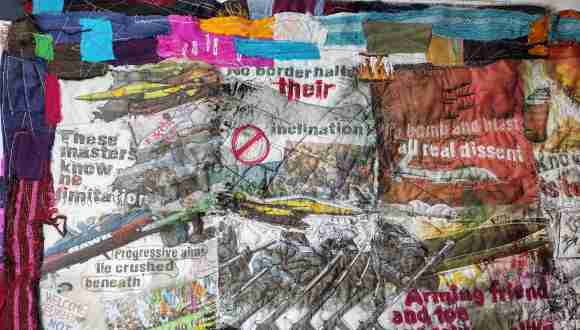
The Oil quilt consists of four panels made up of about 80 squares of 20 x 20 cm, printed, painted, drawn, embellished, stitched and embroidered in various ways. I’m finding it hard to finish, the desire to add more detail is strong but almost certainly misguided. Better to work on another piece I think.

Oil quilt, detail, approx 70 x 35 cm

This detail is from the upper left of the second panel, it feels topical. The quilt as a whole seems to be a polemic.

Oil quilt detail, approx 70 x 35 cm

This second detail is from same panel, lower right.

Categories
art

Meltdown 9

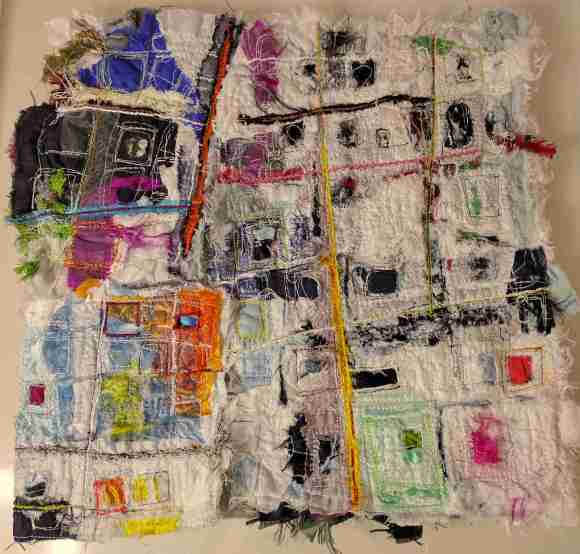
Meltdown 9, mixed fabric, embellish, embroider, stitch, 30 x 30 cm

Categories
art

Fukushima

Fukushima is in the news again, as it will be periodically for the rest of your life and beyond. This time it’s for starting to dump toxic water into the Pacific, with partial blessing of the International Atomic Energy Agency (IAEA) who are trying to hedge their bets, or just lying through their teeth. And a Netflix drama series about the 2011 events.

Anyway I thought I might re-post the piece I made for my Masters degree.

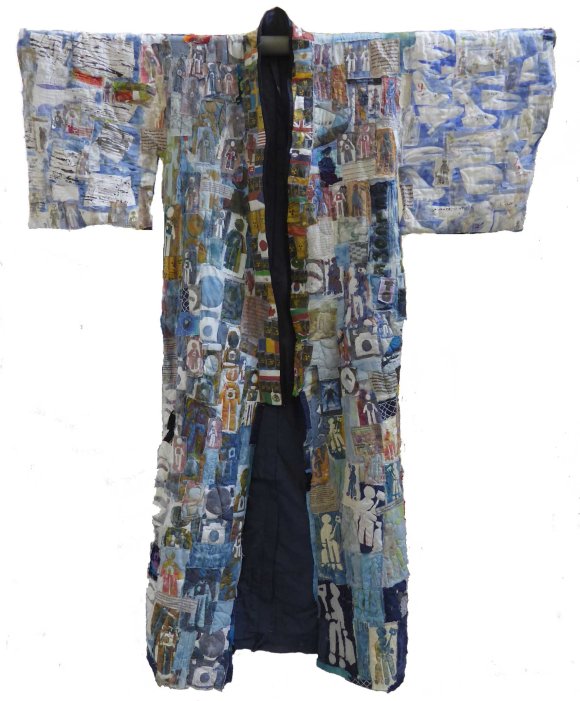
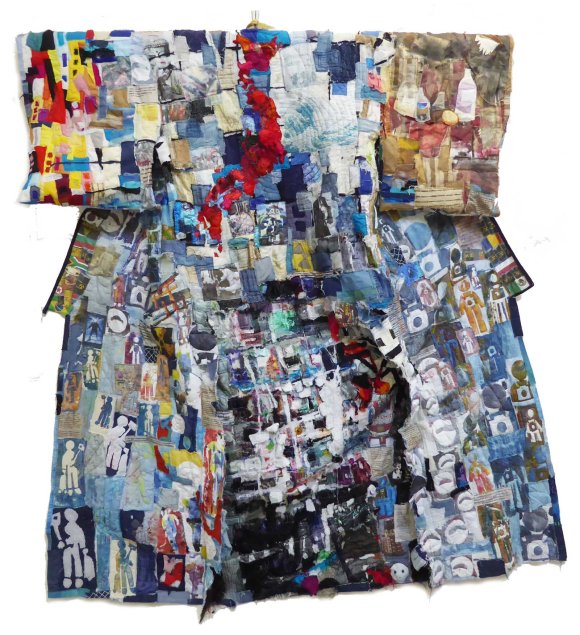
Welcome to Fukushima – kimono front, fabric, printed and embellished, 2m x 2m, 2018.
Welcome to Fukushima – kimono rear, printed and embellished fabric, 2m x 2m, 2018

I have managed to lose most of the files, sketches, notes, images &c. I collected for the project and for the rest of the MA, probably when I moved home, twice.

My overall feeling about this piece is that I would like it to be darker and with bigger and bolder images, but at the time of making I was thinking of the confusion surrounding the 2011 events, and a recent visit to the COBRA museum, Amsterdam https://cobra-museum.nl/ where the anti-art movement of Copenhagen, Brussels and Amsterdam (post World War Two) is displayed.

Categories
quilt

Quilting

I have been working on a new quilt for the last few weeks, until the weather became too good to stay home.

Work in progress – Oil quilt, 2023

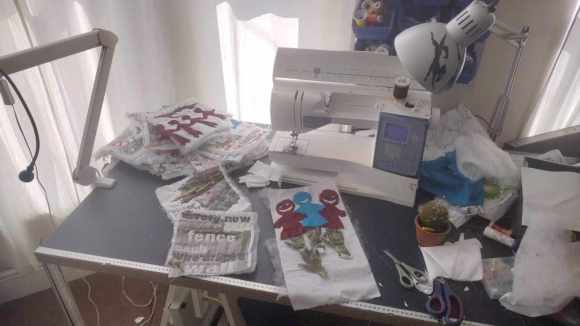
This is a (low-res) pic of my sewing bench, work in progress. The quilt will consist of 72 printed, stitched and embellished fabric squares which are then quilted, stitched together and printed/overstitched again, until done. Most of the squares were inkjet printed, some printed with stamps cut from rubber or lino, some were also stencilled or hand drawn and painted. There are also other forms of printing such as collagraph.

Categories
Doll

Four Dolls

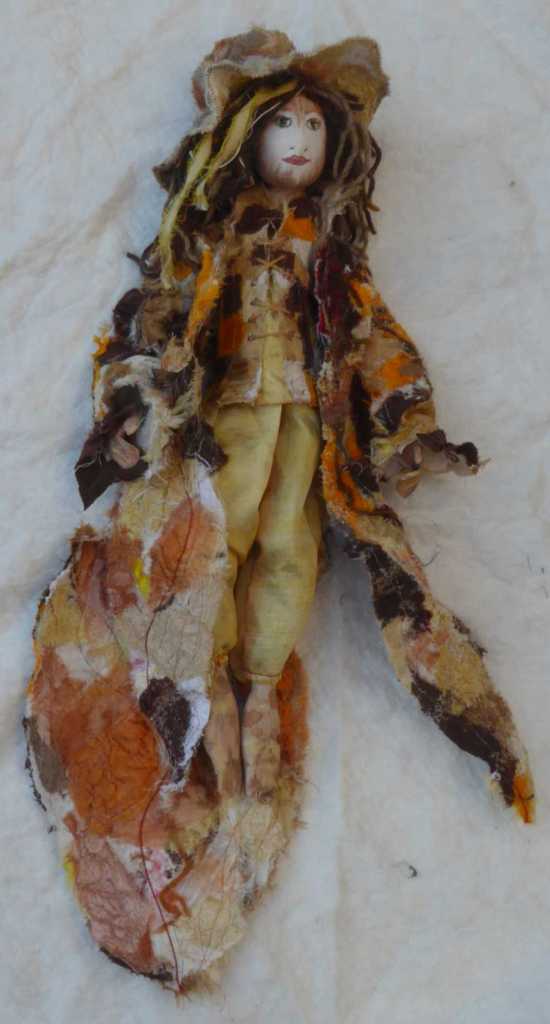
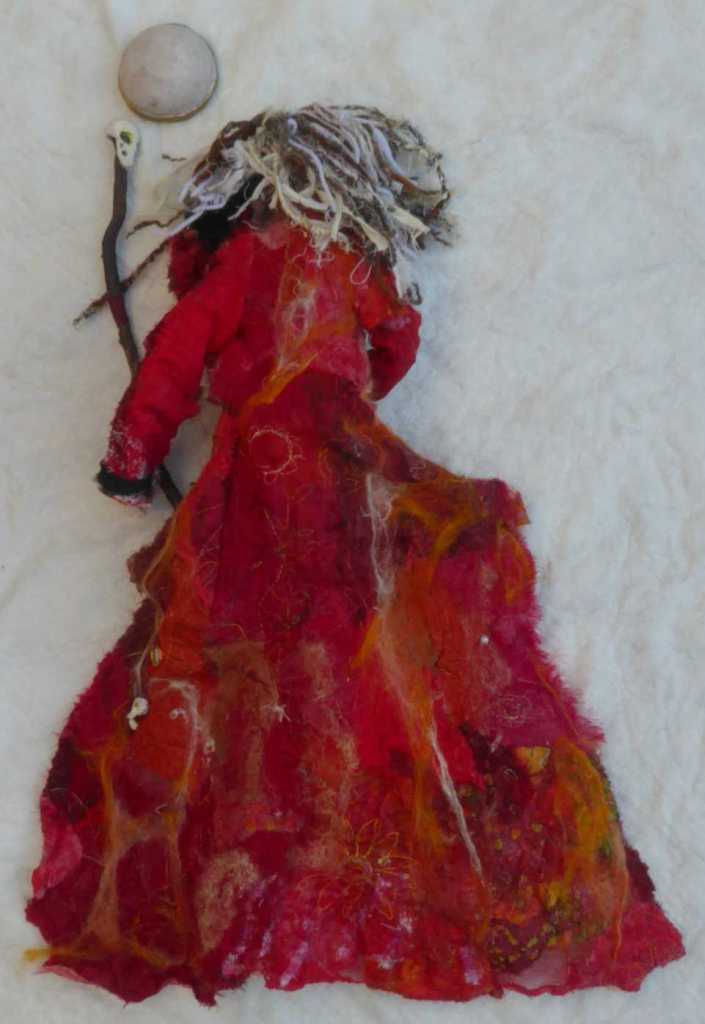
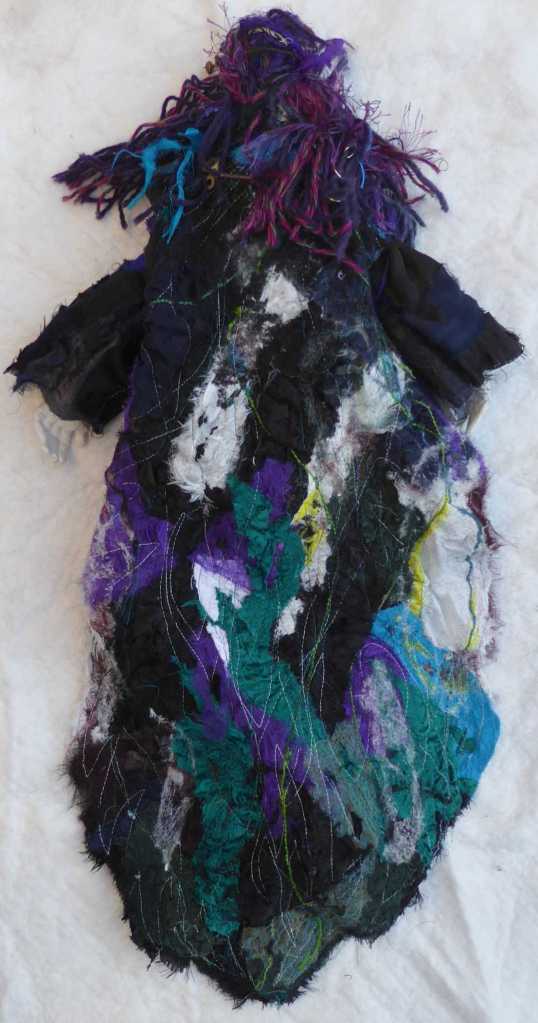
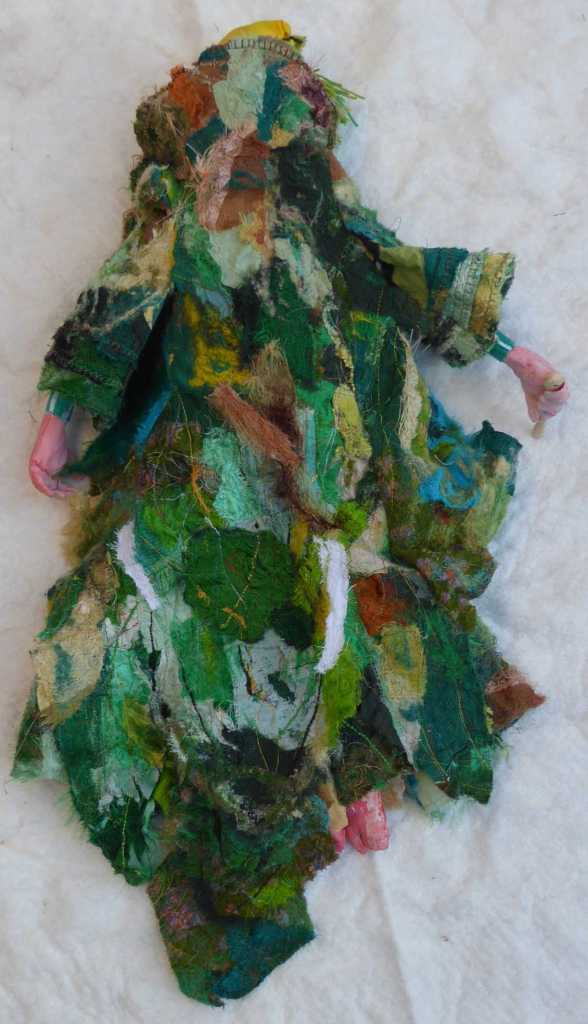
There is something I find satisfying and rewarding about doll making, although I can’t claim to know what that is. These four dolls are button-jointed in the Jan Horrox style, about 60 cm long, their clothes are made from embellished and embroidered scraps and may be much longer. The fabric scraps are often silk and satin and have many metallic threads but these shiny things do not show in these photos.

These dolls might represent both birds of the British Isles and the four regions, Scotland – Magpie, Wales – Red Kite, Ireland – Greenfinch and England – Tawny Owl. I think the Magpie, the first one I made might be my alter-ego, a Scottish Prince!

Categories
Doll

Doll

I’m making another in a series of bird inspired dolls, this one is vaguely based on the Tawny Owl.  Button jointed dolls are fairly easy to make, I always follow  the pattern and instructions of Jan Horrox, a wonderful and inspiring doll maker, then modify things according to my wish.  The most challenging part is to put a face onto the head.

Tawny Owl

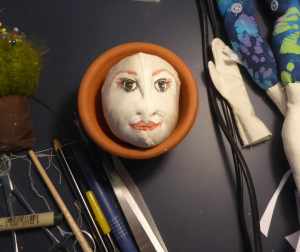
These dolls have needle sculpted faces, which takes some practice, then the features are drawn on with Micron pens and water-based coloured pencils.  A steady hand is essential and the results can’t be guaranteed.

Doll head etc.

Once the face is drawn then it has to be sprayed with artist’s fix, the solvent type.  These dolls are more ornamental than play, although I try to make them robust enough for older children.  Next stage is to attach the head, then make hair, or in this case feathers of some sort.