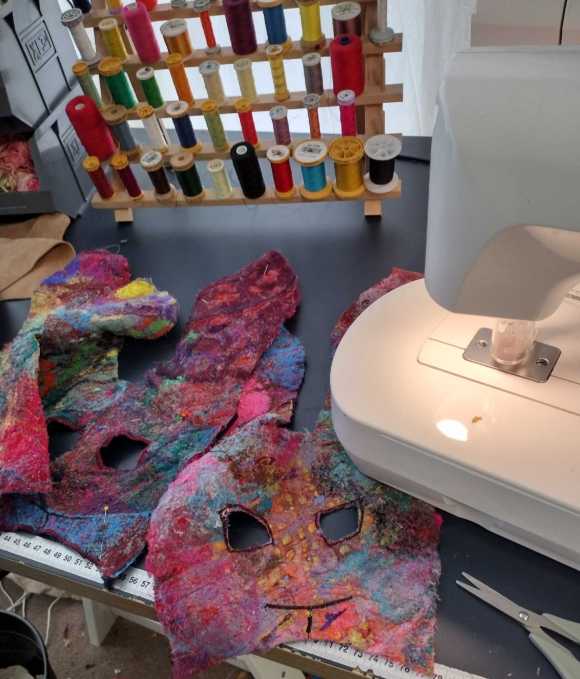
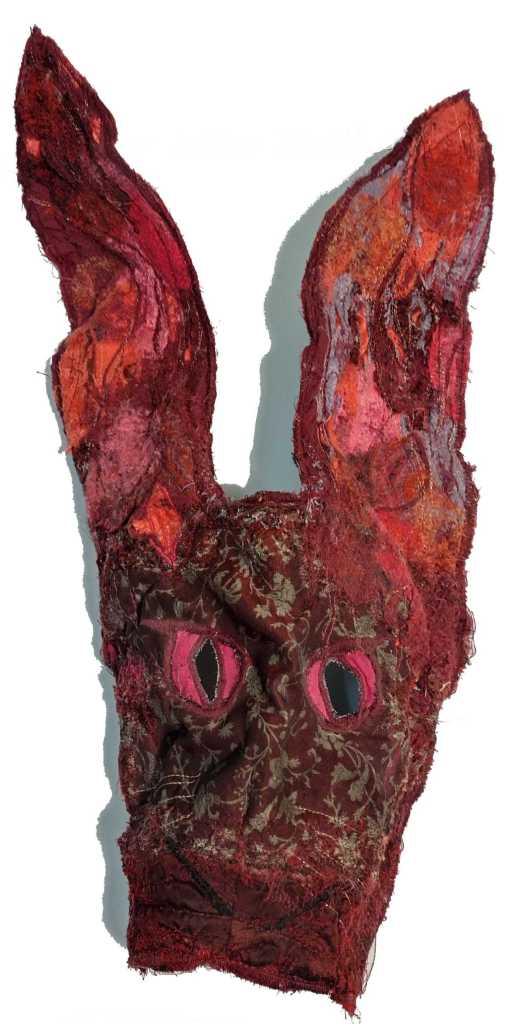
I’m waiting for the post to bring some 18g (1mm) aluminium wire to make the supporting frame for these masks, the embellished fabric in this first pic is a bit heavier than usual (lower pic) and so needs a slightly stiffer wire.
Once the fabric versions are complete, maybe five or six, I’m going to start on some leather ones, with a somewhat different set of tools although the sewing machine will still play a part.
Hare Mask 2, mostly finished
Mostly finished and mostly a trial for the shaping and finishing.
“Rhythm in art is the visual or auditory pattern created by repeated shapes, elements, colors, sounds, and movements. It is used to create a sense of flow and connection within a work of art, as well as draw attention to certain areas of the composition. Rhythm can be achieved through repetition and variation, contrast, gradation and echo.” Studiobinder
Studiobinder – a video software house – blog has some useful definitions and practical examples of the creation and use of rhythm in video and they apply to plastic art (and other artistic ideas), most of the examples shown are painting but the same ideas apply everywhere.
In my own work I’m aware of rhythm in the flow of the stitch lines, the juxtaposition of colour and the textural depth, I use these as well as cut-away, embellish, embroider and ink. Mostly an intuitive process, based on the sketch and scrapbook but with larger pieces some planning and sketching is essential.
A short walk from my home In Bristol Studio hosts a wide range of artists and makers – what a city! – “…an artist-led studio and home to over 50 artists and makers who work across multiple disciplines.” There are classes here and occasionally expos, the BS5 Arts Trail event on September 7th and 8th 2024 will be an open studio event.
Simple pieces of work are often the most satisfying I find. This little sketch was one of several made for a pop-up card for my grandson Sam on the occasion of his seventh birthday a few years ago.
Post updated October 8th 2024. This is the final version of Requiem for Oil, 270 x 165 cm, mixed textiles, lino-print, transfer & other print, stamping, ink, fabric paint, embroider and machine stitch. I delivered the quilt to 44AD gallery in Bath yesterday and it will be on display from Thursday 10th October as part of the Bath OPen Art Prize Exhibition 2024.
Art Brut (‘raw art’ or for the cupboard) I expect. But more influenced by the COBRA (Copenhagen, Brussels, Amsterdam) anti-formalism movement which grew out of Dada and the disaster of WW2.
If you’re in Amsterdam be sure to visit Cobra Museum in Amstelveen.
I have written here before about Affinity apps – now selling for £160 for all three or £68 each – and how useful I have found them, (I have no connection to Affinity or Serif, the parent company) and in a world were many Mac apps seem to be getting worse it’s good that Serif are still producing useful upgrades for all three.
The subscription payment system used by Adobe, Corel and many others means that we pay for ever for a product which barely changes which may be great for the makers of Illustrator, CorelDraw &c. but which drain art and other school coffers year after year.
There are still a few niggles with the Affinity suite – no trace function for instance – but the layout, speed, almost seamless suite integration and excellent functionality more than compensate for any shortcomings.
A couple of weeks ago Affinity was taken over by Canva (a widely used online design house) and they have pledged: “We will provide Affinity free for schools & nonprofits (NFPs)”. This can only be good news, hopefully finally breaking the subscription stranglehold of Adobe etc. Canva are also pledged to invest.
I don’t know anything about Canva other than they are now a huge company but the product seems ok. and very popular.
For the first time in several years I thought I might send some seasonal greetings cards. Lots of scrap material and lots of thread awaiting a little effort, as well as plenty of card and dance paper, so here we go. My favourite animal will be the theme, the much persecuted hare, in winter costume.
Embellishing scraps of fabric is fun, but the embellishing needles have become rather costly at around £3 each – they break easily. So it’s important to take care using the embellishing machine, needles move fast but fabric movement must be slow. I also use embellished fabrics for doll costumes.
Once the fabric is available I cut the hares out and began stitching, might have been easier to stitch first then cut out. Hand stitching is kept to a minimum, whiskers and a little finishing. Anyway the results are just about ok, I think.
Winter Hare cards, work in progress (2)
I printed some text onto hand-made paper as a backing for the fabric hares, printed a greeting on A4 card with a small name label on the reverse. Once the hares are complete I stitched them onto the backing paper, then glue the whole piece to the card.
Winter Hare cards, work in progress (1)
I work with both the printers – one laser and one inkjet – the mac computer, a Husqvana/Viking sewing machine, an embellishing machine and many threads, pens, fabric scraps etc. and with music playing, often BBC R3 classical. The pics show the dry work area, I’ll be gluing elsewhere.
This fabric work which I last posted about in June is based on the OIL poem I wrote in 2010 at the height of the USA ‘surge’ in Iraq, the poem in artist’s book form is here.
Although the bulk of the work is done there is still plenty to do and my progress through the summer has been slow – I have to wait for ideas and they don’t seem to come as often as they once did.
OIL quilt panel, one of four, work in progress
The imagery is ‘busy’ with lots going on, but I feel it could be busier still, and darker, more painterly. I’m still thinking about the border(s), those will take almost as much time as the panels and like all framing they will have a big impact on the final piece.
Linda and Laura Kemshall are well known artist quilters of the highest standard, their book, The Painted Quilt (2007) is one I refer to frequently, especially for printing advice and although my style and content is far from theirs I aspire to the standards they achieve.
I’ve also found their sketchbook ideas inspirational and highly practical, design is at the heart of what they do. My own sketches, scans, screen grabs, pics and notes tend to build into massive files on my Mac and eventually deleted but some get saved on paper or cloth.
Fukushima is in the news again, as it will be periodically for the rest of your life and beyond. This time it’s for starting to dump toxic water into the Pacific, with partial blessing of the International Atomic Energy Agency (IAEA) who are trying to hedge their bets, or just lying through their teeth. And a Netflix drama series about the 2011 events.
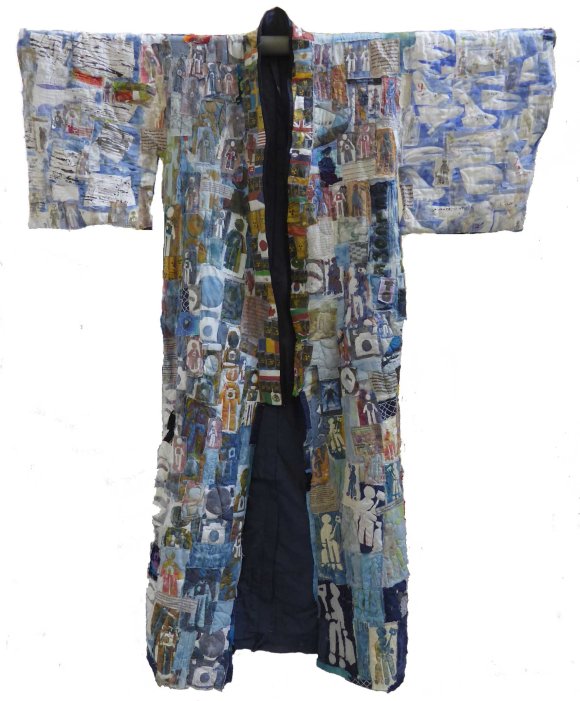
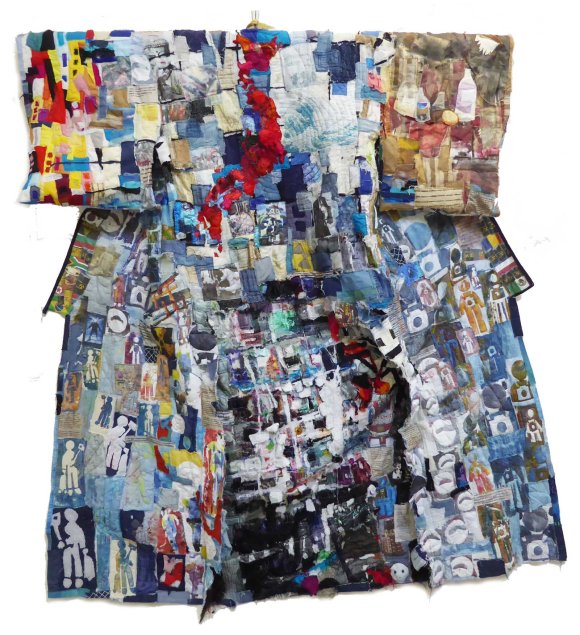
Anyway I thought I might re-post the piece I made for my Masters degree.
Welcome to Fukushima – kimono front, fabric, printed and embellished, 2m x 2m, 2018.Welcome to Fukushima – kimono rear, printed and embellished fabric, 2m x 2m, 2018
I have managed to lose most of the files, sketches, notes, images &c. I collected for the project and for the rest of the MA, probably when I moved home, twice.
My overall feeling about this piece is that I would like it to be darker and with bigger and bolder images, but at the time of making I was thinking of the confusion surrounding the 2011 events, and a recent visit to the COBRA museum, Amsterdam https://cobra-museum.nl/ where the anti-art movement of Copenhagen, Brussels and Amsterdam (post World War Two) is displayed.
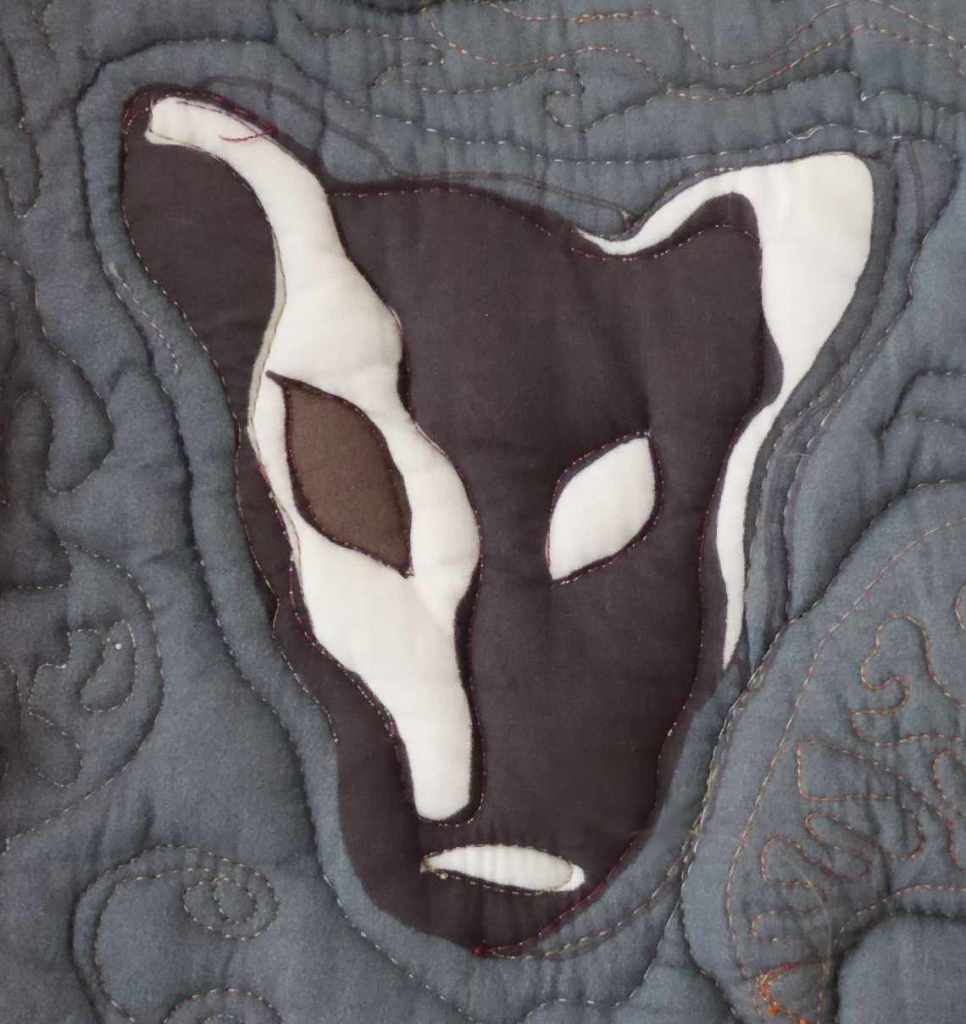
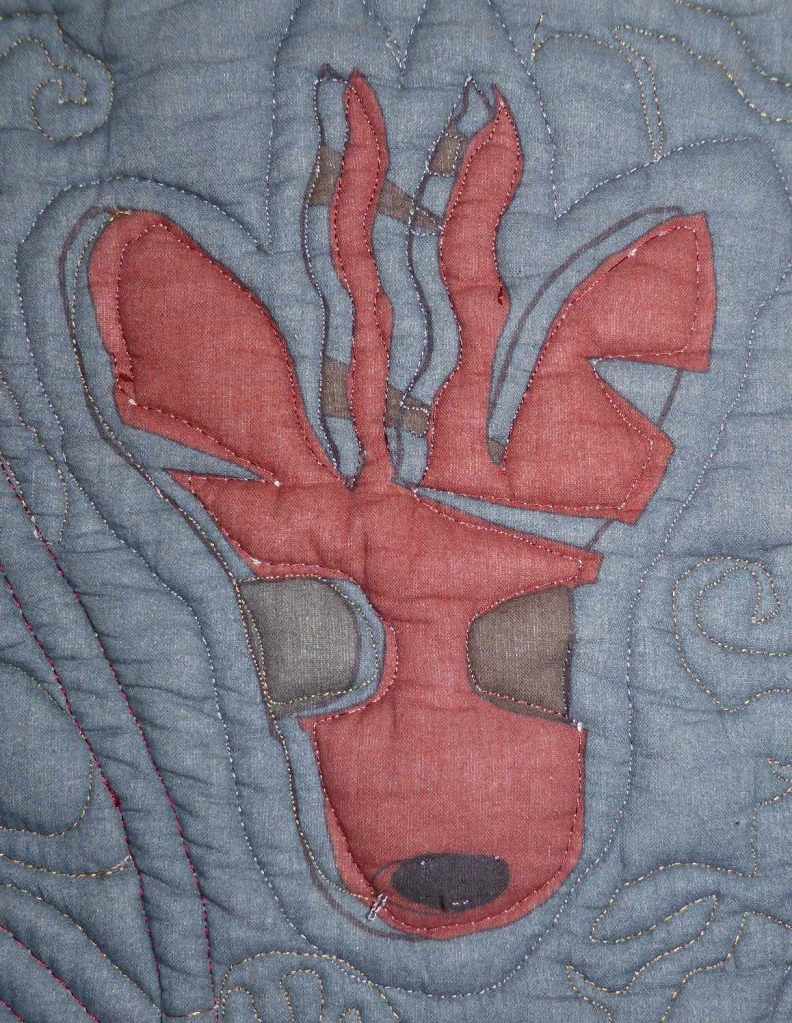
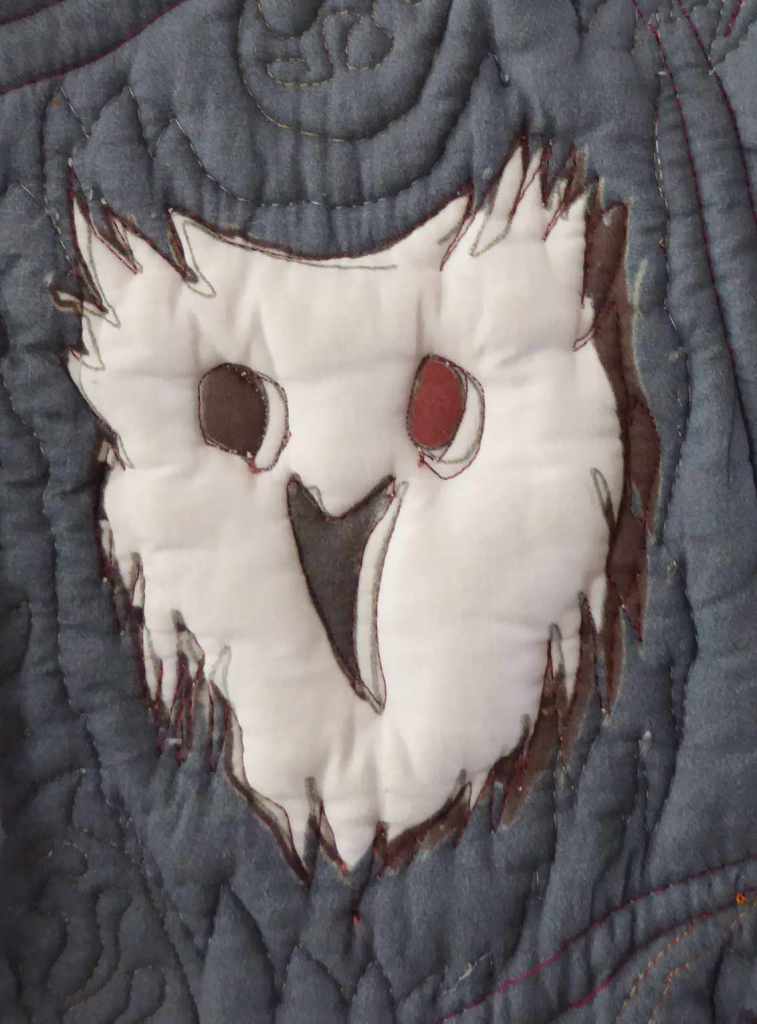
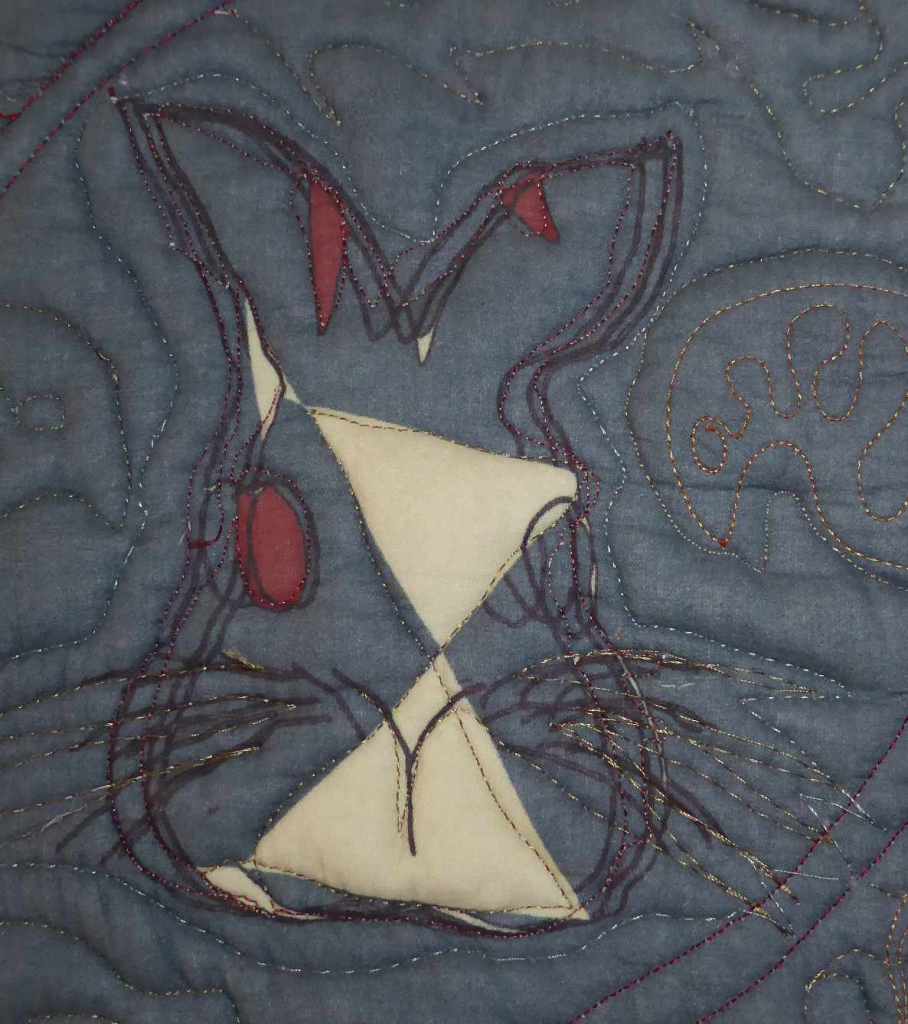
Still sorting out work from a year or two ago, this quilt was made in 2018, there was also an artist’s book using similar mask images. The animals are all British Isles native apart from the grey squirrel, although that has been here for quite some time now. I haven’t done much work for the last two months and sorting out old pieces, repairing or completing them feels like a way back in to making some art. These are sketches of some of the mask images, drawn on a tablet, or drawn on paper and scanned and manipulated in Affinity Photo. The bamboo silk fabric was digitally printed and I also screen printed some tiles but the results were messy.
Many people have reported how the early part of the Covid crisis was a period of stimulus and creativity, I felt that but in the second UK lockdown I felt quite depressed, especially with our government incompetence and found work difficult. I did start work on a fairly large piece – another art quilt – but progress was slow and I have put it aside for a while.
Animal Masquerade, quilted bamboo silk, 120 x 90 cm, 2018
The next and final step is to make a border, this will need to be a dark material and quite wide I think. The quilt was to be a practical piece for a child’s bed but didn’t get finished and so wasn’t used that way. I try to use organic fabrics, usually from the Organic Fabric Co. in Wales but this isn’t always possible; I like bamboo because it is grown without herbicides or pesticides and is really versatile, takes dye and print beautifully and is widely available. The quilting (wadding) is also bamboo.












 FlagFly