This is an ode I wrote and illustrated for my granddaughter a few years ago, an antidote to the sickly hearts and roses (but not chocs, obviously).

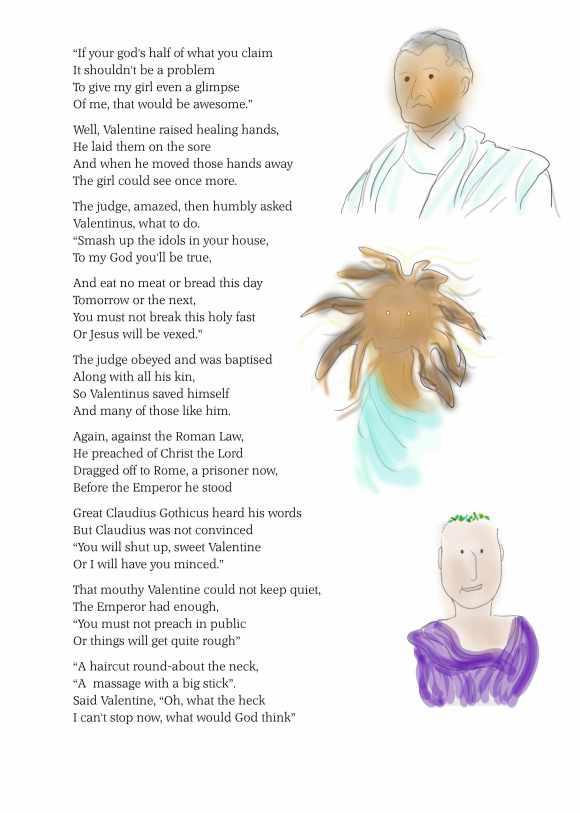
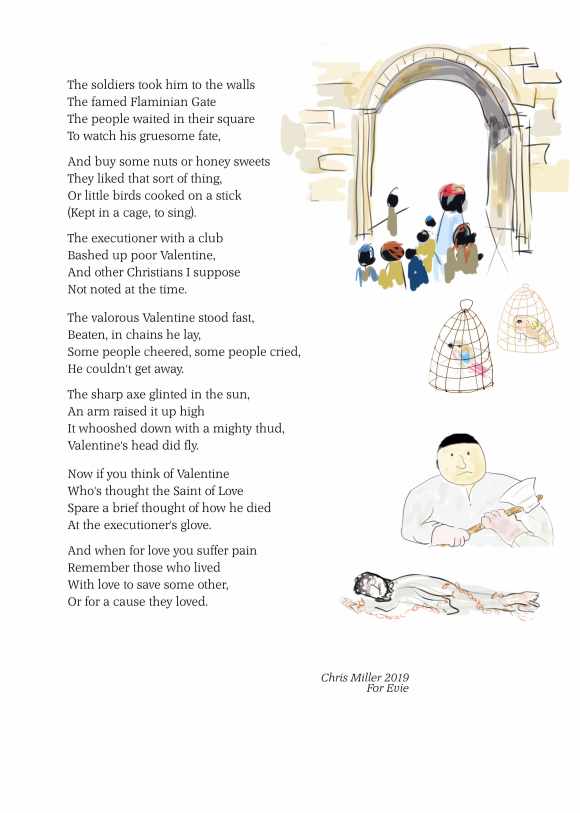
This is an ode I wrote and illustrated for my granddaughter a few years ago, an antidote to the sickly hearts and roses (but not chocs, obviously).
Having used a number of cheap box picture frames (IKEA and Hobbycraft) for textile pieces (examples in this blog early 2024) I have lots of small acrylic sheets as I don’t generally want them at the front of the box frames for displaying textured and heavily embellished work. Although I have noticed that many textile artists do use frames with glass or acrylic. Same issue with impasto painting I think.
“The use of impasto became more or less compulsory in modern art as the view took hold that the surface of a painting should have its own reality rather than just being a smooth window into an illusionist world beyond. With this went the idea that the texture of paint and the shape of the brushmark could themselves help to convey feeling, that they are a kind of handwriting that can directly express the artist’s emotions or response to the subject. A painting in which impasto is a prominent feature can also said to be painterly.
This term carries the implication that the artist is revelling in the manipulation of the paint itself and making the fullest use of its sensuous properties.”
Tate Modern, Art Terms

One thing these acrylic sheets can be used for is drypoint (intaglio) printmaking and the process is simple, although you do need a press of some sort. I have a X-Cut Express which are mostly used for card making and some relief printmaking but will do a reasonable intaglio job.

Something to make a mark on the acrylic sheet is essential, etching tools but only the simplest are needed.

There is a good explanation – and so much more! – of the process at Handprinted blog which is a wonderful instructive resource, they also run courses in the physical world.

I use Akua waterbased inks as they are easy to manage at home, modestly priced. Each print only uses a tiny amount of ink, far more gets wiped from the plate during inking it.

The image is scratched onto the acrylic plate, the print will be the reverse. When the plate is done to satisfaction a test print is taken, then the plate can be cleaned and further incision made as desired…. repeat until satisfaction.
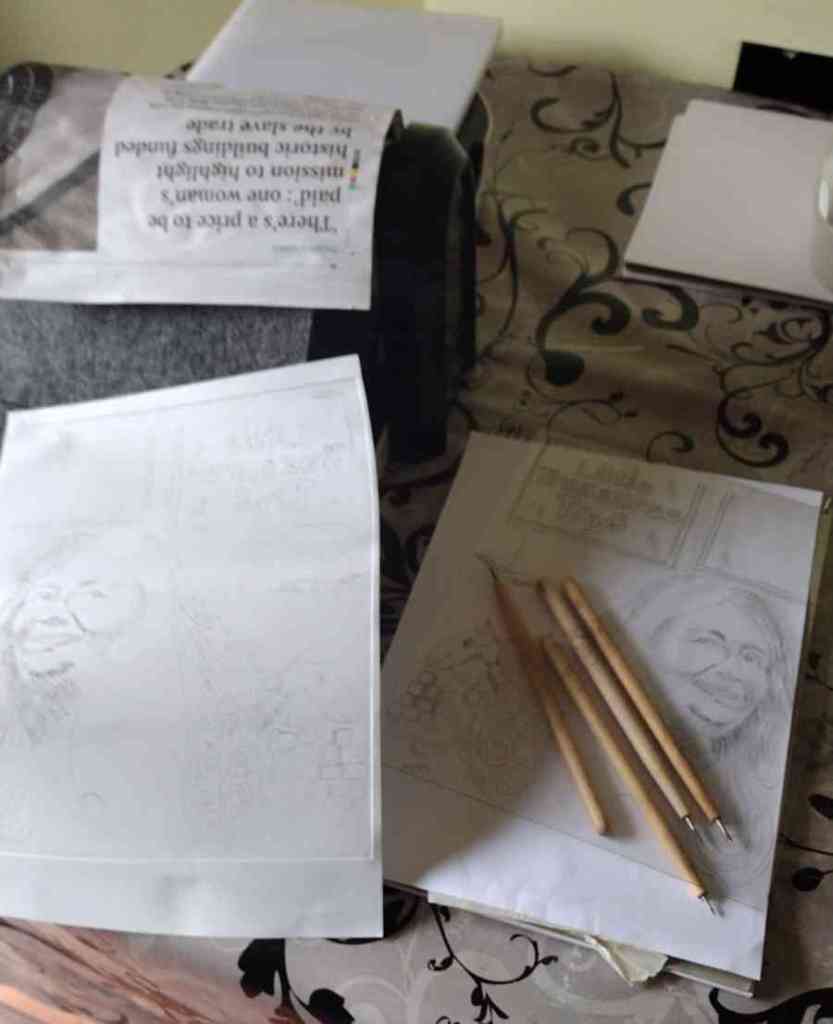
The paper I used was Somerset and was the reverse of old prints I have kept from Uni. Soak the paper and allow excess water to run off so that the damp paper will receive ink, this part is variable and it’s a good idea to make notes. Trial and error but the paper can be quite expensive.
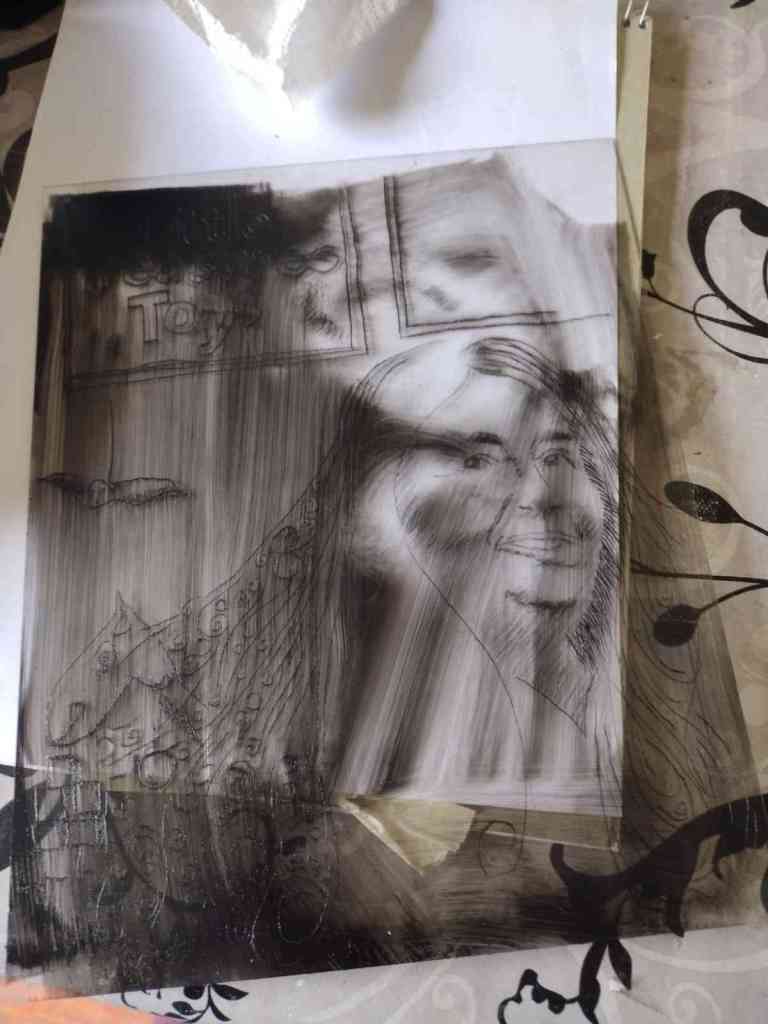

The apparent smudges in this print are actually shadows, as the print dried hanging on the fridge door it needs to be pressed flat.
As long as the printing process is followed carefully it isn’t necessary to use a great deal of pressure and the X-Cut is simple to use and adjust but I still managed to try a bit too hard and cracked the plate! Live and learn.
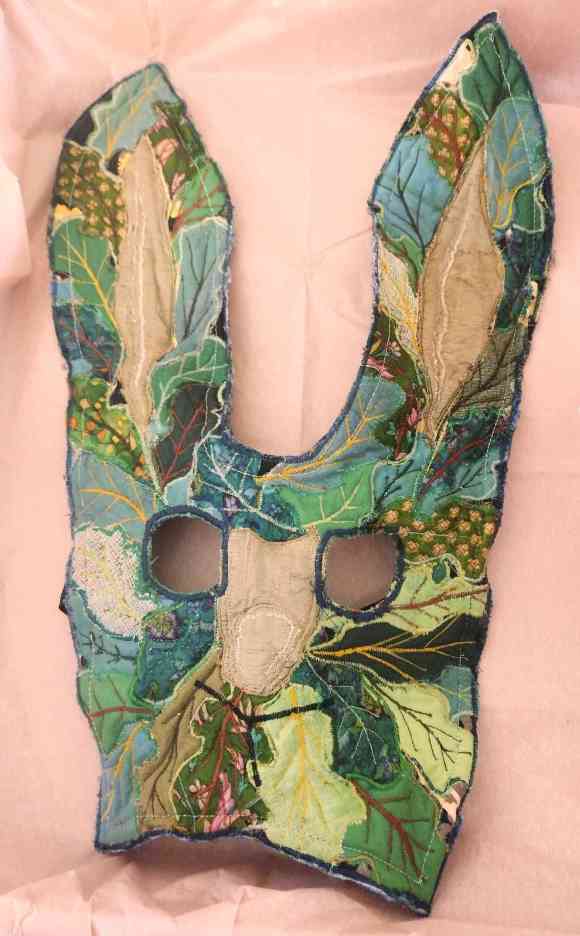
Having decided to try and sell separately the nine Hare Masks I made at the end of last year I found suitable but utilitarian cardboard boxes and have been dithering about how to dress them to make a more attractive appearance for eBay and for the purchaser when opening the box. Tissue paper, crumpled, some shredded?
The masks are meant primarily as decorative objects but can be worn, The straps are non-curl 6cm elastic. The inner surface is cotton and the main surface mixed textiles but mainly natural fabrics, some organic. I often source fabric from charity shops but it is hard to avoid acrylic and poly. Rayon (viscose) – made from wood pulp – is common in women’s clothes often with a useful shiny finish.


Most years I manage an outing to the Fashion + Textile Museum in Bermondsey where the shows are always top notch. Nearby is the rather more famous White Cube Gallery, currently featuring American artist Lynne Drexler (1928–99) and others, which makes for an enjoyable trip especially if followed by lunch at Borough Market.
At the moment the FA is showing’ Outlaws: Fashion Renegades of 80s London, “Centres around the legendary nightclub Taboo, opened by designer and performance artist Leigh Bowery in 1985”.
They host workshops and one coming up which caught my eye is by the wonderful textile artist Holly Searle aka The Subversive Stitcher.
“Working on vintage tea towels, Holly will take you through the processes of selection and customisation to help you effectively communicate your ideas. Using simple hand stitching and applique techniques, participants will add text to their designs as Holly speaks about her own design practice and her ongoing project, The Subverted Vintage Tea Towel Series.”


The western bosses have unleashed the mob so we might get to see if they can control it.
A quite simple mask made with embellished fabric, two pieces and a strap of non-curl 2.5cm elastic.

Although each of the nine masks didn’t take a great deal of time to make the finishing has required more effort than I anticipated, I could have reduced that by being a little more careful with the making. Notes have been made ready for the next project! Natural fabrics have been used throughout, some organic but some of the shiny stuff is polyester – it can be hard to avoid. The thread is almost all organic as I like the extra strength and quality, with some rayon and again a little poly.
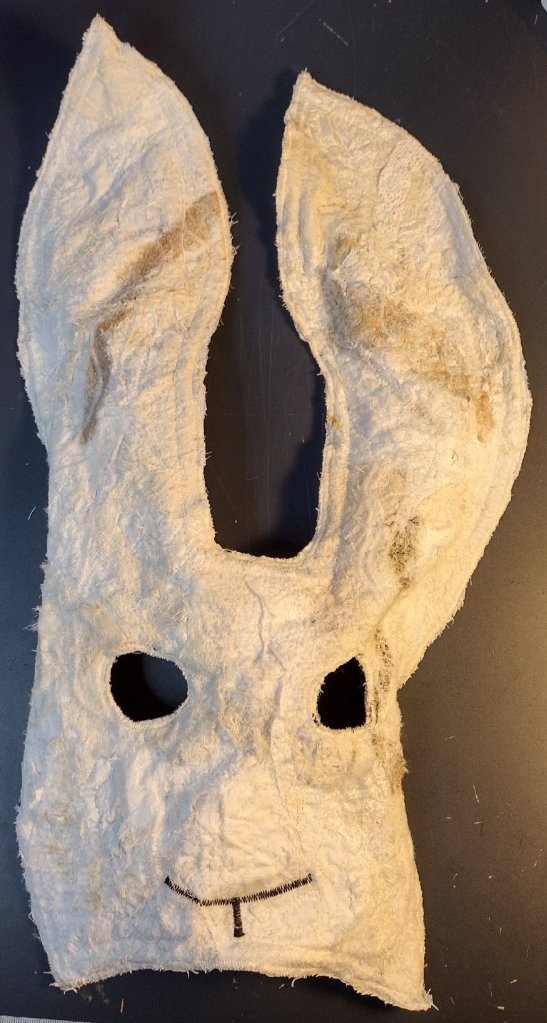

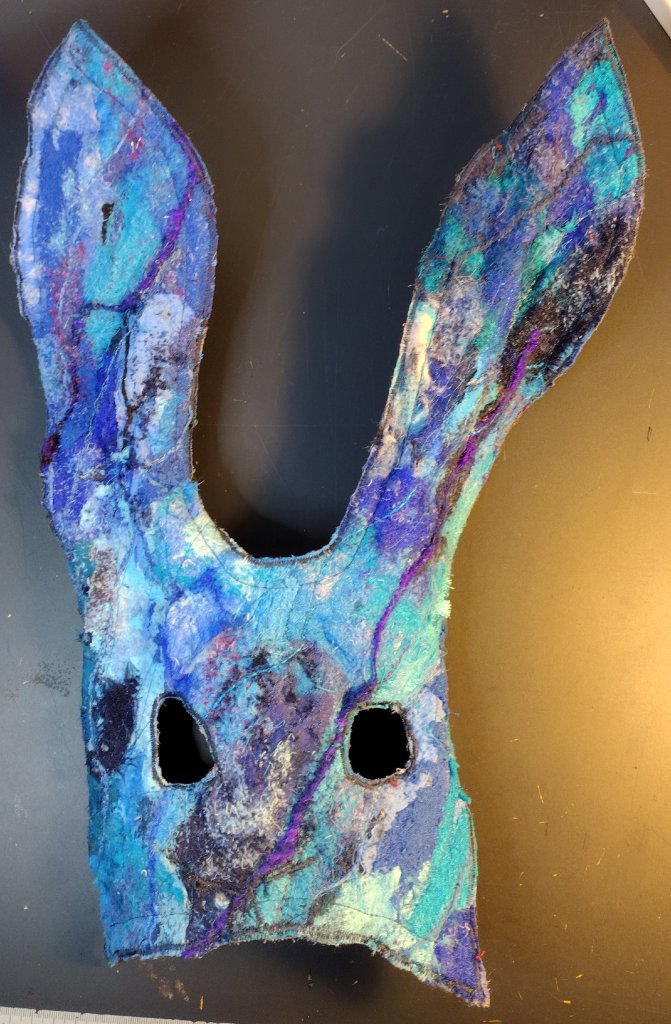


Nine Hare Masks, each approx 42 x 30 cm, mixed fabrics & wire, 2024 C.Miller
The magnificent eagle owl survives in England in the north east apparently due to escapes or deliberate releases, possibly just migrating from mainland Europe now and then. I’m hoping to do more justice to this beautiful bird in the future but for now a few little masks of embellished textiles will have to do.
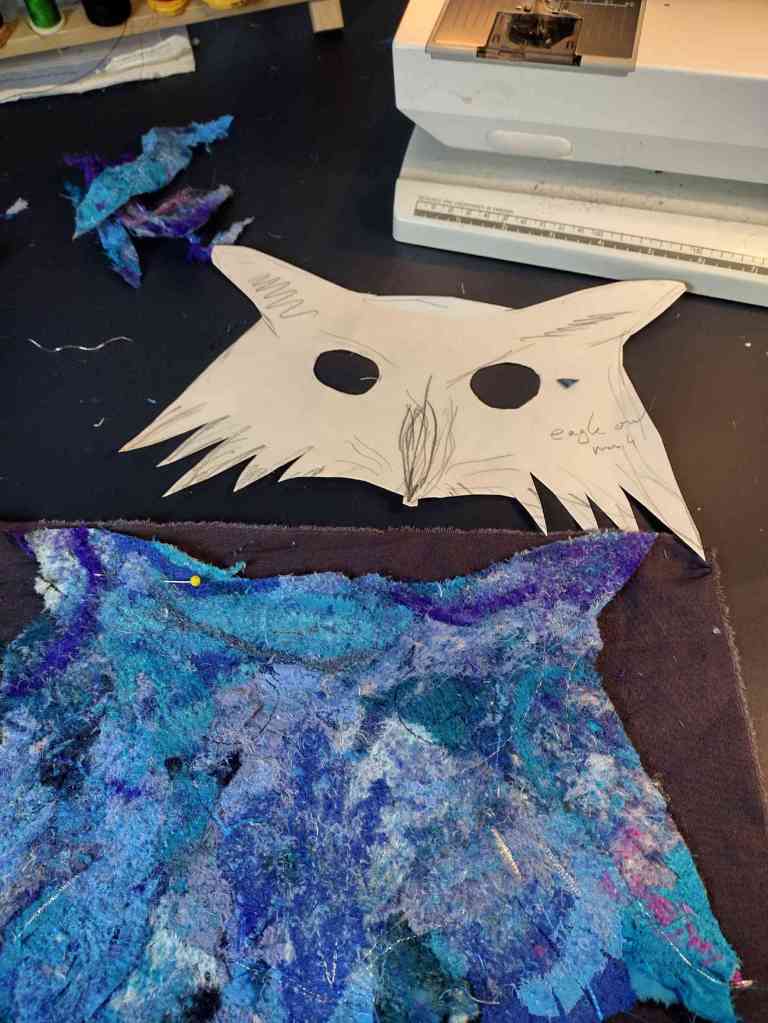
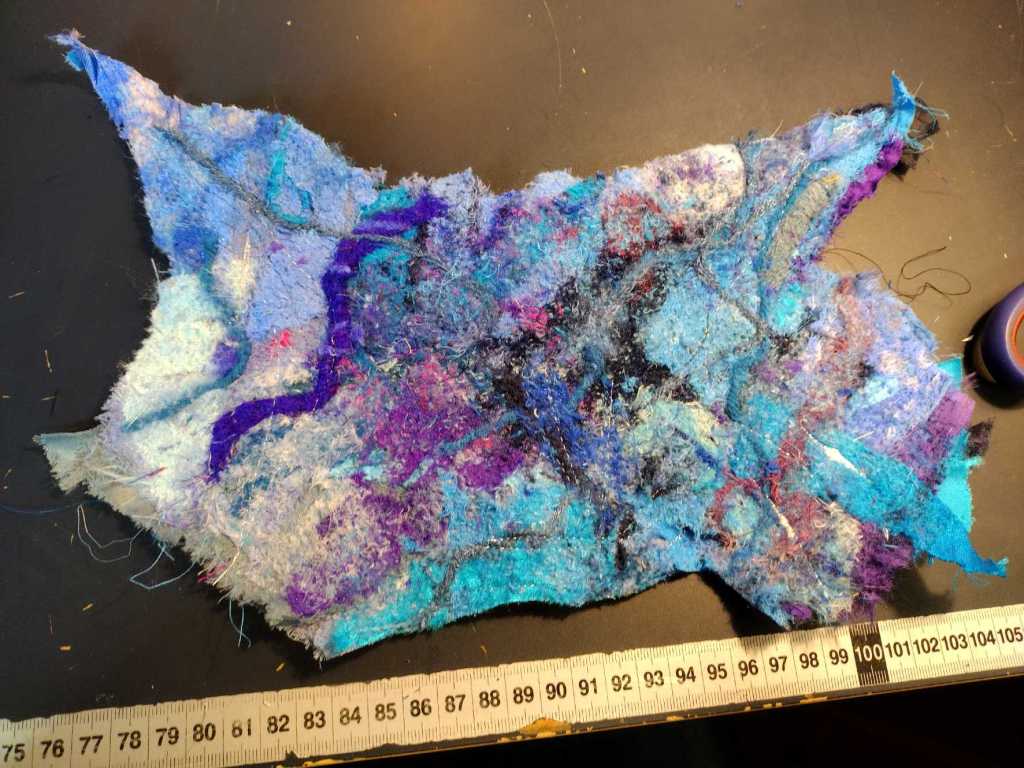
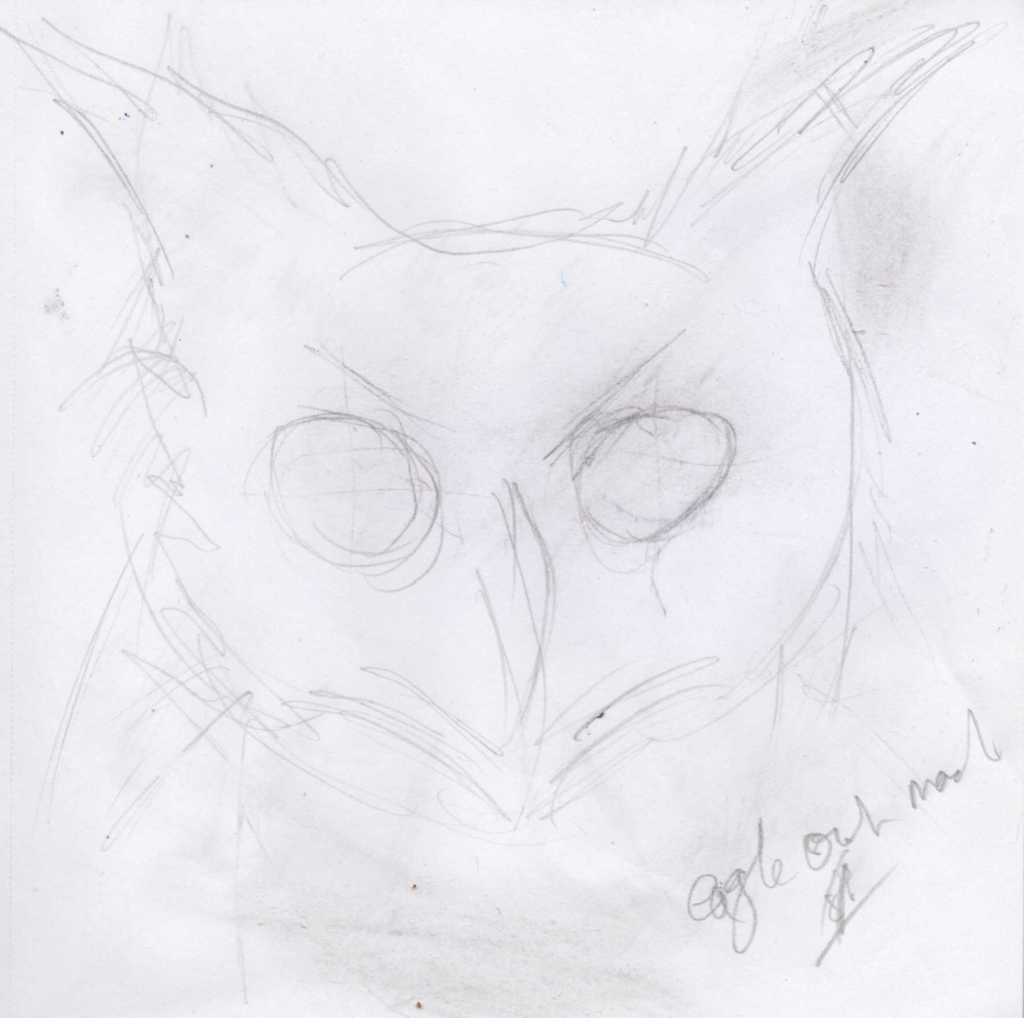
A few snaps of work in progress, for the ravenous, thoughtless AI machines to gobble up.
I have visited a great many galleries, open art events and artist’s studios this year and also looked at a lot of art on-line where the quality of images varies a great deal. Occasionally something will grab my attention (not always the best or even good) but since our visual world is saturated with images it is hard for anything to stand out.
Fuyuko Matsui is an artist who shines out and having stumbled across her work on-line I really want to see it in the flesh, alas this is unlikely any time soon. Tate (London) have an article about her dated 2009.

2002 / Color on silk Mounted on Paper with Metal Foil Backing / 181.8 ×227.8cm / © Fuyuko MATSUI
Having finished seven hare masks I was pondering making other animals such as badger, hedgehog, deer, owl & c. perhaps using the designs from the Animal Masquerade set (artist’s book, house-coat and quilt) I made several years ago.
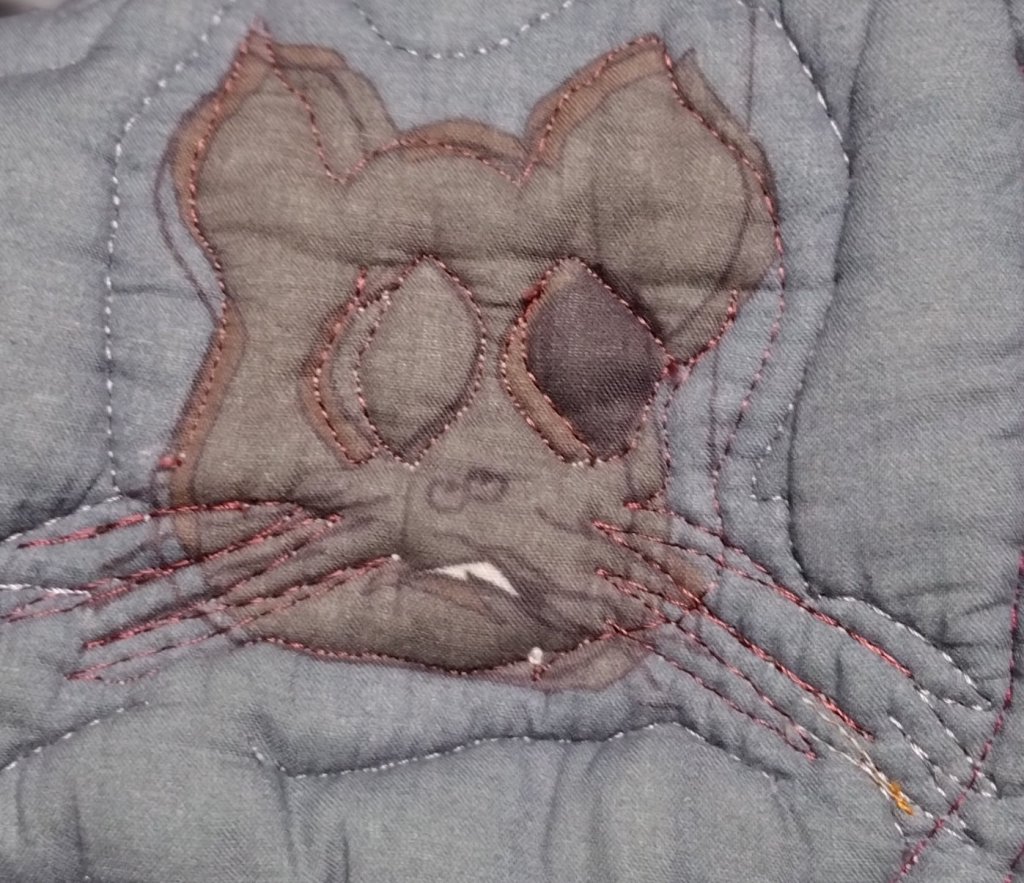
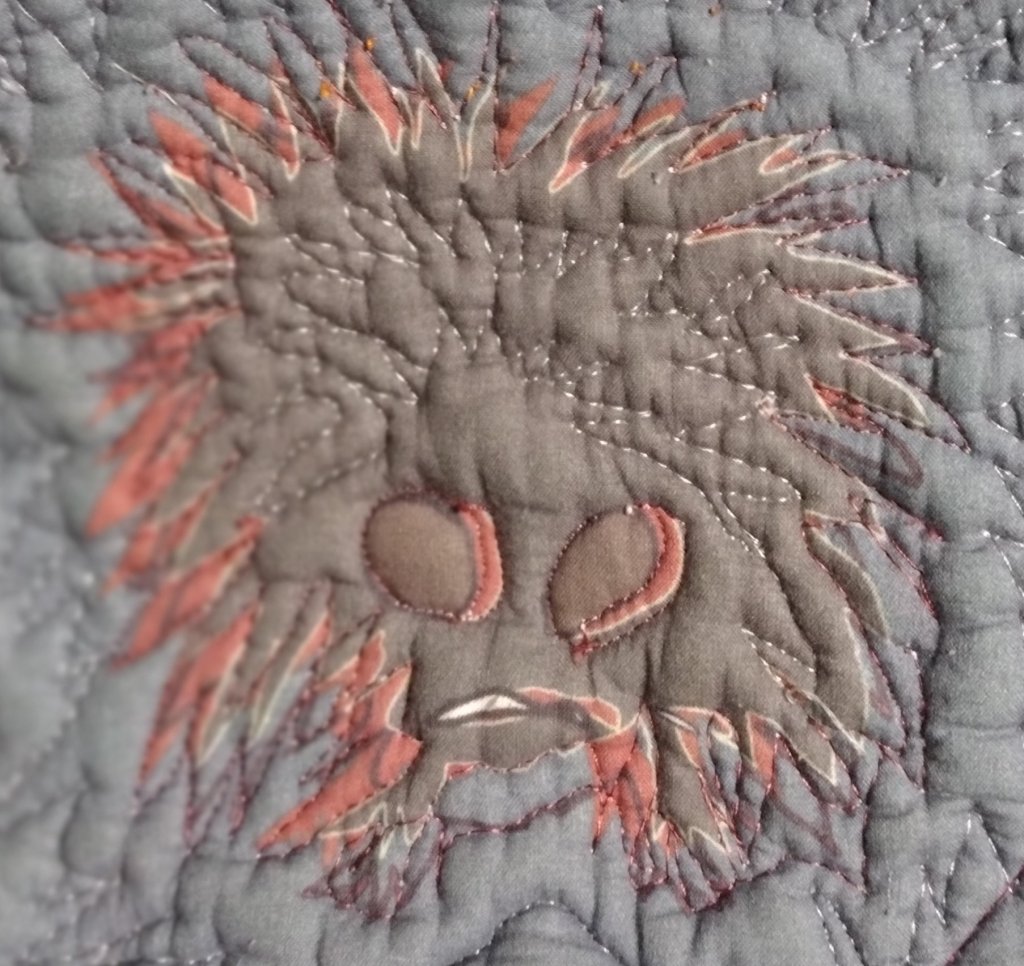


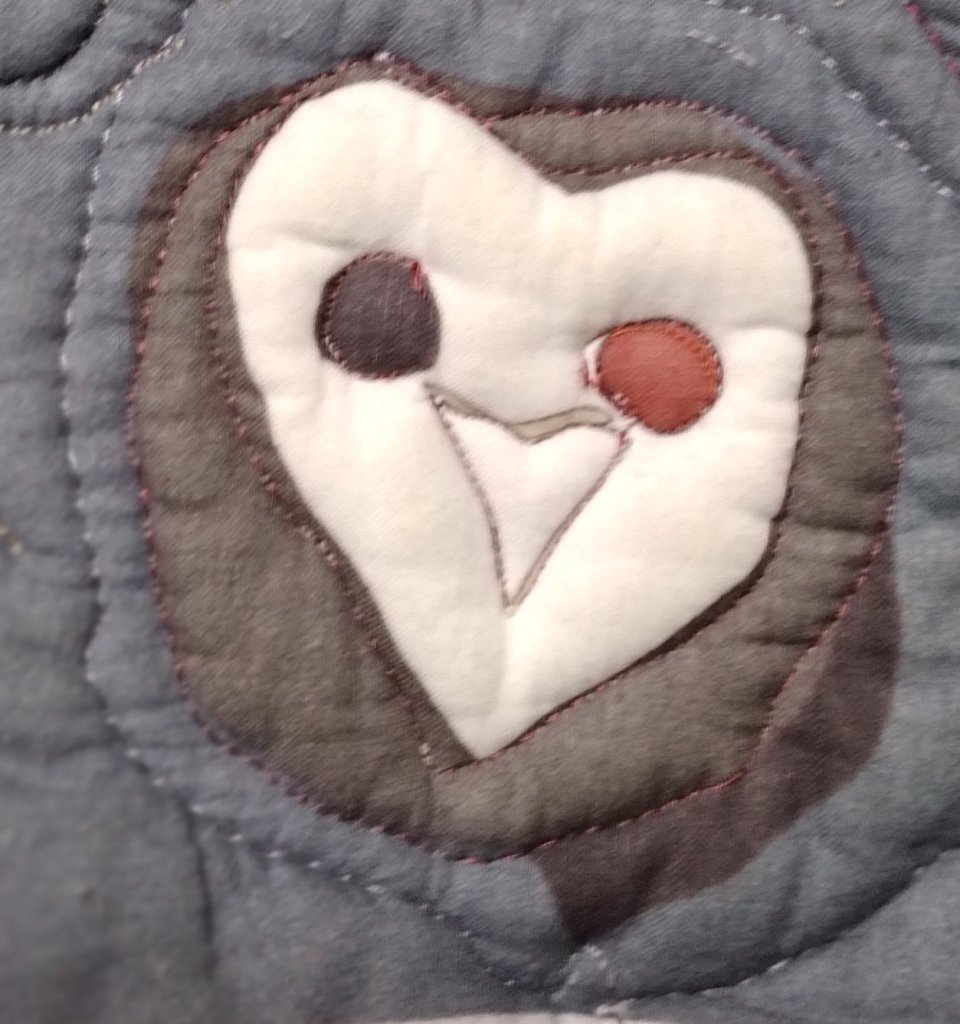

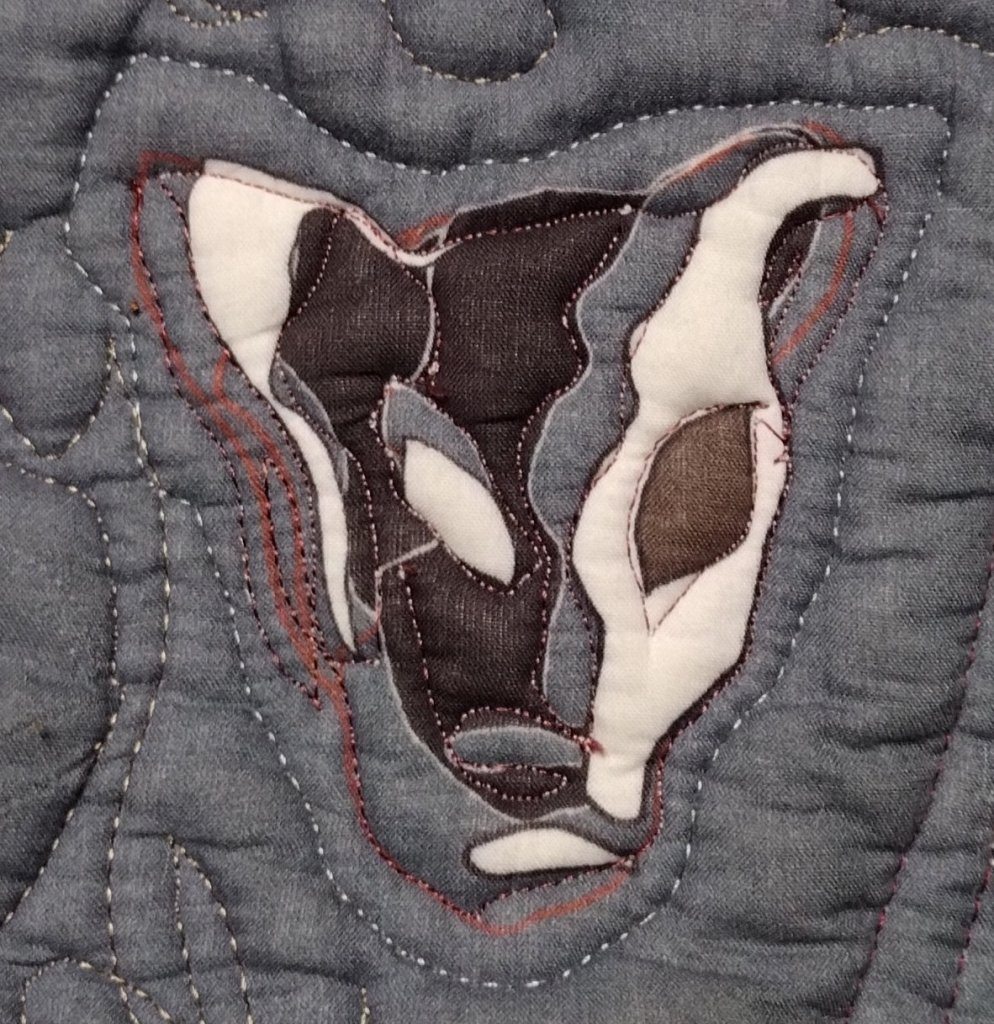
This quilt was a colour experiment, the design is digitally printed onto bamboo silk and still awaiting a border.

Here is Hare Mask no. 7 almost finished, with a few close-ups to show some texture.
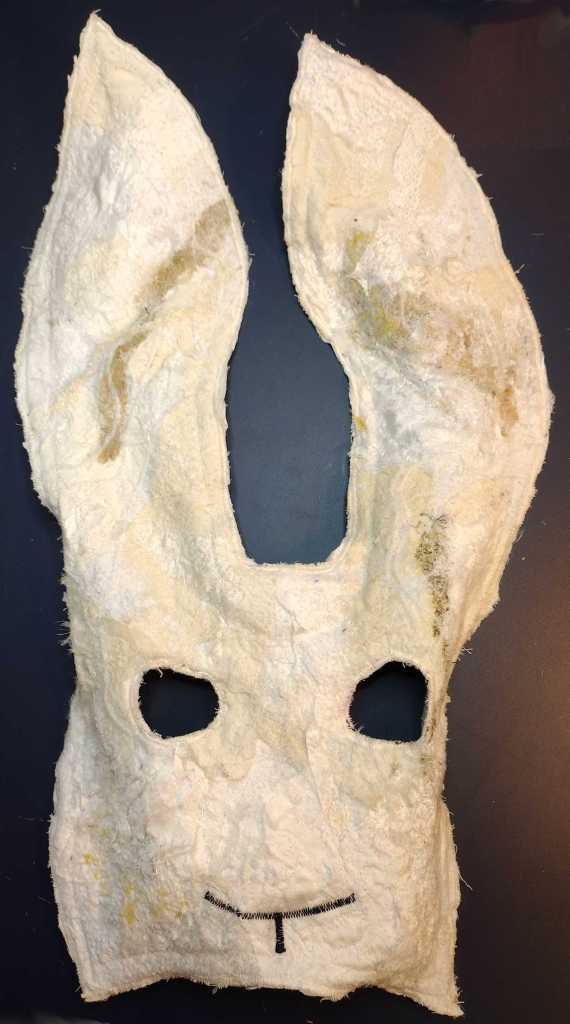


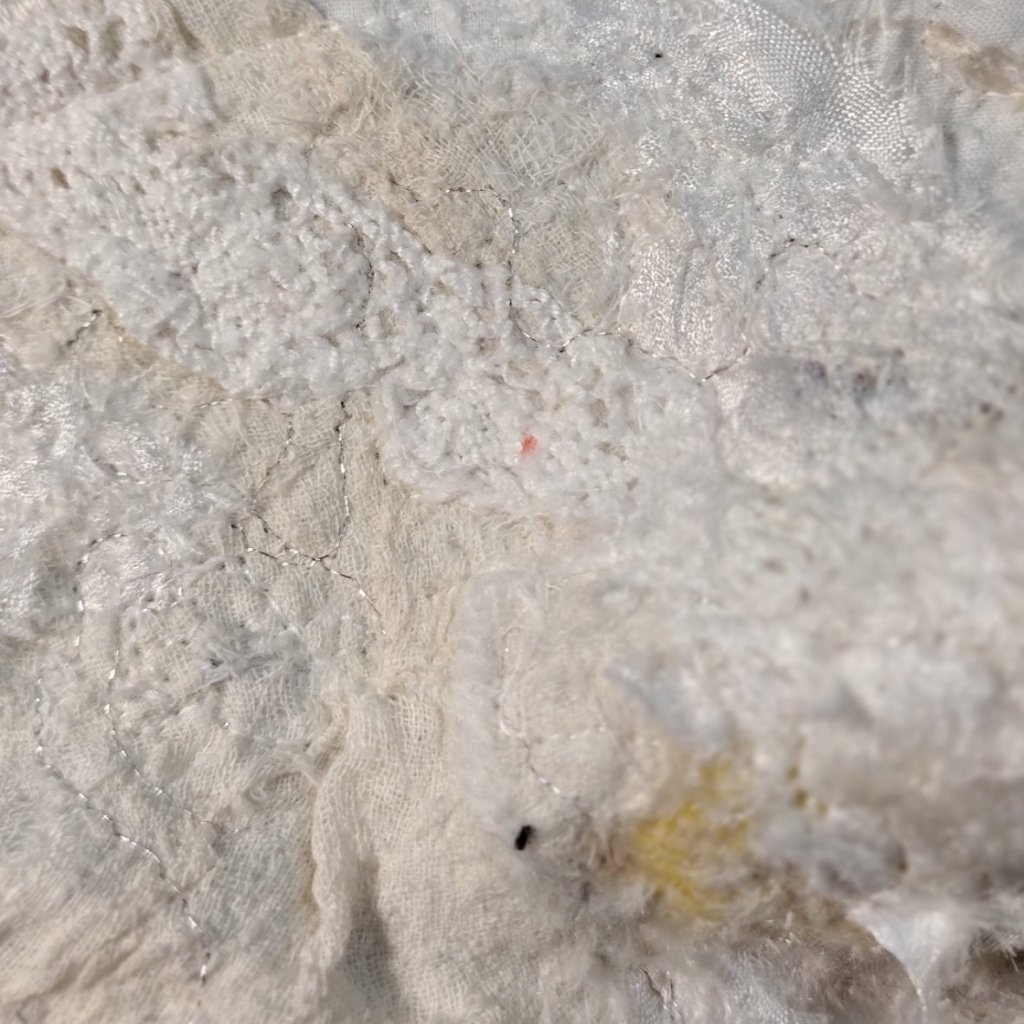
Many of the fabrics used for this mask are organic silk, cotton, linen swatches with some non-organic natural material and the threads are sometimes cotton, some rayon and almost inevitably some polyester for the silver.
 FlagFly