Printmakers: Instructional videos are two-a-penny but not on this subject and not with this level of clarity. Acrylic sheets may not be everyone’s choice but are fairly cheap and can be sent for recycling.
It is possible to do intaglio printmaking with simple equipment and Handprinted have produced instructions for exactly that using the X-Cut Express (die cutter beloved of card makers and some printmakers). Drypoint printing being an intaglio process requires more pressure than relief print but good results are possible. I have also used sticky-back aluminium foil stuch down on acrylic sheet then engraved using a rounded tip tool so as not to tear into the foil.
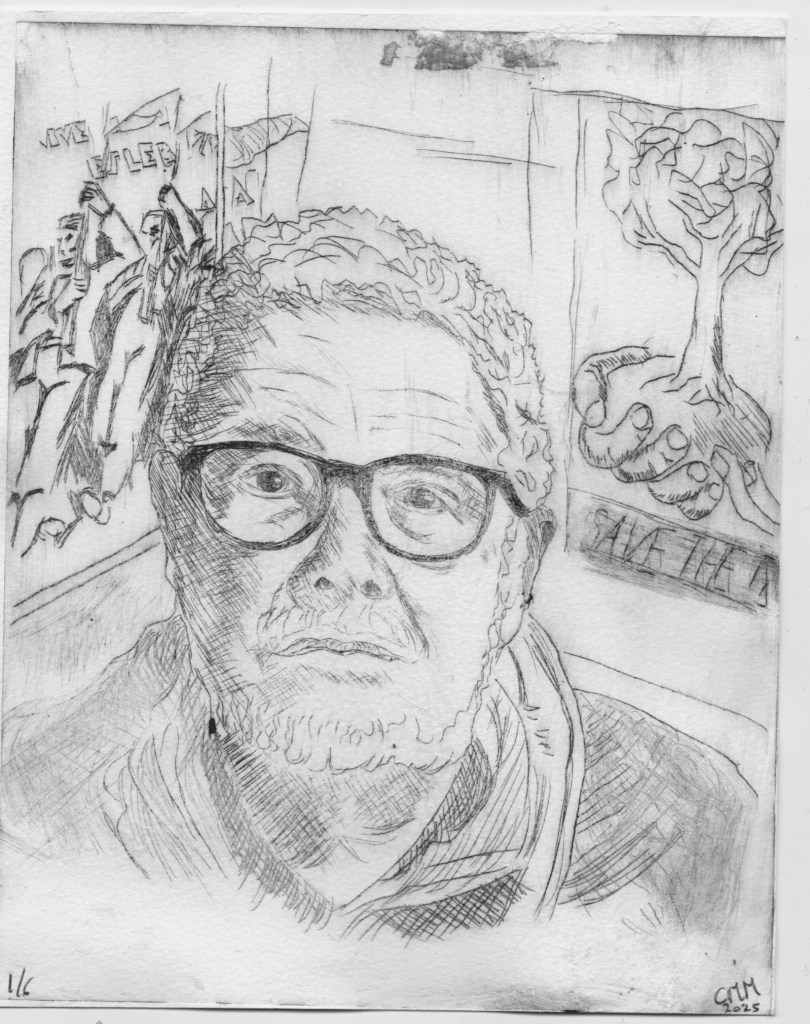
Maria, 20×22 cm drypoint on handmade paper.Martin, 20x25cm drypoint Brian, 20x25cm, drypoint
Not having a ‘wet’ studio I must make do by printmaking in the kitchen, not ideal but still possible to get likeable results, I hope.
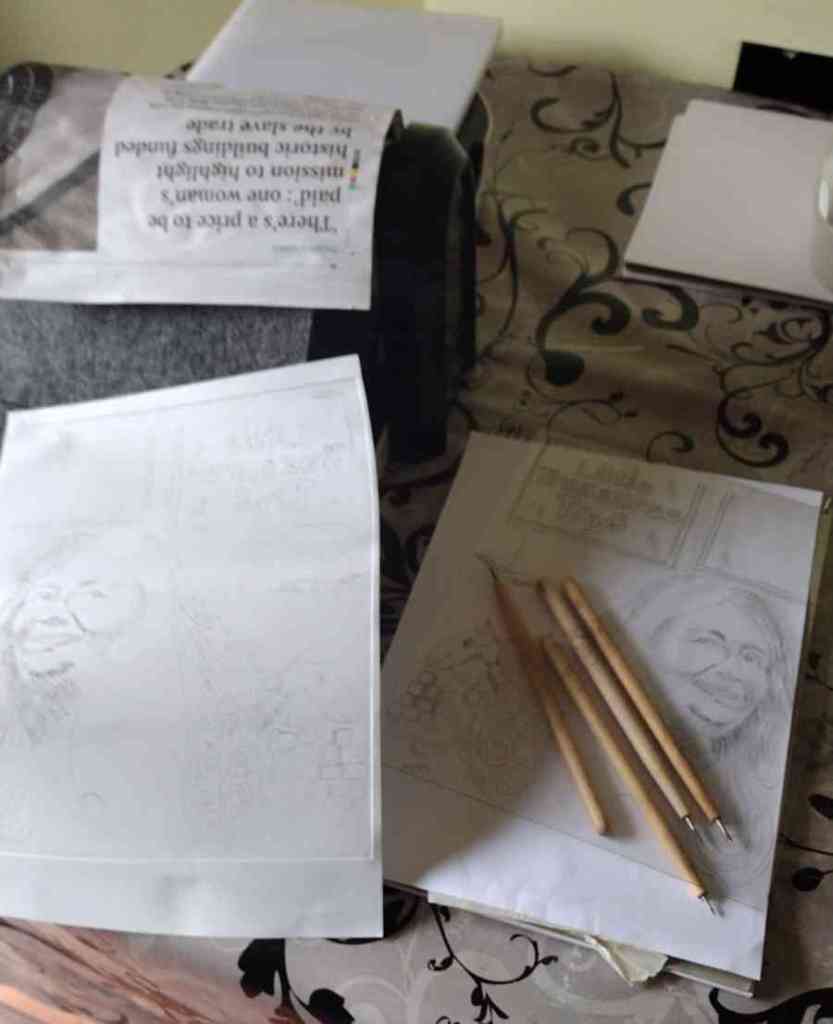
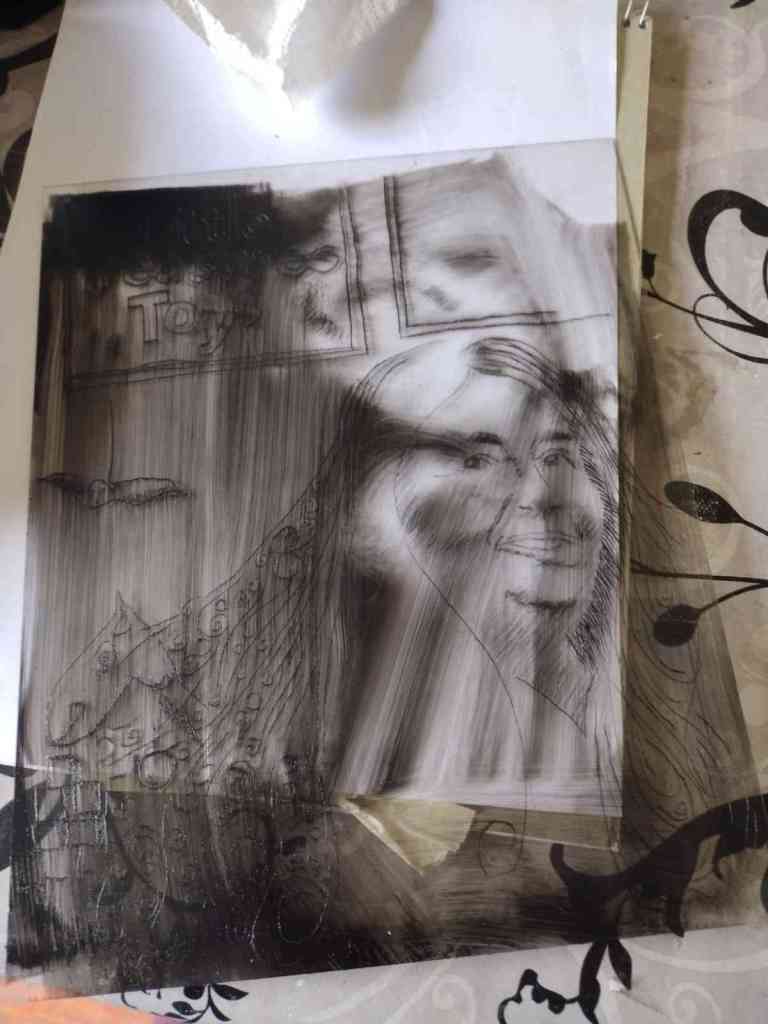
As a long-term project I want to make a series of prints of Church Road people. The A420 runs from Bristol to Oxford but the part I’m interested in is from Lawrence Hill to St. George Park, about a mile, with Easton on the northern side and Redfield on the southern leading down to the river Avon at Netham lock and Barton Hill. I started with some drypoint etching of several folk and today I’ve been adding some colour to one of those sets of prints by making a collagraph plate.
And also doing some more printing from drypoint plates. There isn’t any shortage of subject matter around here, many colourful and friendly characters and bubbling street life. We have live music at the George and Dragon pub every Tuesday or more often, several good places to eat and the Plough Inn in Easton – scene of great music and good food – is just a stroll away. I would like to capture a little all of these riches, and more.
Having used a number of cheap box picture frames (IKEA and Hobbycraft) for textile pieces (examples in this blog early 2024) I have lots of small acrylic sheets as I don’t generally want them at the front of the box frames for displaying textured and heavily embellished work. Although I have noticed that many textile artists do use frames with glass or acrylic. Same issue with impasto painting I think.
“The use of impasto became more or less compulsory in modern art as the view took hold that the surface of a painting should have its own reality rather than just being a smooth window into an illusionist world beyond. With this went the idea that the texture of paint and the shape of the brushmark could themselves help to convey feeling, that they are a kind of handwriting that can directly express the artist’s emotions or response to the subject. A painting in which impasto is a prominent feature can also said to be painterly.
This term carries the implication that the artist is revelling in the manipulation of the paint itself and making the fullest use of its sensuous properties.”
Tate Modern, Art Terms
Window at Artigo, Gloucester Road, Bristol, 2024
One thing these acrylic sheets can be used for is drypoint (intaglio) printmaking and the process is simple, although you do need a press of some sort. I have a X-Cut Express which are mostly used for card making and some relief printmaking but will do a reasonable intaglio job.
X-Cut Express
Something to make a mark on the acrylic sheet is essential, etching tools but only the simplest are needed.
There is a good explanation – and so much more! – of the process at Handprinted blog which is a wonderful instructive resource, they also run courses in the physical world.
I use Akua waterbased inks as they are easy to manage at home, modestly priced. Each print only uses a tiny amount of ink, far more gets wiped from the plate during inking it.
The image is scratched onto the acrylic plate, the print will be the reverse. When the plate is done to satisfaction a test print is taken, then the plate can be cleaned and further incision made as desired…. repeat until satisfaction.
The paper I used was Somerset and was the reverse of old prints I have kept from Uni. Soak the paper and allow excess water to run off so that the damp paper will receive ink, this part is variable and it’s a good idea to make notes. Trial and error but the paper can be quite expensive.
The apparent smudges in this print are actually shadows, as the print dried hanging on the fridge door it needs to be pressed flat.
As long as the printing process is followed carefully it isn’t necessary to use a great deal of pressure and the X-Cut is simple to use and adjust but I still managed to try a bit too hard and cracked the plate! Live and learn.
Most years I manage an outing to the Fashion + Textile Museum in Bermondsey where the shows are always top notch. Nearby is the rather more famous White Cube Gallery, currently featuring American artist Lynne Drexler (1928–99) and others, which makes for an enjoyable trip especially if followed by lunch at Borough Market.
At the moment the FA is showing’ Outlaws: Fashion Renegades of 80s London, “Centres around the legendary nightclub Taboo, opened by designer and performance artist Leigh Bowery in 1985”.
They host workshops and one coming up which caught my eye is by the wonderful textile artist Holly Searle aka The Subversive Stitcher.
“Working on vintage tea towels, Holly will take you through the processes of selection and customisation to help you effectively communicate your ideas. Using simple hand stitching and applique techniques, participants will add text to their designs as Holly speaks about her own design practice and her ongoing project, The Subverted Vintage Tea Towel Series.”
The Return Of The Repressed by Holly Searle “Contemporary cotton tea towel featuring the work of the incredible artist Beryl Cook.”
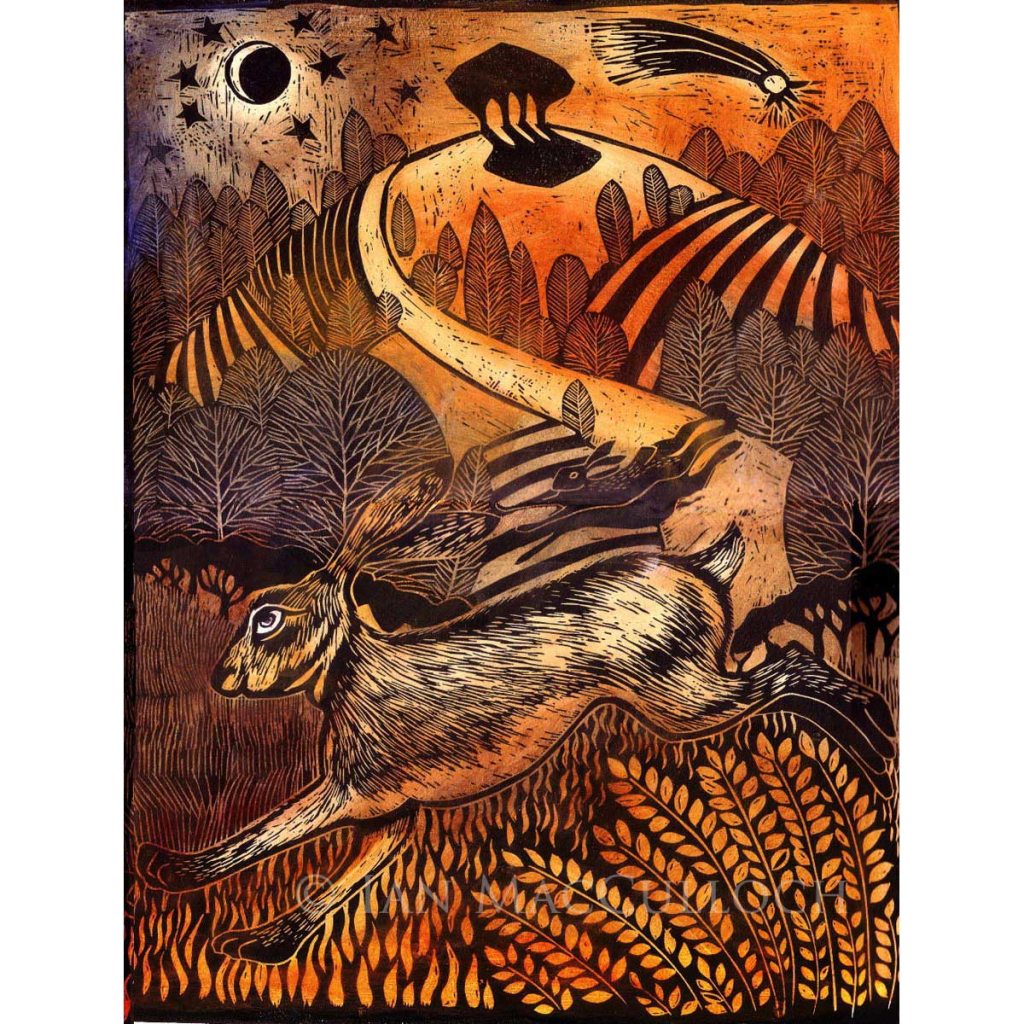
Visiting Bath today and the lovely Topping & Company bookshop -near the Abbey and the Roman Baths – I came across two fairly recently published volumes concerning hares, The Way of the Hare, Marianne Taylor (2017 Bloomsbury) and Raising Hare, Chloe Dalton (2024 Canongate). The first has a linocut print cover by Ian MacCulloch
a terrific printmaker who specialises in wildlife and seems to have a love for the hare. I feel I need to put far more effort into my series of hare masks! Not to mention my printmaking which is sadly neglected since the demise of Cato Press in 2020.
Hare Mask (4) 40x30cm, textile embellished and embroidered.
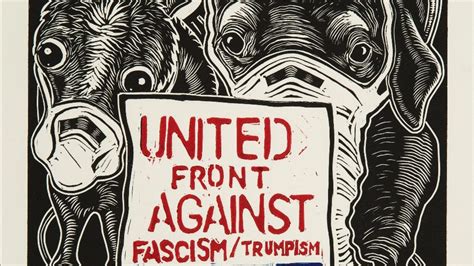
I’m waiting to find out if Requiem for Oil has won a prize in the Bath Open Art Prize Exhibition 2024 – the show is free entry – as the judging was yesterday. The standards of exhibitors are very high so I’m not optimistic. But in the meantime I came across the truly wonderful Sue Coe, an artist and activist working in the USA, born in the UK just a few months later than me. Although I often search for artists who are activists and produce political art I can’t recall seeing her work but she is an illustrator as well as a painter and printmaker and he work has often appeared on the (essential) Counterpunch website, a place I look at almost every day.
United Front Against Trumpism/Fascism, Sue Co
NB. The winners of the Bath Open Arts Prize were: 1st Aran Illingworth (Bag Lady, a textile piece); 2nd Oliver Hurst, (Moth on a Building, oil painting). Many congratulations to both.
I have been reluctant to post this print as it seems er, gloomy but it was really an exercise in cutting away to get the thinest linocut lines and a lot of blank space and still get a print.
I’ve put other links about CoBrA but this is an excellent introduction to the movement written on the 75th anniversary of it’s founding, last year.
As the seeming stampede to world war by the western states and their proxies continues the political stance of the CoBrA artists is more important than ever.
A visit to the CoBrA Museum in Amsterdam is not to be missed if you find yourself in that fair city.
Huile sur toile, Jeune Peinture Belge Dimensions : 87,5 x 160
I stumbled across this article from 2021 while I was preparing a leaflet to accompany my Requiem for Oil quilt which will be on display in Bath next week at the 44AD Gallery.
“The serious art of quilting: the history of patchwork and political activism. The craft of quilting has been around for centuries, and has more recently emerged as a serious art form in its own right. Fiona McKenzie Johnston explores its history and contemporary relevance.”
The ‘art world’ gets a mention in these articles (and many others) but isn’t clearly defined, although it seems to mean the dealers and galleries rather than craft/gift shops and local shows. Quilts, “warm, comfy, fluffy” do get discussed and some contemporary makers get a mention. There is a wealth of craft work which is often undervalued – especially if created by women – and the originality of much of this work as well as it’s innate quality is testimony to it’s real artistic (and monetary) value, in short collectors want it in the same way they wanted ‘native’ and later ‘ethnic’ art.
Most of my textile work isn’t political in any obvious sense and only a little of that which is has been on public show so far.
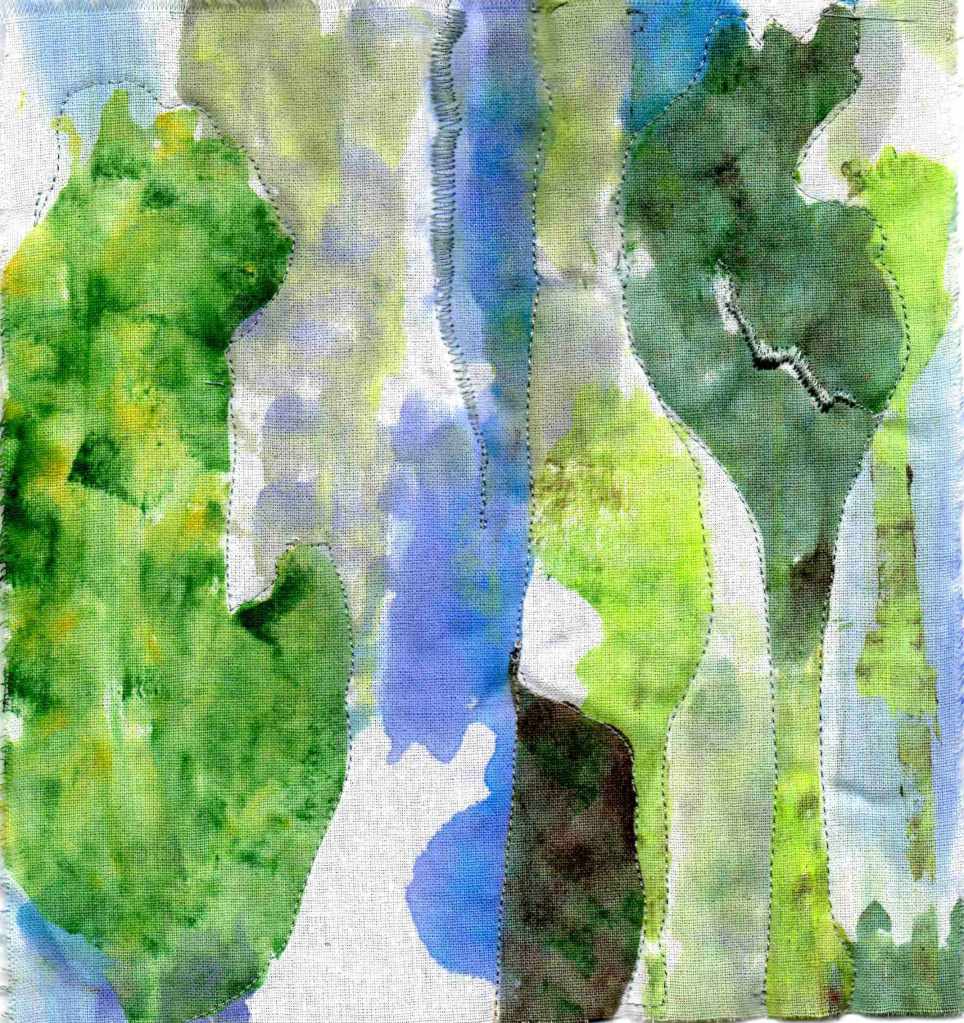
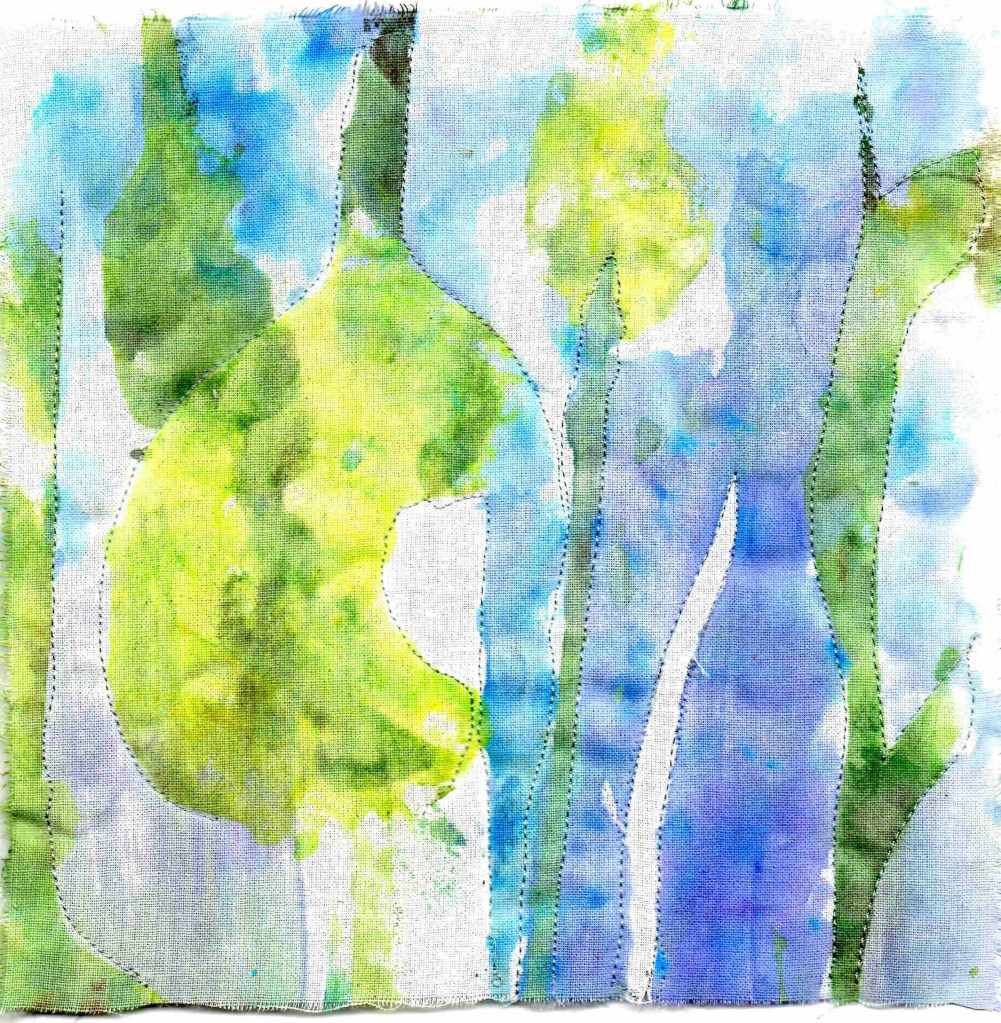
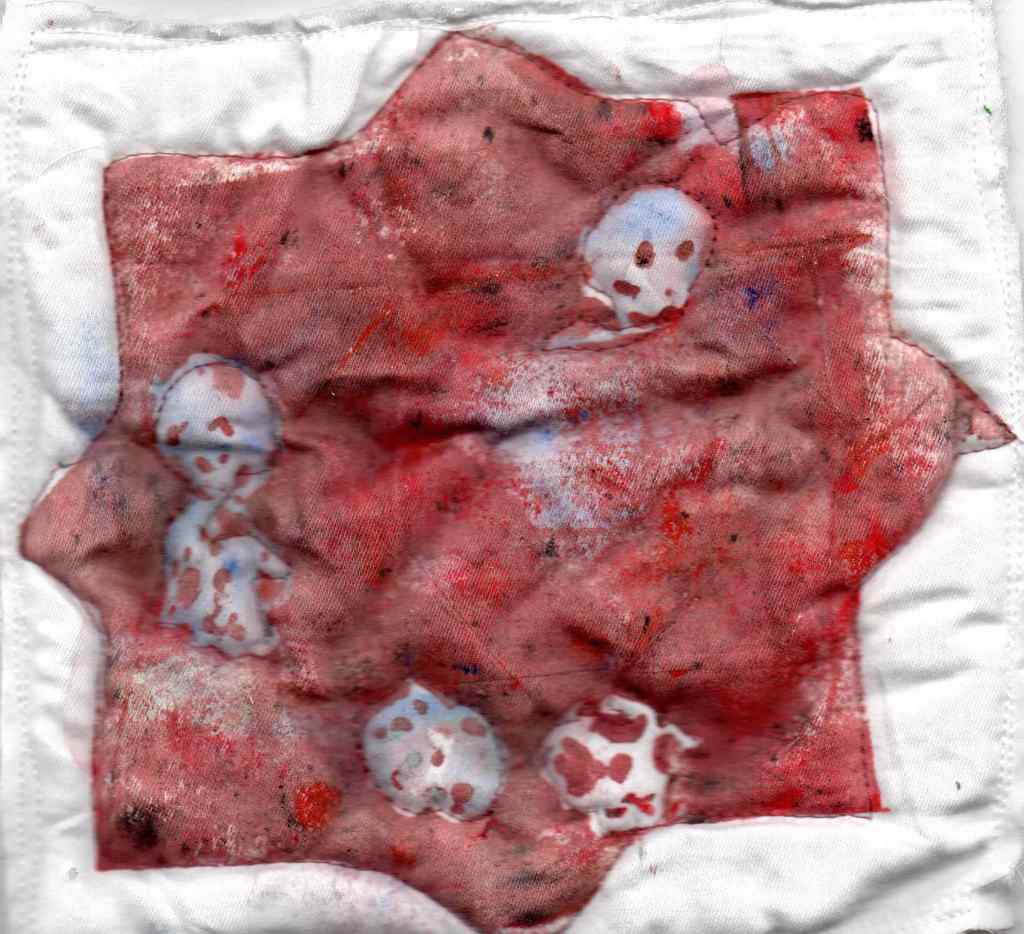
The textile prints below were all based on Afghan poppies, quilted into 15cm squares and intended as a border to a larger quilt called Afghan Wedding, similar in image to the enamel work which is on this blog. But I didn’t much care for the border and so the piece is still waiting to be completed years later.
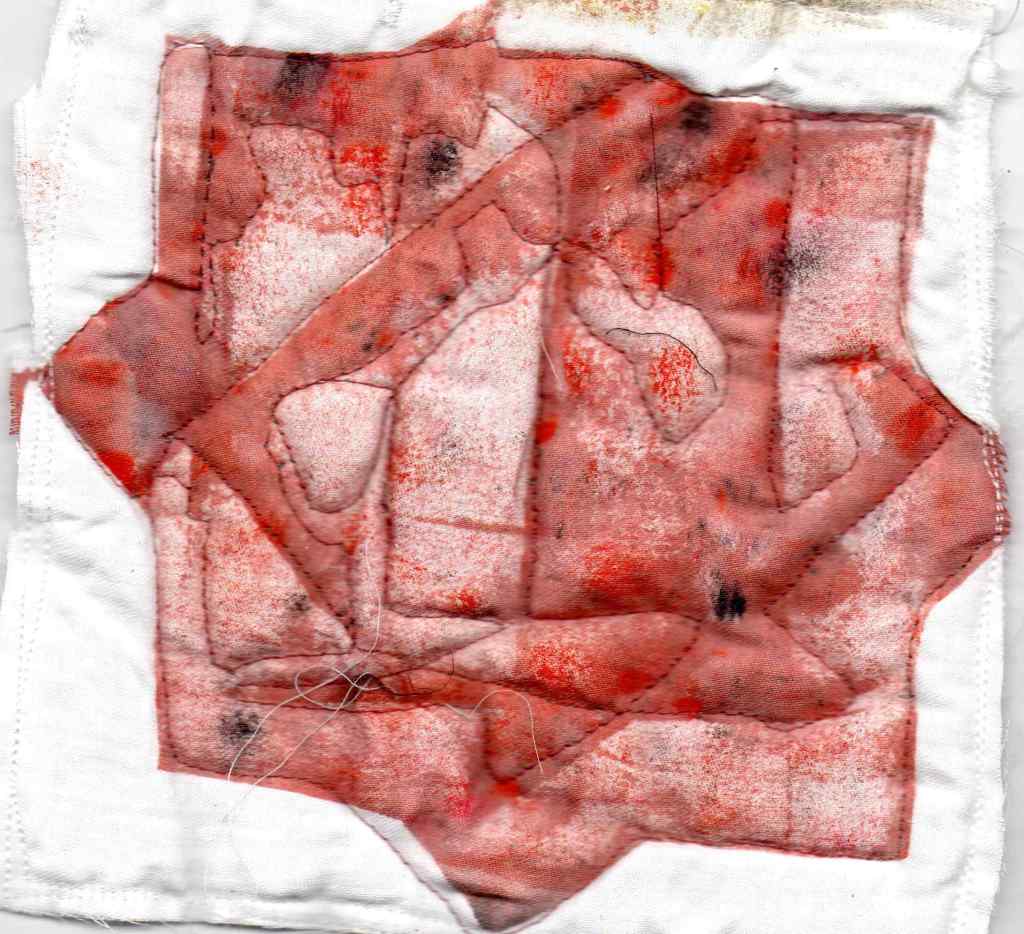
Other squares were based on tile images from Afghan ceramics.
These are all stencil mono-prints, the stencils were cut from thin film and the prints made with soft rollers or sponge, acrylic paint mixed with fabric print medium, quilted after that.
















 FlagFly