“A newspaper clipping glimpsed in a new documentary is headlined “New Mexico’s Infant Mortality Highest in U.S., Report Says.” Lois Lipman’s film explains why that rate is so high for babies, as well as for others, especially Indigenous and Hispanic inhabitants, in her gripping First We Bombed in New Mexico. Onscreen Tina Cordova, born and raised at Tularosa, only 30 miles from the Trinity Site, declares: “We are the first victims of the atomic bomb.””
The above is from Counterpunch+ behind a paywall, but the film First We Bombed in New Mexico is now released, to rave reviews, I hope it gets to the UK very soon. ’Thousands of New Mexicans – mostly Hispanic and Native American – were exposed to catastrophic levels of radioactive fallout, never warned, never acknowledged and never helped afterwards. Generations of cancers followed.‘
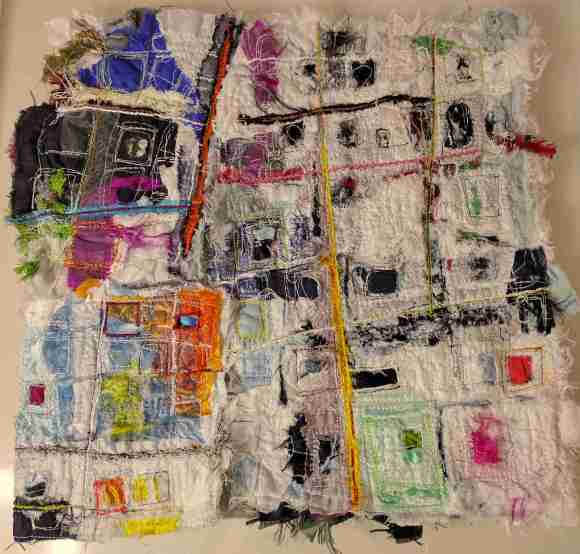
I’ve been working on several pieces in the series I’ve called Meltdown, this is the latest work very much in progress.

I’ve been having a little fun finding names for the pieces instead of just Meltdown 1, 2, 3 &c. and I found, ‘No Risk to the Public’, mildly amusing. The International Atomic Energy ‘Authority’ – the trade body for the nuke industry – likes to claim that far more people have died from the evacuation and it’s subsequent effects at Fukushima than have been irradiated to death, almost as though this is proof that meltdowns are survivable. The fact that a mass evacuation might be necessary at all doesn’t seem to be an issue for them. No one ever needs to be evacuated from a solar or wind farm, biomass converter or a conventional fossil fuel power station. The corium – the many, many tons of melted fuel and containment structure are unlikely to be removed from the site before 2050, if then, because they are too ‘hot’ to handle, even for robots. Of course all that stuff will remain dangerous for thousands of years, there is no safe disposal at this time.
The number of deaths and serious illnesses from radiation released and still being released at Fukushima is disputed and could be many thousands. China, Korea and other states have banned fish from Japan.
The cleanup cost is now estimated at least $200 billion, likely far higher since every estimate so far has proven low – from one incident!


 FlagFly