Several of this series have gone to new homes. I am working on several more, some larger.
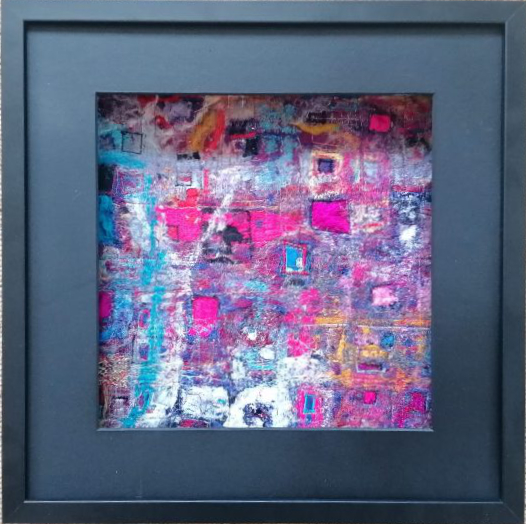
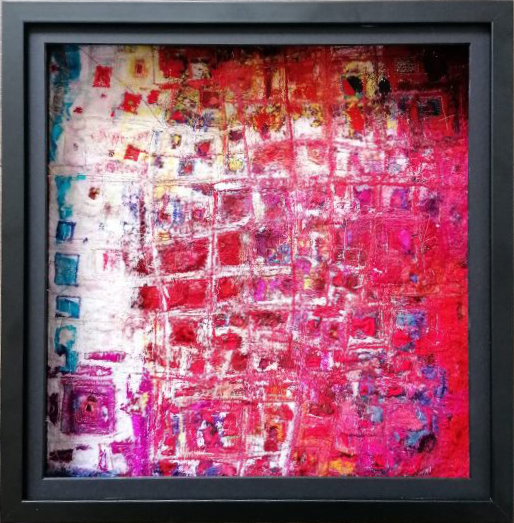
Several of this series have gone to new homes. I am working on several more, some larger.

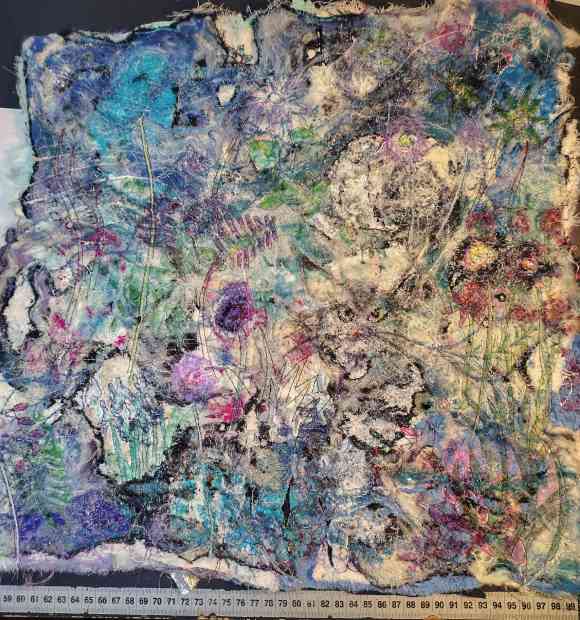
Almost finished, this piece has been hanging around for months waiting for some inspiration as to how to finish it. I tried adding a mouse but that didn’t work well. When in doubt, stitch, but now I’m afraid of wrecking what there is. The surface is rather fragile as it is mainly nunofelt with scraps of fabric below, all stitched and embellished.
One day later… I added a little more stitch, tried to reemphasise the cat but subtly then, deciding it was finished I added a backing. Next a gently wash then seal with very dilute pva. Then press and a frame of some sort.
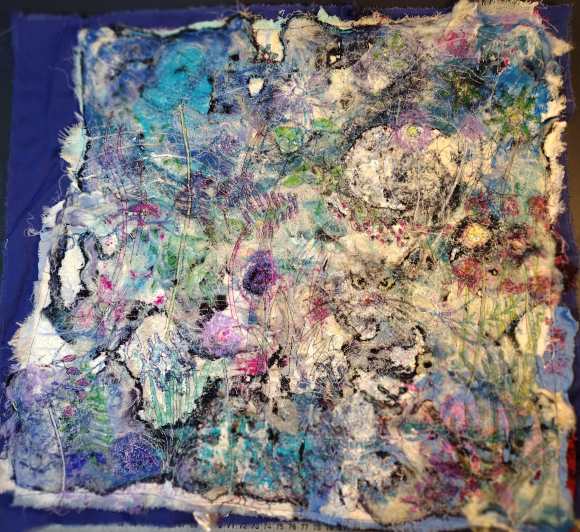
One of the larger piece in the series I called City, but I’m not sure about the framing.
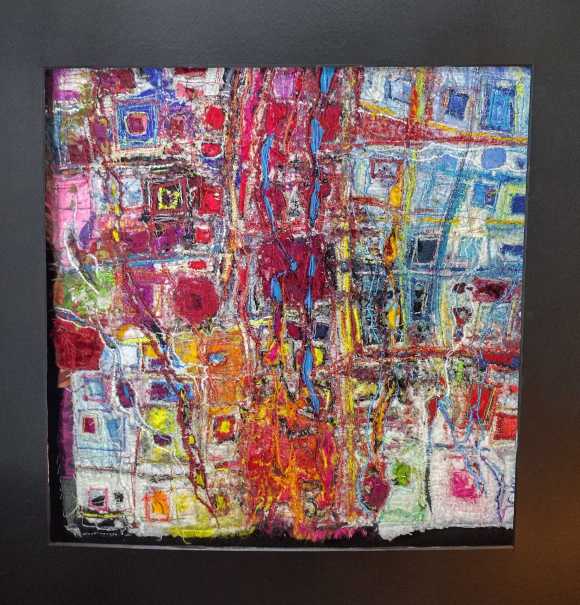
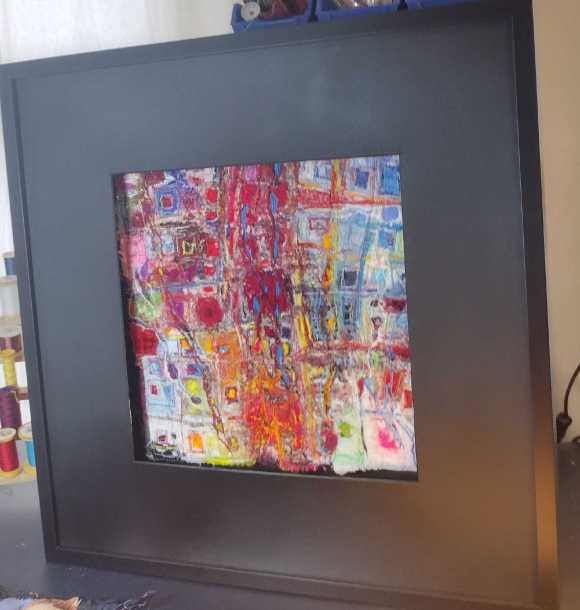
When I was making or remaking embellished work of this type a year or more ago I categorised them all as part of sets called either Meltdown or City, (1,2,3 etc) but later some of them seemed to find other names. This one is now In the Sun. Most of the pics I put on this blog or elsewhere are quite low resolution by current online standards but this one has a few more pixels.

It can be satisfying to take colour to an extreme.
Having decided to try and sell separately the nine Hare Masks I made at the end of last year I found suitable but utilitarian cardboard boxes and have been dithering about how to dress them to make a more attractive appearance for eBay and for the purchaser when opening the box. Tissue paper, crumpled, some shredded?
The masks are meant primarily as decorative objects but can be worn, The straps are non-curl 6cm elastic. The inner surface is cotton and the main surface mixed textiles but mainly natural fabrics, some organic. I often source fabric from charity shops but it is hard to avoid acrylic and poly. Rayon (viscose) – made from wood pulp – is common in women’s clothes often with a useful shiny finish.
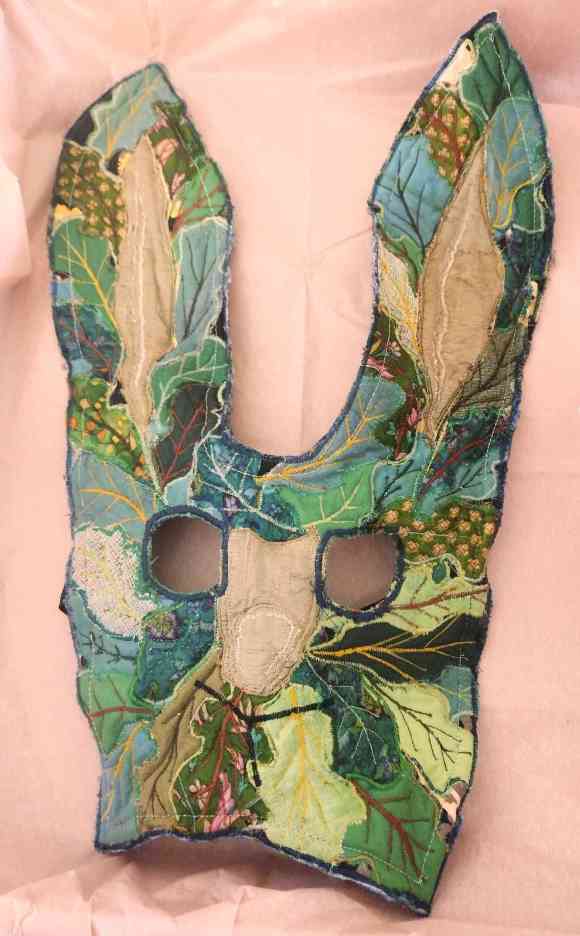


A quite simple mask made with embellished fabric, two pieces and a strap of non-curl 2.5cm elastic.

I’m waiting for the post to bring some 18g (1mm) aluminium wire to make the supporting frame for these masks, the embellished fabric in this first pic is a bit heavier than usual (lower pic) and so needs a slightly stiffer wire.
Once the fabric versions are complete, maybe five or six, I’m going to start on some leather ones, with a somewhat different set of tools although the sewing machine will still play a part.
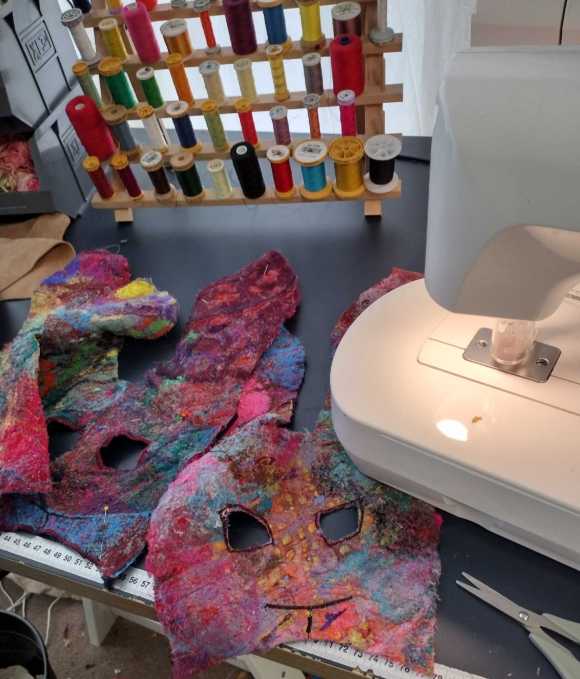
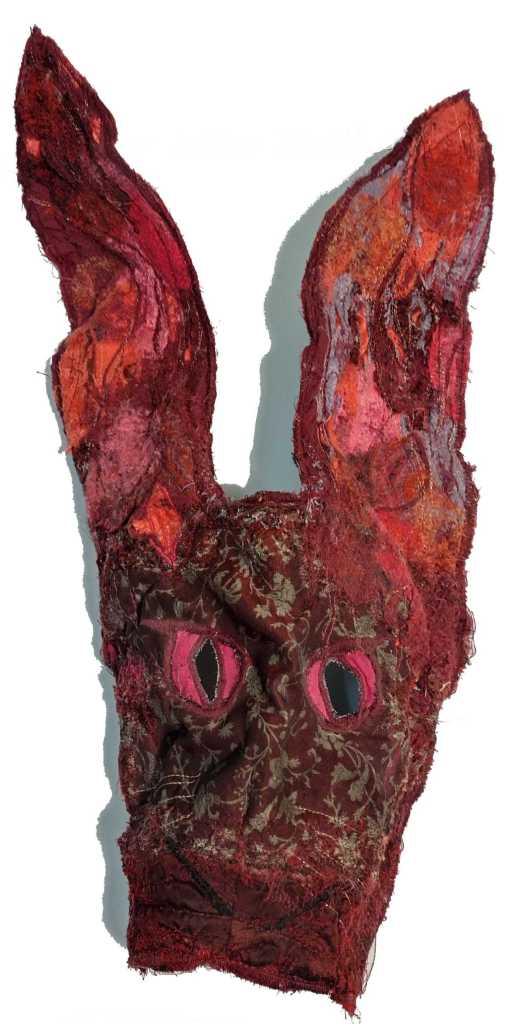
Mostly finished and mostly a trial for the shaping and finishing.
The pleasure of textiles might be related to the fact we are literally surrounded by them from birth, almost instantly wrapped even before being presented to our mothers. A huge part of human endeavour is to clothe ourselves, keep us warm with bedding, cosseted with cushions. Decorative fabrics and upholstery play large parts in our lives and we expend a goodly portion of our income on all these things.
It’s thought that humans have been using clothing (skins) for at least 500,000 years but when we began decorating those clothes is not yet known. Decorative fabrics were used by ancient civilisations although examples are vanishingly rare, unlike clay pots they mostly cannot usually survive time.
The infinite possibilities of textile art offer a tempting panorama but in order to achieve anything it is necessary to restrict oneself to just a tiny fraction of that view, I think. I posted a little about making this piece last November and I haven’t found a use for it yet but I’m sure it will get used.
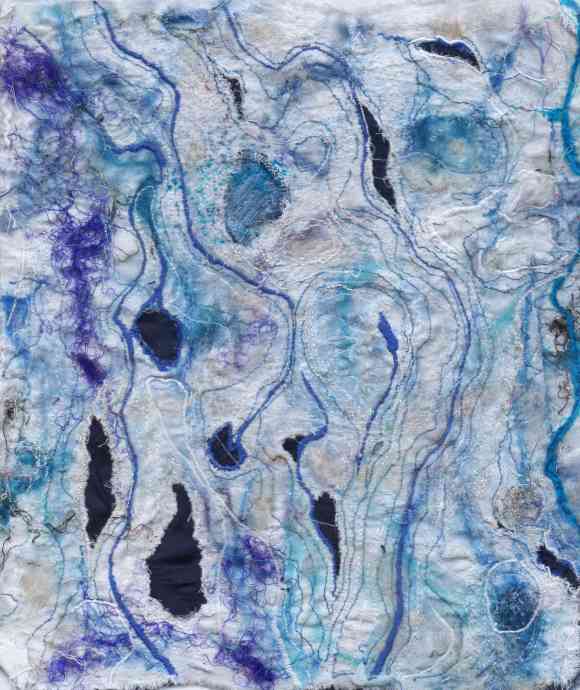
Making this I was inspired by Sarah Ross-Thompson, printmaker of renown and the photographs she often posts on Facebook.

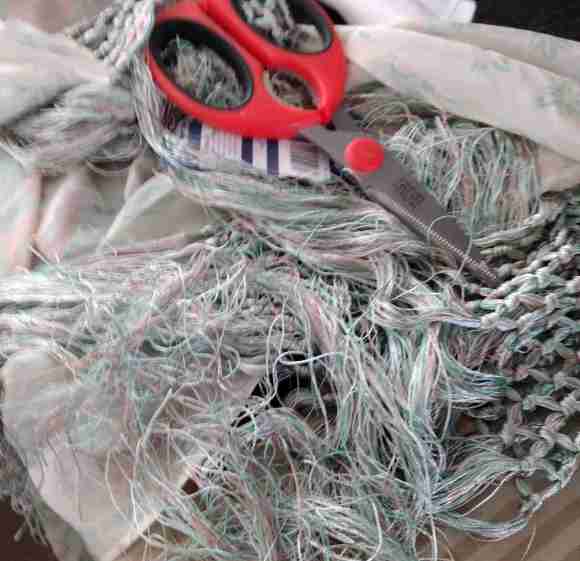
Now and then the UK charity shops are just amazing. I was browsing them this rainy morning in Bristol and found, in one shop four huge cotton scarfs in plain colours for just £2 each. Another one was just demanding to be used for doll-making, plaits and braids ready-made. All in good condition, as new. Now I’m reluctant to cut them!

 FlagFly