This is an ode I wrote and illustrated for my granddaughter a few years ago, an antidote to the sickly hearts and roses (but not chocs, obviously).

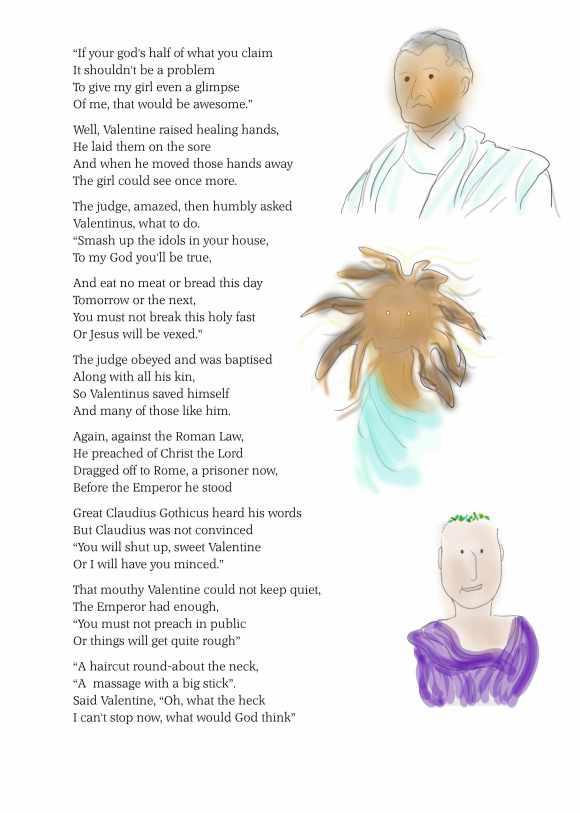
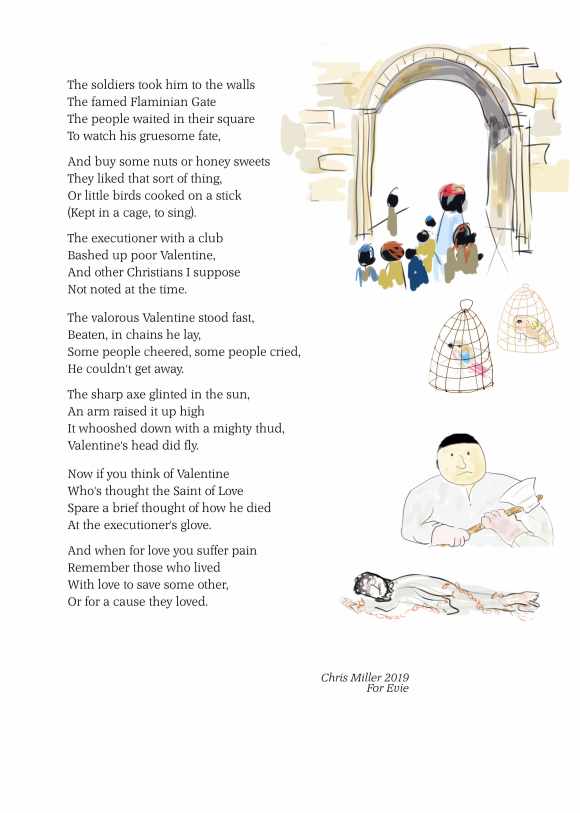
This is an ode I wrote and illustrated for my granddaughter a few years ago, an antidote to the sickly hearts and roses (but not chocs, obviously).
Having used a number of cheap box picture frames (IKEA and Hobbycraft) for textile pieces (examples in this blog early 2024) I have lots of small acrylic sheets as I don’t generally want them at the front of the box frames for displaying textured and heavily embellished work. Although I have noticed that many textile artists do use frames with glass or acrylic. Same issue with impasto painting I think.
“The use of impasto became more or less compulsory in modern art as the view took hold that the surface of a painting should have its own reality rather than just being a smooth window into an illusionist world beyond. With this went the idea that the texture of paint and the shape of the brushmark could themselves help to convey feeling, that they are a kind of handwriting that can directly express the artist’s emotions or response to the subject. A painting in which impasto is a prominent feature can also said to be painterly.
This term carries the implication that the artist is revelling in the manipulation of the paint itself and making the fullest use of its sensuous properties.”
Tate Modern, Art Terms

One thing these acrylic sheets can be used for is drypoint (intaglio) printmaking and the process is simple, although you do need a press of some sort. I have a X-Cut Express which are mostly used for card making and some relief printmaking but will do a reasonable intaglio job.

Something to make a mark on the acrylic sheet is essential, etching tools but only the simplest are needed.

There is a good explanation – and so much more! – of the process at Handprinted blog which is a wonderful instructive resource, they also run courses in the physical world.

I use Akua waterbased inks as they are easy to manage at home, modestly priced. Each print only uses a tiny amount of ink, far more gets wiped from the plate during inking it.

The image is scratched onto the acrylic plate, the print will be the reverse. When the plate is done to satisfaction a test print is taken, then the plate can be cleaned and further incision made as desired…. repeat until satisfaction.
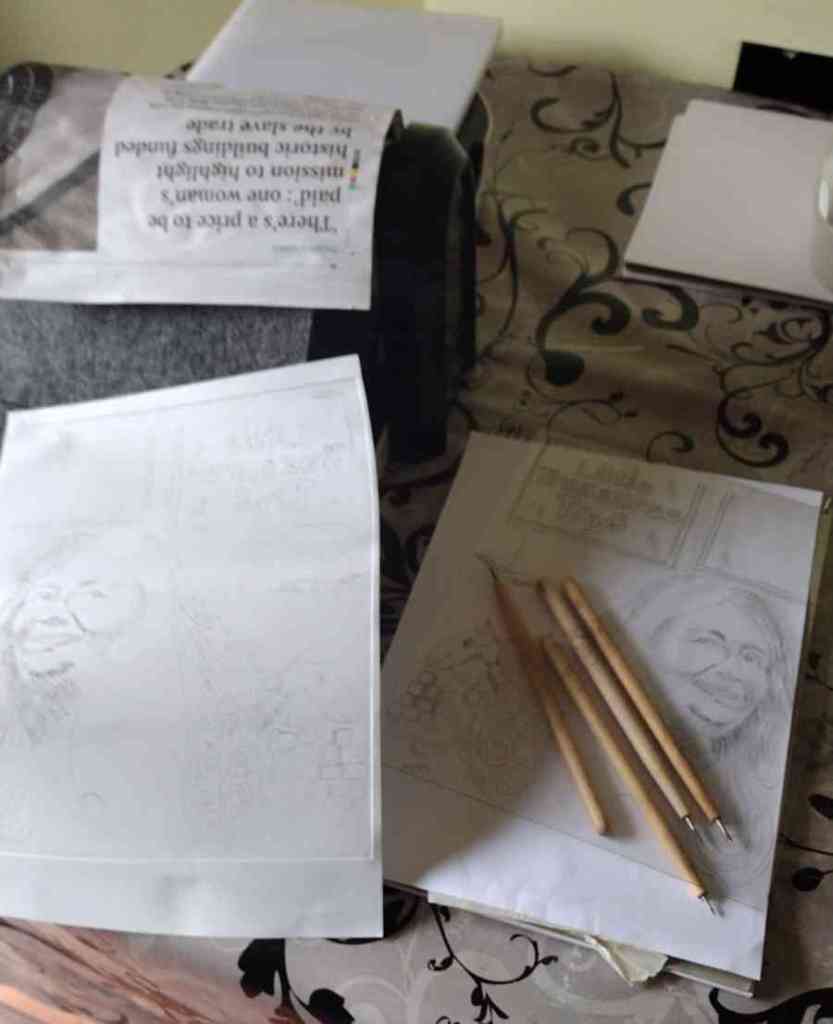
The paper I used was Somerset and was the reverse of old prints I have kept from Uni. Soak the paper and allow excess water to run off so that the damp paper will receive ink, this part is variable and it’s a good idea to make notes. Trial and error but the paper can be quite expensive.
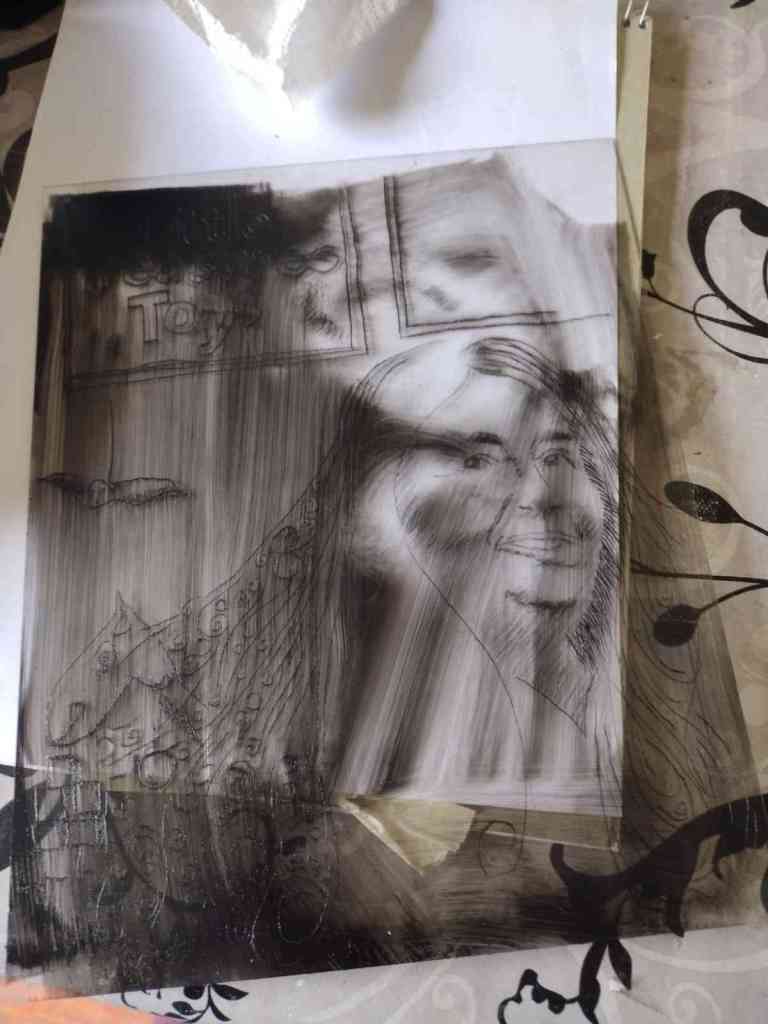

The apparent smudges in this print are actually shadows, as the print dried hanging on the fridge door it needs to be pressed flat.
As long as the printing process is followed carefully it isn’t necessary to use a great deal of pressure and the X-Cut is simple to use and adjust but I still managed to try a bit too hard and cracked the plate! Live and learn.
Having decided to try and sell separately the nine Hare Masks I made at the end of last year I found suitable but utilitarian cardboard boxes and have been dithering about how to dress them to make a more attractive appearance for eBay and for the purchaser when opening the box. Tissue paper, crumpled, some shredded?
The masks are meant primarily as decorative objects but can be worn, The straps are non-curl 6cm elastic. The inner surface is cotton and the main surface mixed textiles but mainly natural fabrics, some organic. I often source fabric from charity shops but it is hard to avoid acrylic and poly. Rayon (viscose) – made from wood pulp – is common in women’s clothes often with a useful shiny finish.
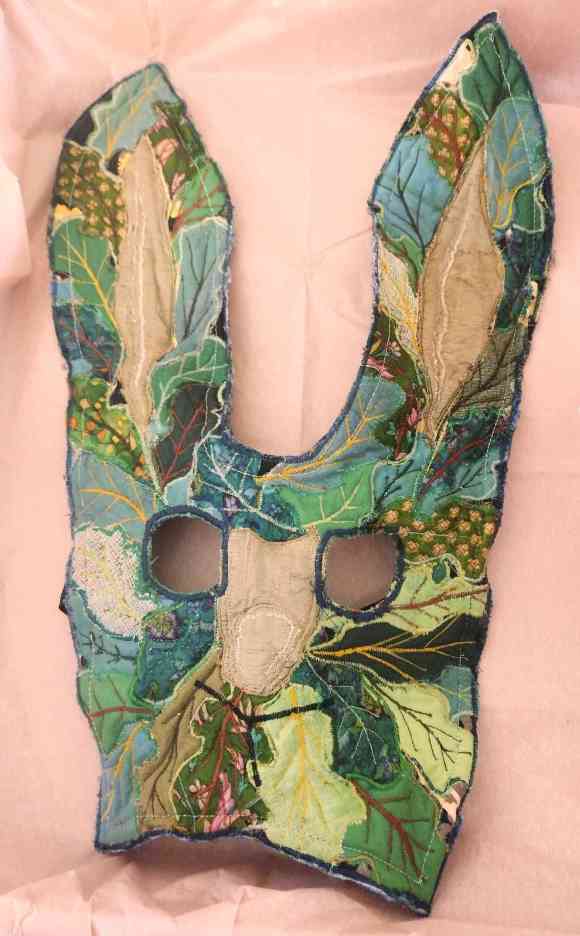


A quite simple mask made with embellished fabric, two pieces and a strap of non-curl 2.5cm elastic.

Although each of the nine masks didn’t take a great deal of time to make the finishing has required more effort than I anticipated, I could have reduced that by being a little more careful with the making. Notes have been made ready for the next project! Natural fabrics have been used throughout, some organic but some of the shiny stuff is polyester – it can be hard to avoid. The thread is almost all organic as I like the extra strength and quality, with some rayon and again a little poly.
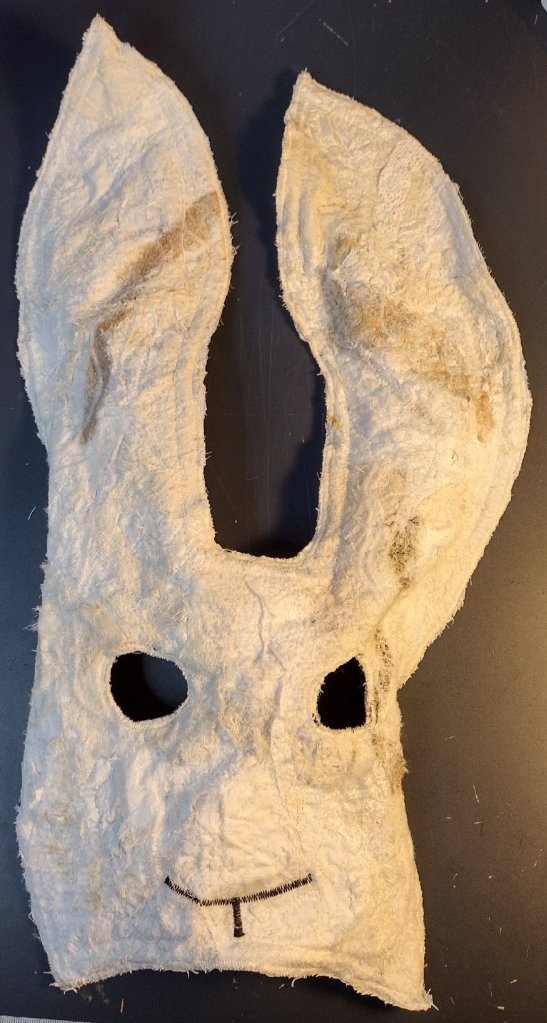

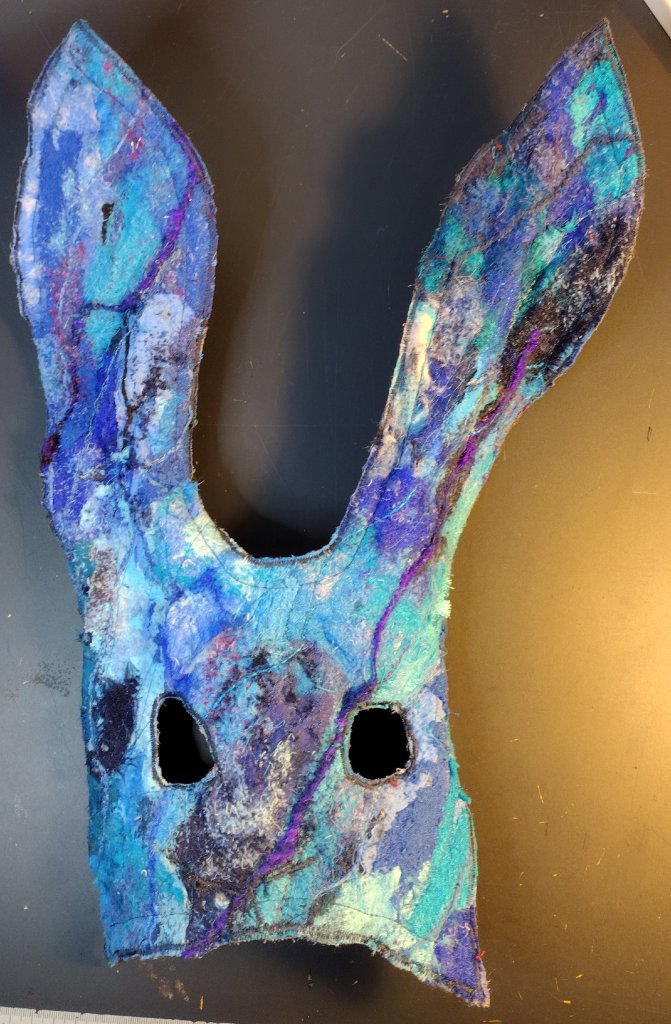


Nine Hare Masks, each approx 42 x 30 cm, mixed fabrics & wire, 2024 C.Miller
I’m amazed to say that I got the People’s Choice prize at the Bath Open Art show which finished on Saturday 26th October (2024).


I stumbled across this article from 2021 while I was preparing a leaflet to accompany my Requiem for Oil quilt which will be on display in Bath next week at the 44AD Gallery.
“The serious art of quilting: the history of patchwork and political activism. The craft of quilting has been around for centuries, and has more recently emerged as a serious art form in its own right. Fiona McKenzie Johnston explores its history and contemporary relevance.”
Another article looking at the same theme, from 2020 by Isis Davis-Marks https://www.artsy.net/article/artsy-editorial-quiltmakings-deep-traditions-influencing-contemporary-art
The ‘art world’ gets a mention in these articles (and many others) but isn’t clearly defined, although it seems to mean the dealers and galleries rather than craft/gift shops and local shows. Quilts, “warm, comfy, fluffy” do get discussed and some contemporary makers get a mention. There is a wealth of craft work which is often undervalued – especially if created by women – and the originality of much of this work as well as it’s innate quality is testimony to it’s real artistic (and monetary) value, in short collectors want it in the same way they wanted ‘native’ and later ‘ethnic’ art.
Most of my textile work isn’t political in any obvious sense and only a little of that which is has been on public show so far.
The textile prints below were all based on Afghan poppies, quilted into 15cm squares and intended as a border to a larger quilt called Afghan Wedding, similar in image to the enamel work which is on this blog. But I didn’t much care for the border and so the piece is still waiting to be completed years later.


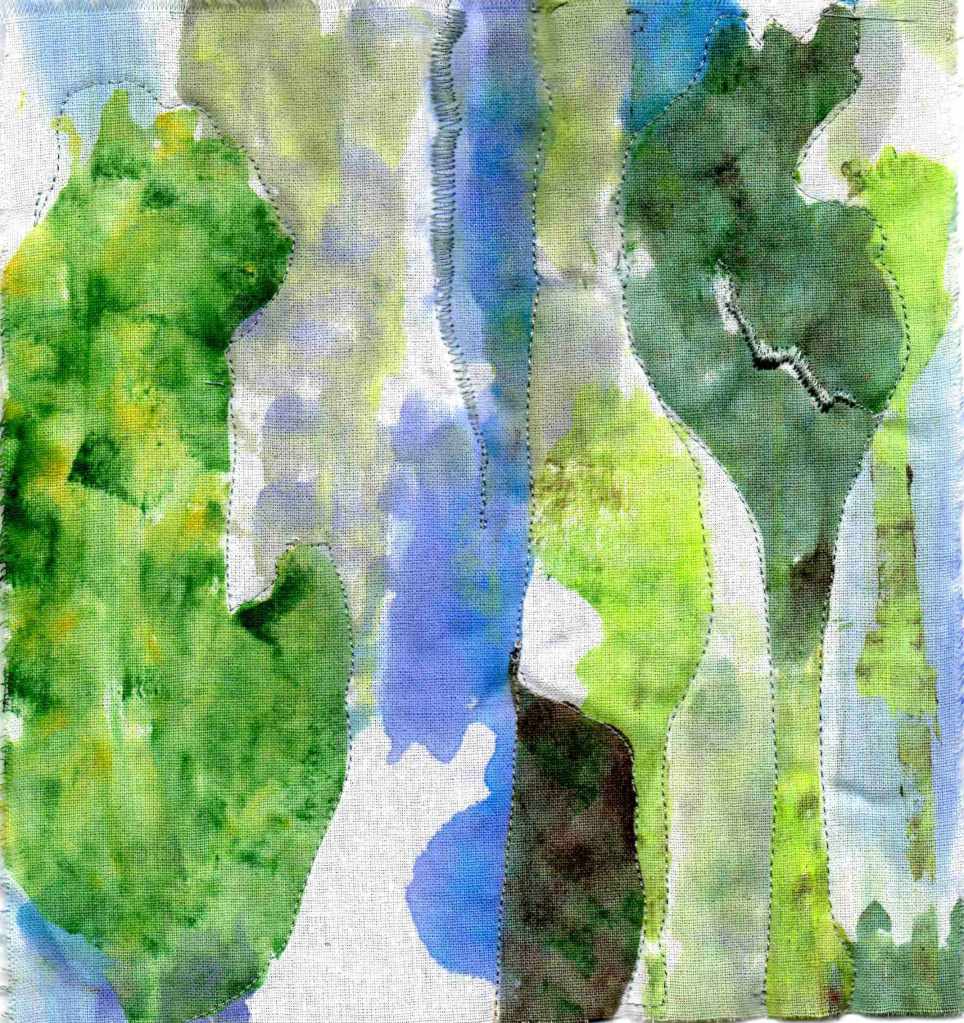


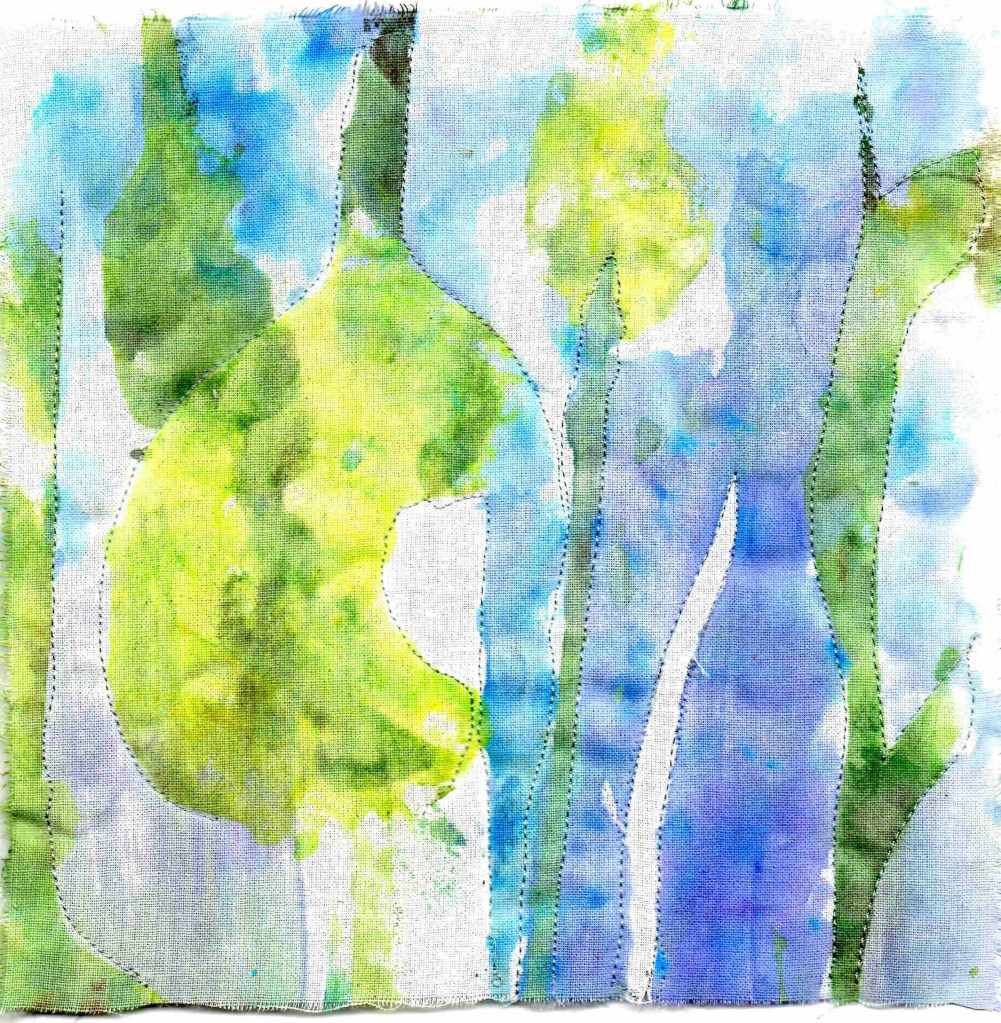


Other squares were based on tile images from Afghan ceramics.
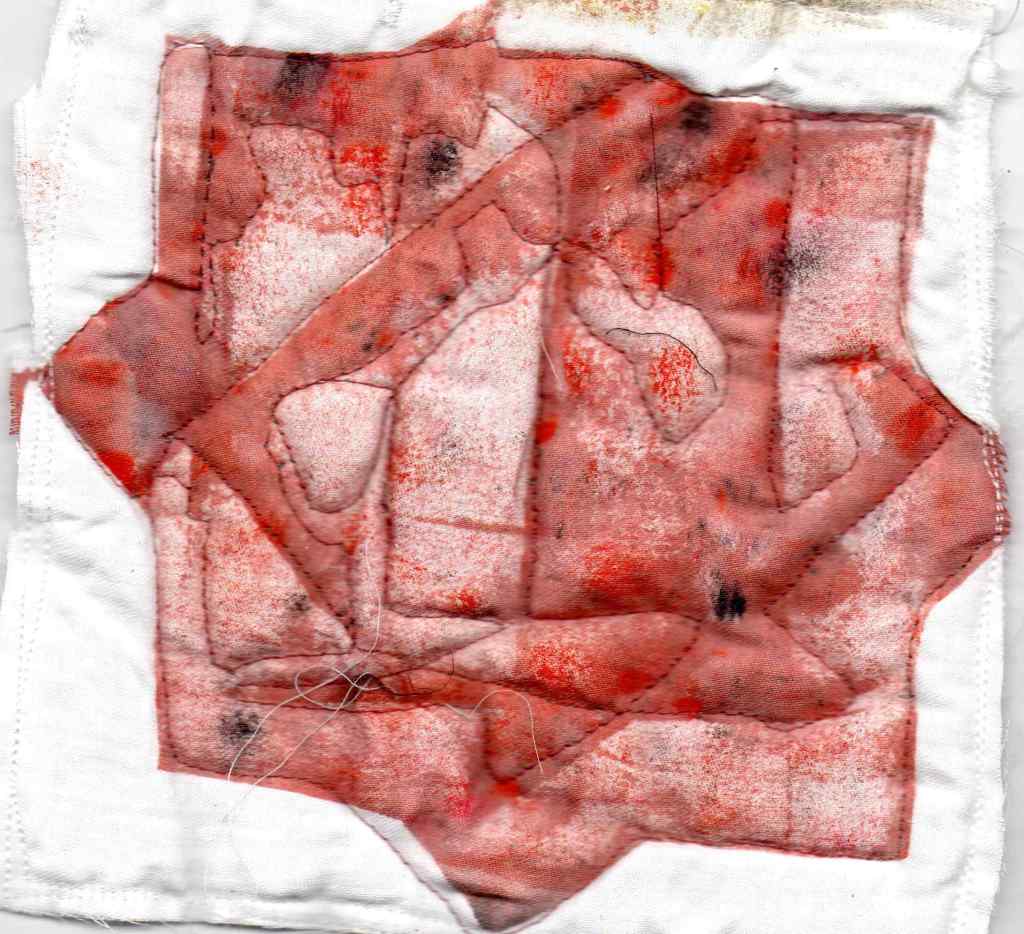


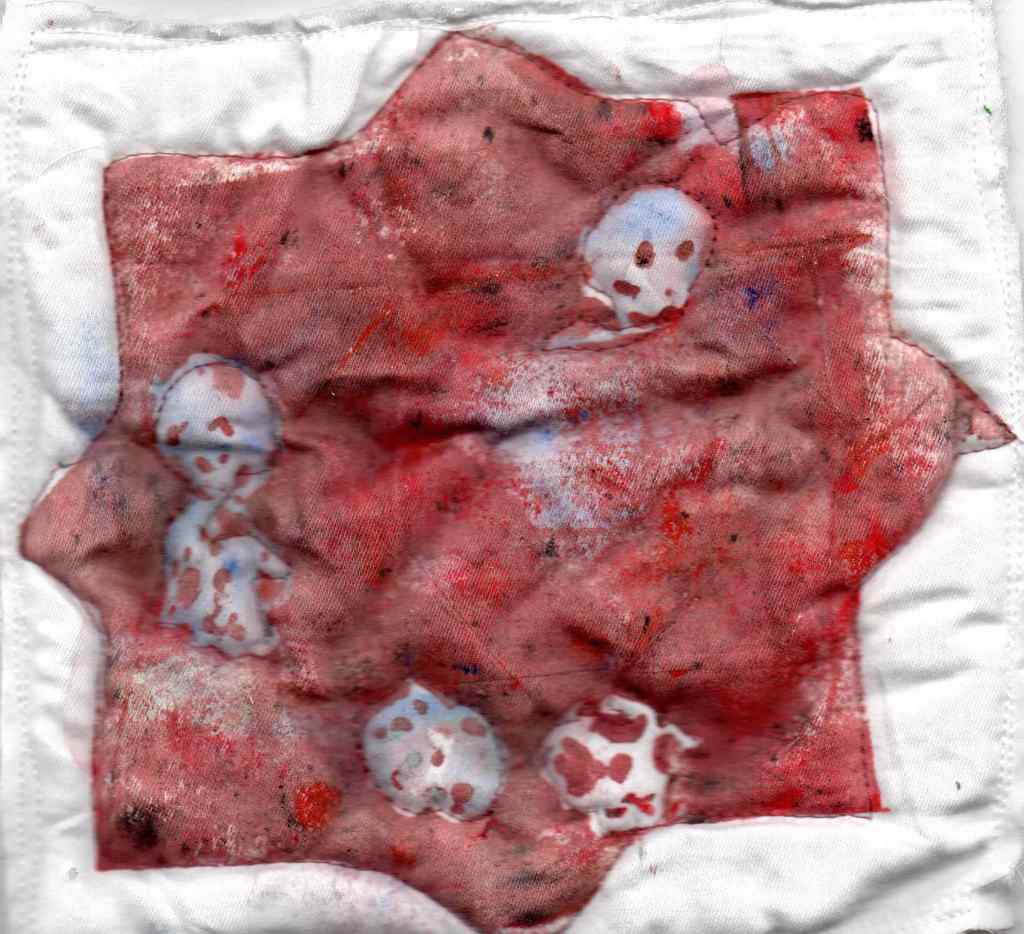
These are all stencil mono-prints, the stencils were cut from thin film and the prints made with soft rollers or sponge, acrylic paint mixed with fabric print medium, quilted after that.

Afghan Wedding quilt, for in progress in 2019.
My work Requiem for Oil has been selected for the Bath Open Art Prize Exhibition 2024. There are other pics of work in progress earlier in this blog.
Prize winners will be announced by judges Leonie Bradley and Karen Wallis on Friday 11th October, wish me luck!
The exhibition runs:
10th to 26th October
open 11am-5pm daily
at 44AD artspace, Bath BA1 1NN (this gallery is in the centre of Bath)
bathopenartprize.co.uk
fringeartsbath.co.uk
#BOAP2024
Thank you to organisers Fringe Arts Bath @fringeartsbath and the prize’s supporters for this opportunity: @Wessex_Area @thebellinnbath @studio44ad @minervaartshop

Poster artwork: Andrew Jenner, Sunday in the Park with George @the_dolliverer
Working on fabric I usually have several pieces on the go, large and small. The smaller pieces sometimes get joined or incorporated into larger work.
This is an example of a series I called City, there are some larger and some smaller, framed and unframed.
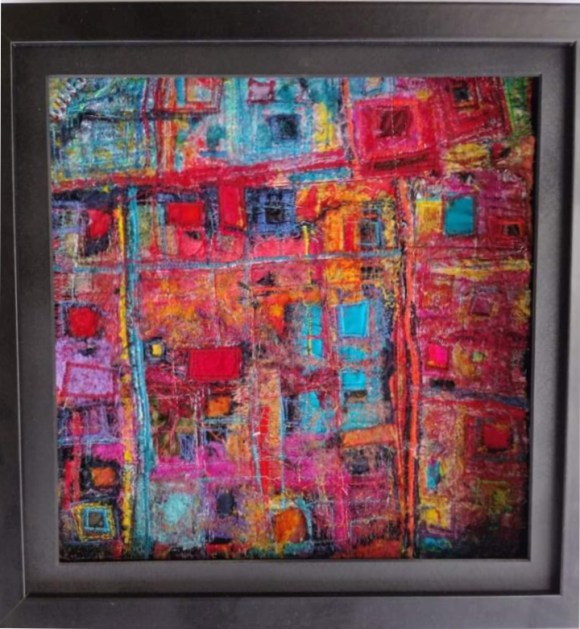
Part of an on-going study of colour.
A short walk from my home In Bristol Studio hosts a wide range of artists and makers – what a city! – “…an artist-led studio and home to over 50 artists and makers who work across multiple disciplines.” There are classes here and occasionally expos, the BS5 Arts Trail event on September 7th and 8th 2024 will be an open studio event.


