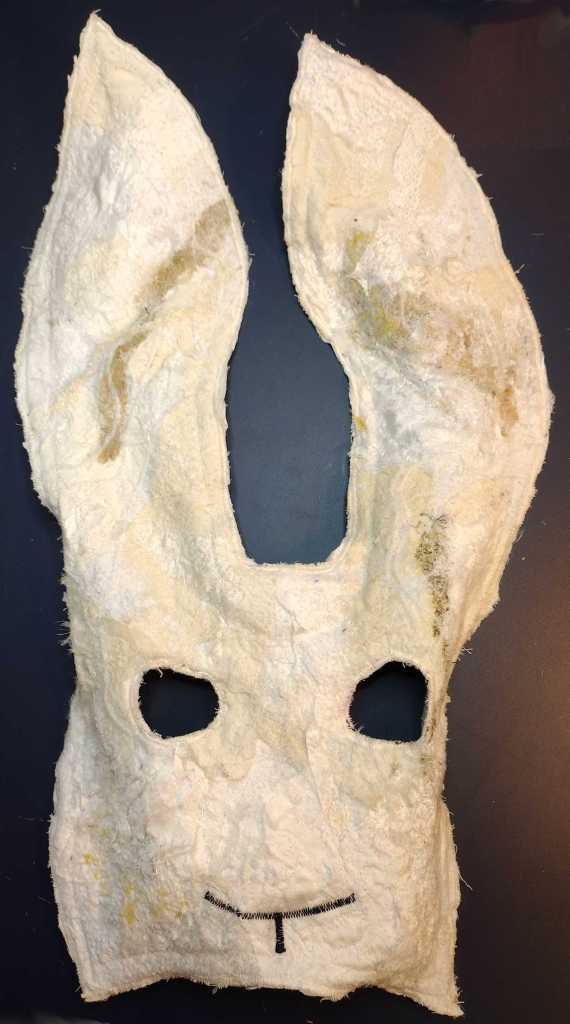
Having decided to try and sell separately the nine Hare Masks I made at the end of last year I found suitable but utilitarian cardboard boxes and have been dithering about how to dress them to make a more attractive appearance for eBay and for the purchaser when opening the box. Tissue paper, crumpled, some shredded?
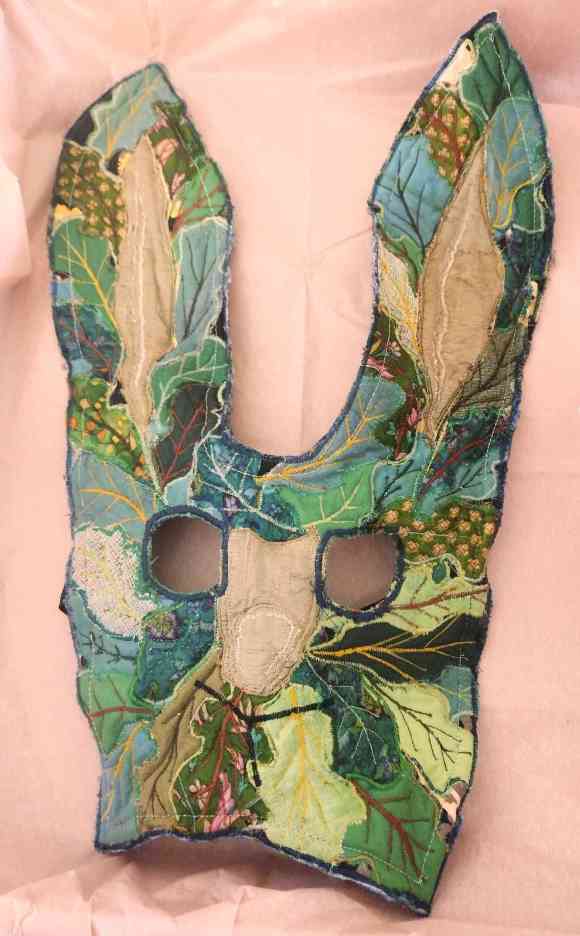
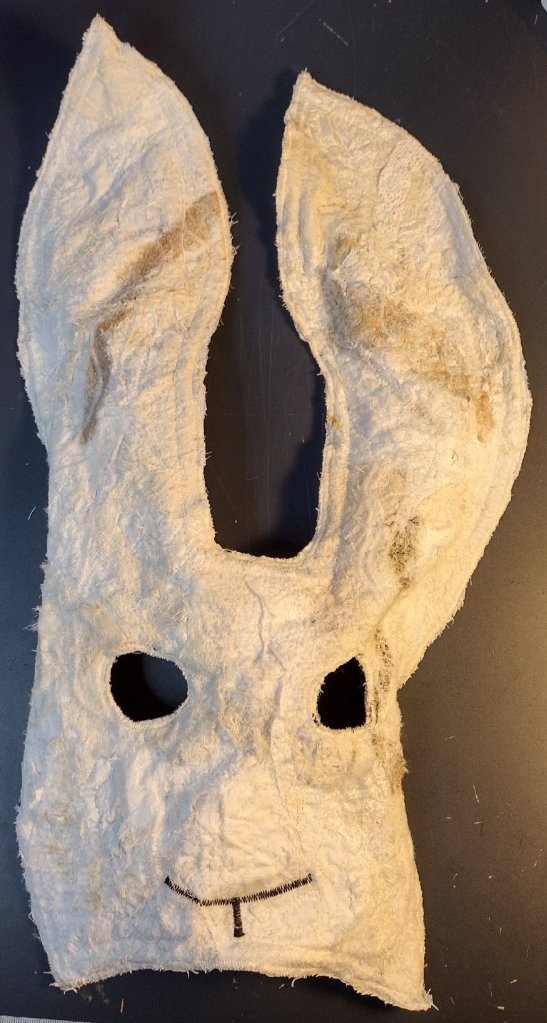
The masks are meant primarily as decorative objects but can be worn, The straps are non-curl 6cm elastic. The inner surface is cotton and the main surface mixed textiles but mainly natural fabrics, some organic. I often source fabric from charity shops but it is hard to avoid acrylic and poly. Rayon (viscose) – made from wood pulp – is common in women’s clothes often with a useful shiny finish.
Hare (Green Man) Mask, about 43 x 30 cm, mixed textiles and wire frame.
Although each of the nine masks didn’t take a great deal of time to make the finishing has required more effort than I anticipated, I could have reduced that by being a little more careful with the making. Notes have been made ready for the next project! Natural fabrics have been used throughout, some organic but some of the shiny stuff is polyester – it can be hard to avoid. The thread is almost all organic as I like the extra strength and quality, with some rayon and again a little poly.
Nine Hare Masks, each approx 42 x 30 cm, mixed fabrics & wire, 2024 C.Miller
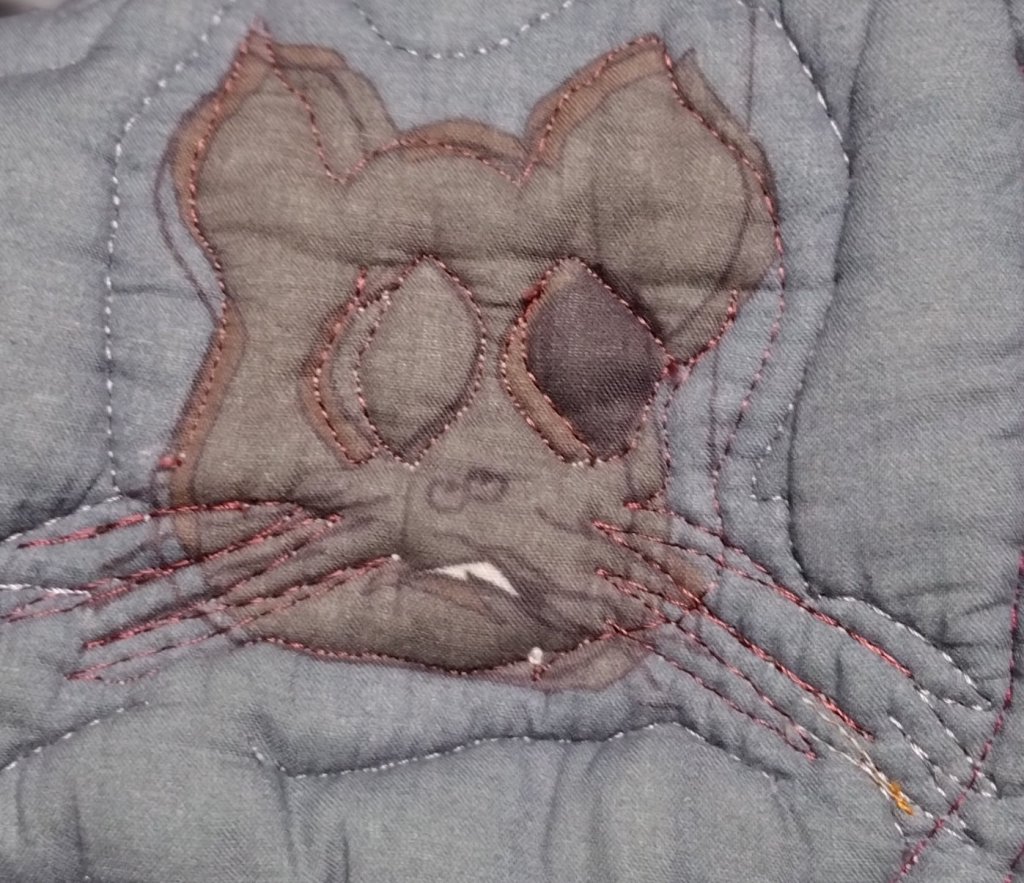
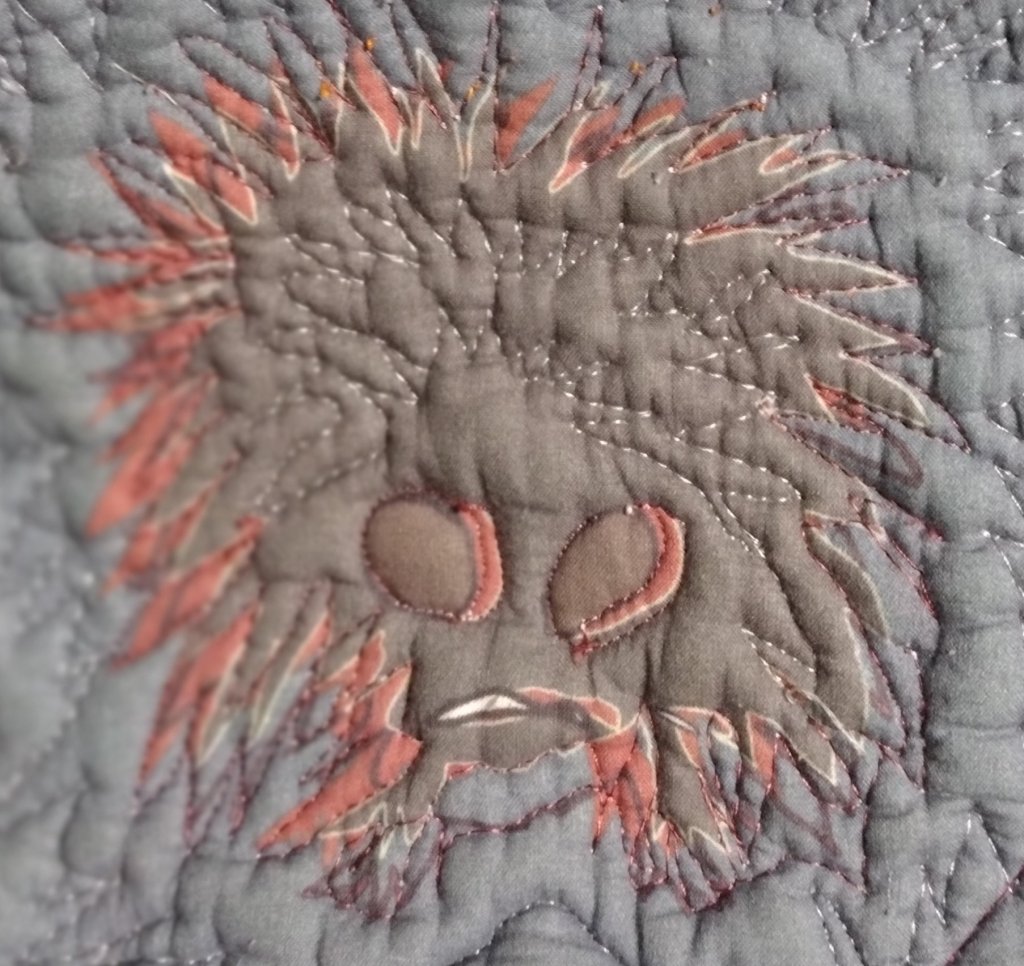
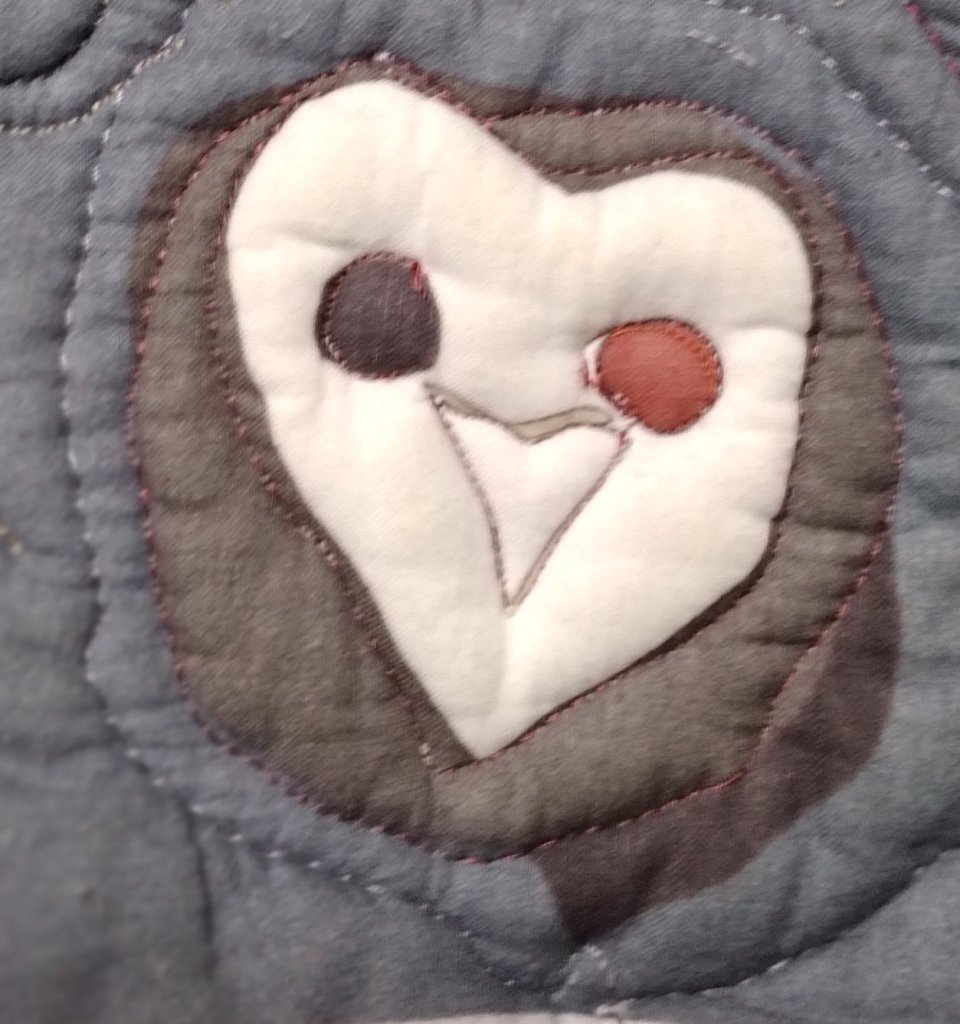
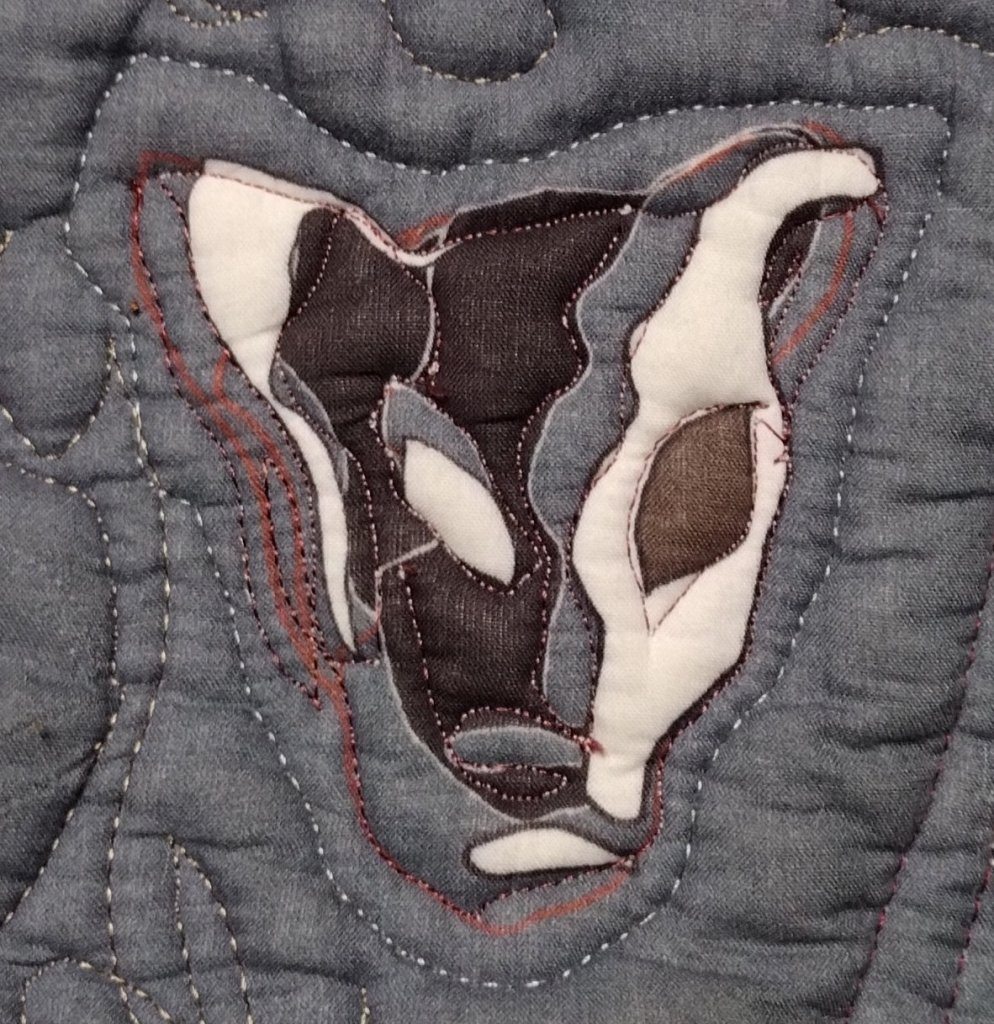
Having finished seven hare masks I was pondering making other animals such as badger, hedgehog, deer, owl & c. perhaps using the designs from the Animal Masquerade set (artist’s book, house-coat and quilt) I made several years ago.
This quilt was a colour experiment, the design is digitally printed onto bamboo silk and still awaiting a border.
British Wildlife quilt, ink-jet printed bamboo fabric, bamboo wadding, 2017 (100cm x 140cm)
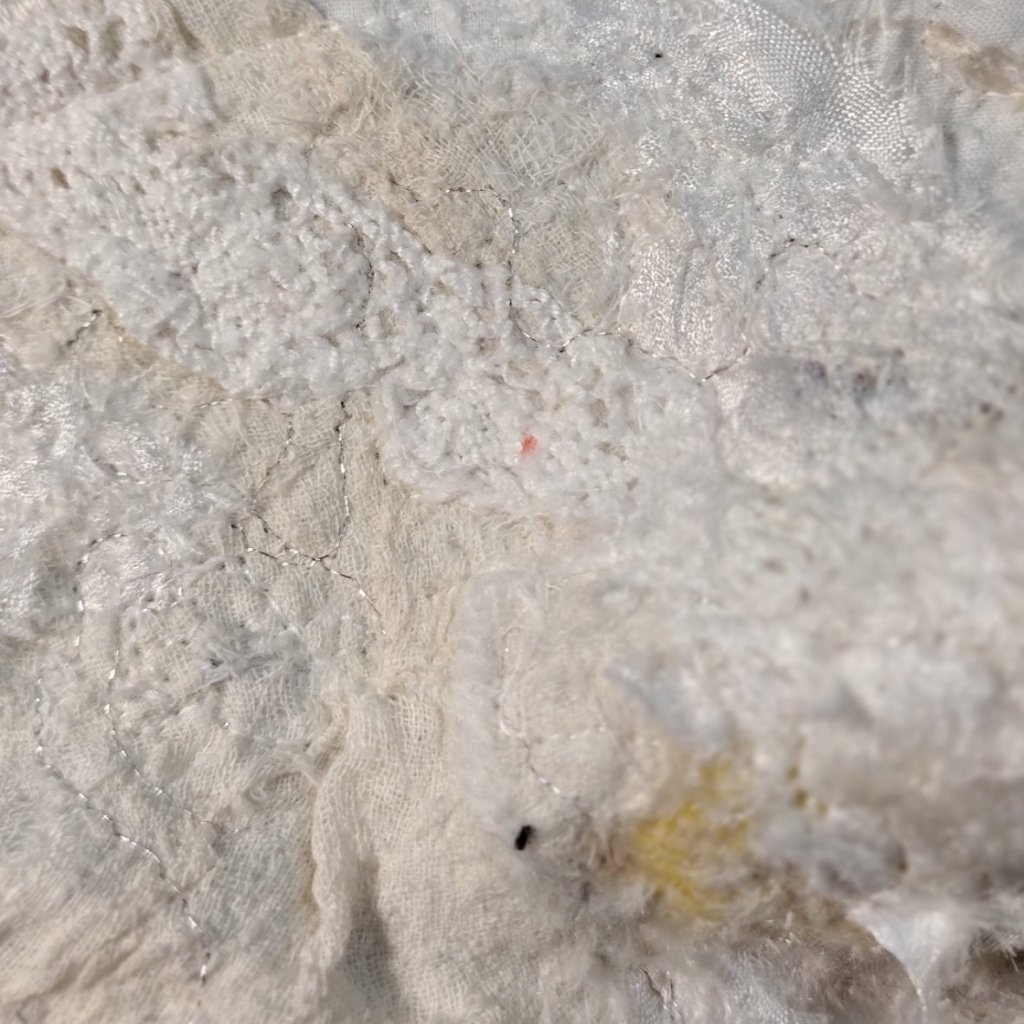
Here is Hare Mask no. 7 almost finished, with a few close-ups to show some texture.
Winter Hare Mask (1) 45 x 25 cm, mixed textiles
Many of the fabrics used for this mask are organic silk, cotton, linen swatches with some non-organic natural material and the threads are sometimes cotton, some rayon and almost inevitably some polyester for the silver.
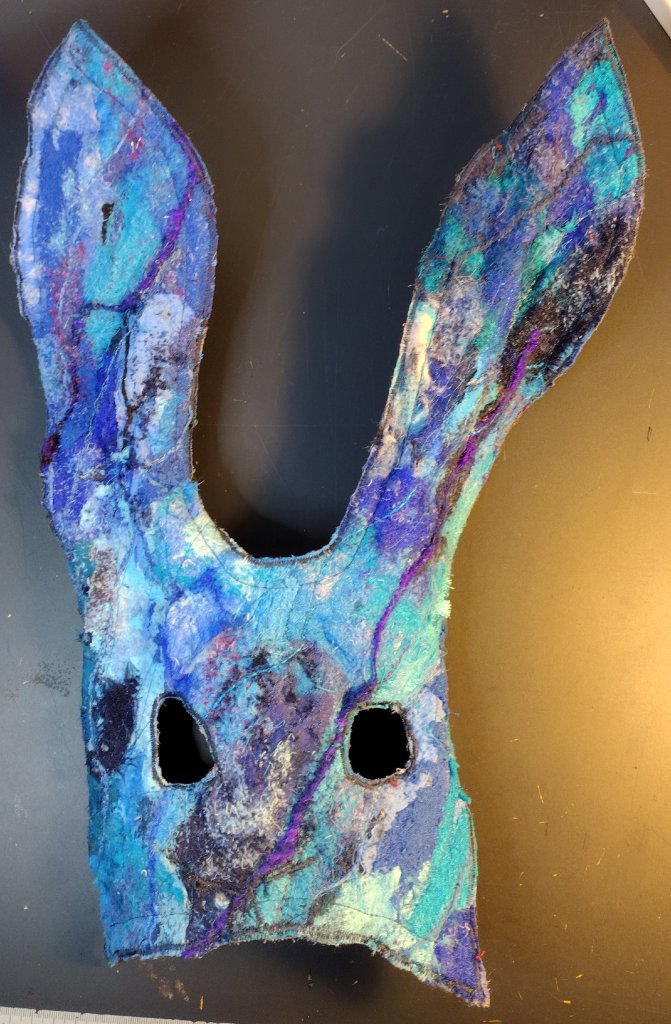
Embellishing was invented before the sewing machine as a way of joining fabrics without having to stitch, the textile fibres are pulled together by the action of the – very sharp – needles being forced back and forth through the materials.
I’m working here with silk, bamboo and cotton scraps, some of these are tiny or little swatches. The process is fairly quick, an hour or two is enough to create a piece suitable for the hare masks I have been making. The primary aim here is texture and the small amount of colours other than cream or white should help with that. The silk is making my hands feel er, silky which I guess is an effect of the way these materials have been treated in the finishing process.
The embellishing machine can have a maximum of five needles but I usually don’t have that many as I want more control of the appearance.
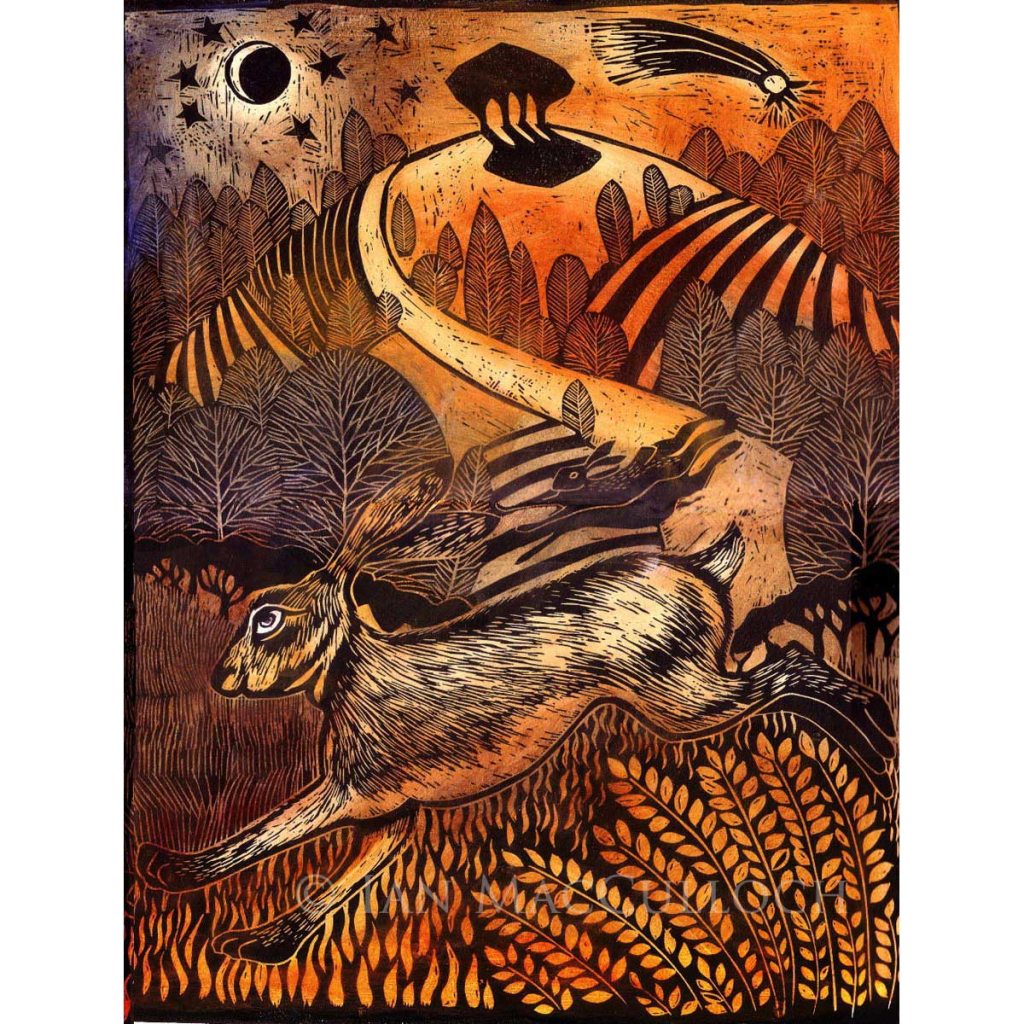
Visiting Bath today and the lovely Topping & Company bookshop -near the Abbey and the Roman Baths – I came across two fairly recently published volumes concerning hares, The Way of the Hare, Marianne Taylor (2017 Bloomsbury) and Raising Hare, Chloe Dalton (2024 Canongate). The first has a linocut print cover by Ian MacCulloch
a terrific printmaker who specialises in wildlife and seems to have a love for the hare. I feel I need to put far more effort into my series of hare masks! Not to mention my printmaking which is sadly neglected since the demise of Cato Press in 2020.
Hare Mask (4) 40x30cm, textile embellished and embroidered.
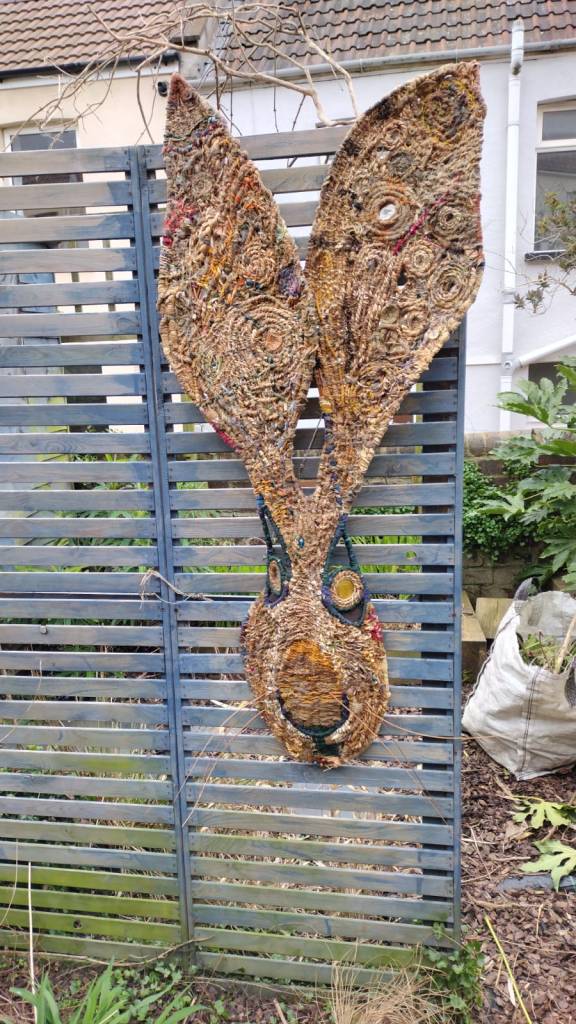
I finally got round to putting the Hare – made last year – into the garden, the heavy rain of the last two months has eased and the ground is a little less muddy. Now awaiting some flowers. Not much chance of frost now, there has been very little this winter in southern or western England, but some of the most popular of annual climbers such as Black-Eyed Susan, sweet peas and nasturtiums like it to be a little warmer before being poked into the cold earth.
Hare, mixed fibres, approx 2m – awaiting some flowers
I finished off the hare with several coats of diluted pva, about three water to one glue, allowing it to dry between coats. I’m hoping this will extend the life for a few years, nothing will stop the elements for ever of course. I can’t quite remember all the various fibres, most of them came from Musgrove Willows in Somerset, others from garden centres and craft places, collected over years, includes wool, string, rope, willow and many more. Musgrove have an interesting website gallery
For the first time in several years I thought I might send some seasonal greetings cards. Lots of scrap material and lots of thread awaiting a little effort, as well as plenty of card and dance paper, so here we go. My favourite animal will be the theme, the much persecuted hare, in winter costume.
Embellishing scraps of fabric is fun, but the embellishing needles have become rather costly at around £3 each – they break easily. So it’s important to take care using the embellishing machine, needles move fast but fabric movement must be slow. I also use embellished fabrics for doll costumes.
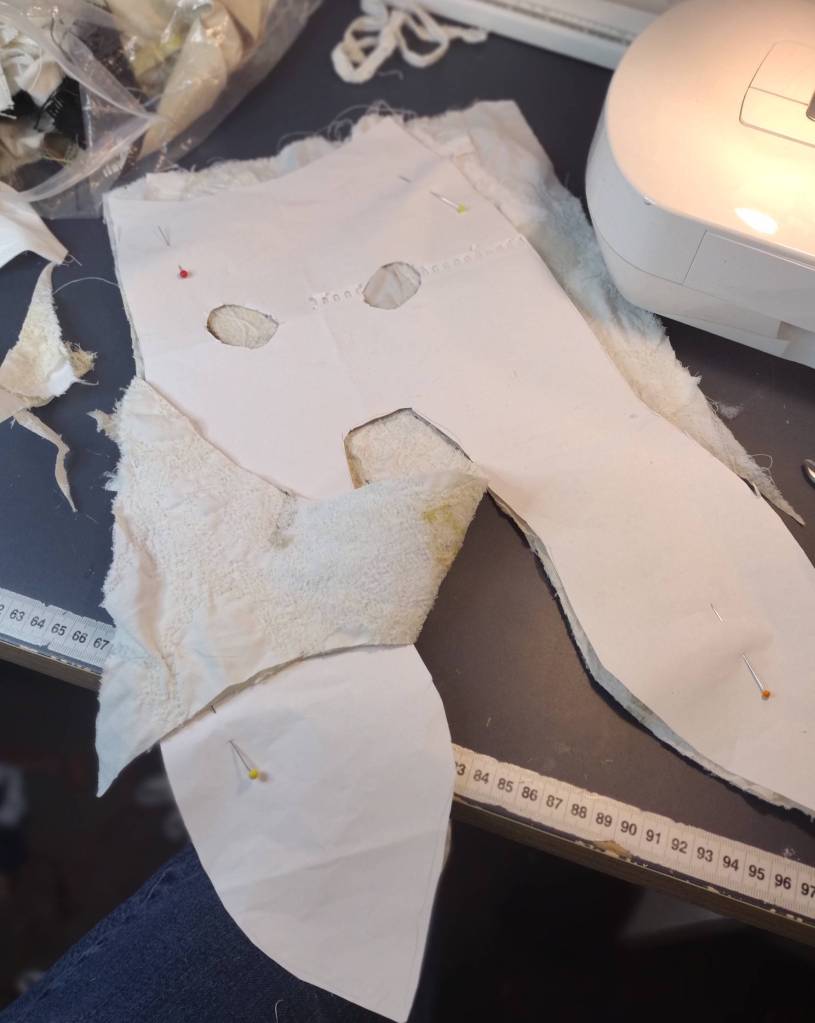
Once the fabric is available I cut the hares out and began stitching, might have been easier to stitch first then cut out. Hand stitching is kept to a minimum, whiskers and a little finishing. Anyway the results are just about ok, I think.
Winter Hare cards, work in progress (2)
I printed some text onto hand-made paper as a backing for the fabric hares, printed a greeting on A4 card with a small name label on the reverse. Once the hares are complete I stitched them onto the backing paper, then glue the whole piece to the card.
Winter Hare cards, work in progress (1)
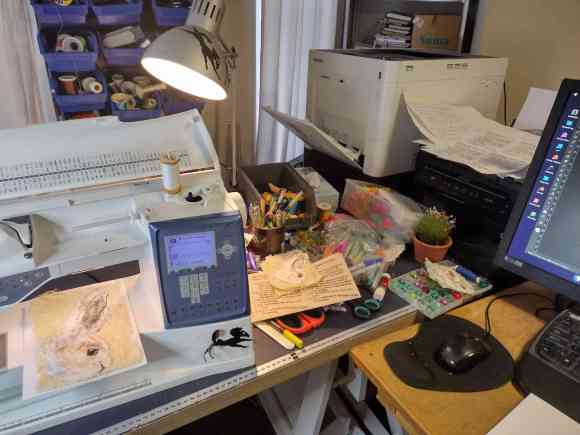
I work with both the printers – one laser and one inkjet – the mac computer, a Husqvana/Viking sewing machine, an embellishing machine and many threads, pens, fabric scraps etc. and with music playing, often BBC R3 classical. The pics show the dry work area, I’ll be gluing elsewhere.
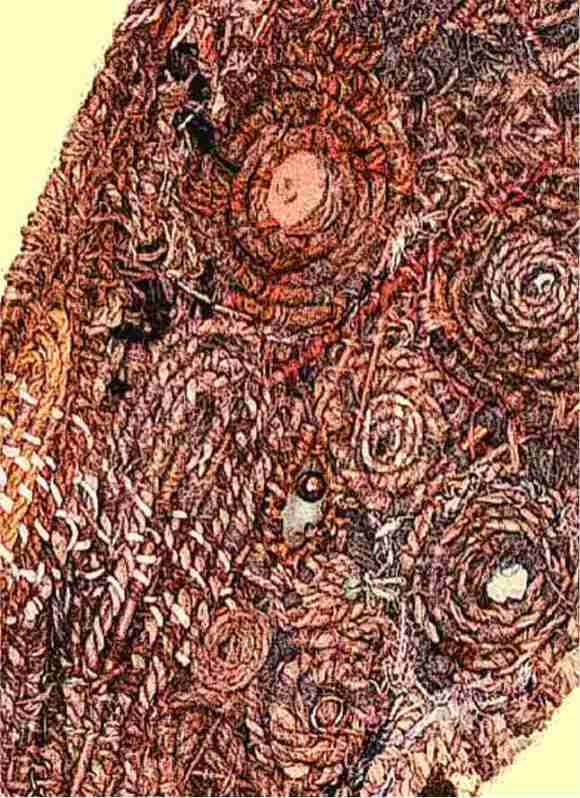
Summer 2022 I stayed on a willow farm in Somerset and bought withies and other fibres with a view to doing some sculpture. My previous experience with this material is that the whole project can quickly grow beyond first ideas and this happened again. I expected a smaller and much simpler mask but when the basic structure was made it seemed to demand more intricacy and detail.
I worked on it off – one of several projects – and on through last Autumn and into Spring this year and this is the result. The hare is supposed to be outside in my little garden but I haven’t got round to that, it needs a little shelter from the elements. Part of my reason for making this was to amuse my grandchildren and encourage them in artistic endeavours.
Hare, 2023, Withies, grasses and other natural fibres and found objects, 220cm x 90cm Chris MillerHare, 2023, detailHare, 2023, detail


















 FlagFly